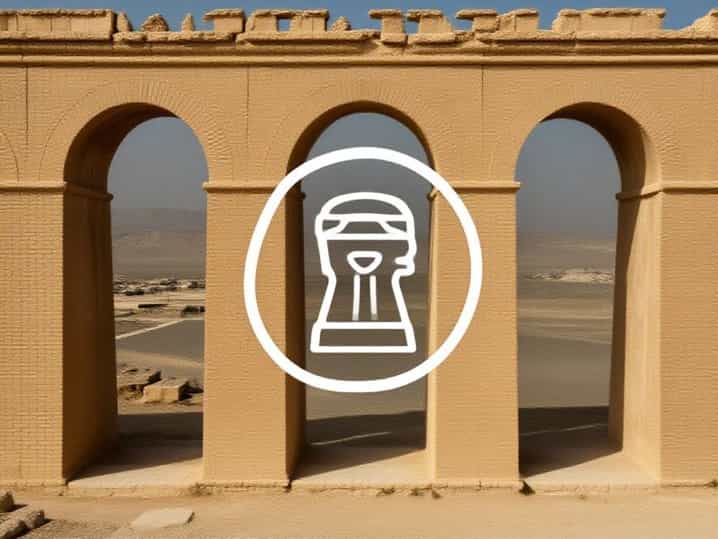
Among the most remarkable achievements of ancient Mesopotamia is Sennacherib’s Aqueduct at Jerwan, a massive stone structure built in the early 7th century BCE. It was part of an advanced irrigation system designed to bring water to the Assyrian capital of Nineveh. More than just a practical construction, this aqueduct demonstrates the engineering skills, ambition, and political power of King Sennacherib, who ruled Assyria during its height. Today, the aqueduct at Jerwan stands as one of the earliest known examples of monumental water engineering, blending functionality with symbolism of royal authority and technological mastery.
Historical Background of Sennacherib
Sennacherib ruled the Assyrian Empire from 705 to 681 BCE, a period marked by military expansion, architectural innovation, and administrative reforms. As the son of King Sargon II, he inherited not only a vast empire but also the responsibility to maintain and expand its prosperity. His reign is often remembered for the grandeur of Nineveh, which he transformed into one of the most sophisticated cities of its time.
Central to Sennacherib’s vision was water. Nineveh needed a reliable supply to support its growing population, irrigate fields, and sustain gardens and palaces. The aqueduct at Jerwan was one of the solutions to this challenge, part of an ambitious network of canals and waterways stretching across northern Mesopotamia.
The Construction of the Aqueduct at Jerwan
The aqueduct at Jerwan was constructed around 690 BCE. It is often regarded as the first large-scale stone aqueduct in history. Built from cut limestone blocks, it extended across a natural valley to carry a canal over it, ensuring that water could continue its course uninterrupted.
Design and Materials
- Stone blocksThe aqueduct was built using precisely cut limestone, many of which still remain in place today.
- Cuneiform inscriptionsSome blocks bear inscriptions praising Sennacherib, highlighting both his role as builder and his divine favor.
- Structural designThe aqueduct was designed to carry the canal over uneven terrain, a method that avoided interruptions in water flow.
This construction required a deep understanding of hydraulics, architecture, and logistics, proving that Assyrian engineers were capable of projects on a monumental scale.
The Purpose of Sennacherib’s Aqueduct
The aqueduct was not merely a display of power. It had practical and strategic purposes. Its primary role was to transport water from springs and rivers in the mountains to Nineveh, which was located miles away. By securing this supply, Sennacherib could support agriculture, sustain his subjects, and provide for the lavish gardens he is said to have created.
Water Supply for Nineveh
At its peak, Nineveh was home to hundreds of thousands of people. Without advanced irrigation, the city could not have sustained such growth. The aqueduct formed part of a larger system of canals that fed the city, demonstrating foresight in urban planning.
The Legendary Hanging Gardens
Some historians suggest that Sennacherib’s irrigation system may have been linked to the gardens he built in Nineveh, which some scholars associate with the famous Hanging Gardens traditionally attributed to Babylon. The aqueduct at Jerwan would have provided the necessary water to sustain these lush landscapes.
Symbolism and Power
Sennacherib’s aqueduct at Jerwan was more than a practical solution; it was a statement of dominance. By commanding nature and redirecting rivers, the king displayed his authority not only over people but also over the environment. The inscriptions carved into the aqueduct reinforce this image, attributing the feat to divine blessing and royal genius.
Political Propaganda
In the ancient Near East, monumental construction often served political purposes. By building such a project, Sennacherib demonstrated his ability to mobilize resources, labor, and knowledge. The aqueduct reminded subjects and rivals alike of Assyria’s strength.
Engineering Significance
The Jerwan aqueduct is often cited as one of the earliest examples of stone-built aqueducts. Its scale, durability, and functionality highlight how advanced Assyrian engineering had become. While Roman aqueducts are more famous today, Sennacherib’s project predates them by centuries.
Comparison with Later Aqueducts
- The Romans developed long networks of aqueducts, but Jerwan stands out as an early prototype of large-scale water transportation.
- Unlike many Roman aqueducts built with arches, Jerwan relied on solid stone channels.
- The Assyrian aqueduct was integrated into a broader irrigation system, not just urban supply.
This innovation influenced how later civilizations thought about water management and infrastructure.
Archaeological Discoveries at Jerwan
The aqueduct was rediscovered in the 19th century by explorers studying ancient Mesopotamia. Since then, archaeologists have studied its inscriptions, structure, and materials to learn more about Assyrian society. Today, portions of the aqueduct still stand, offering a glimpse into the grandeur of the ancient Assyrians.
Inscriptions on the Stones
Several blocks carry inscriptions in Akkadian cuneiform. These texts attribute the construction to Sennacherib and emphasize his role as a divinely appointed ruler. They also provide valuable historical records of how the Assyrians documented their achievements.
Impact on Assyrian Society
The aqueduct at Jerwan had wide-ranging effects on Assyrian society. By improving water supply, it supported population growth, agriculture, and urban development. It also reinforced the power of the state, as only a king with immense resources could have commissioned such a project.
Economic and Agricultural Benefits
Reliable irrigation allowed Assyria to expand agricultural production. Surplus crops supported the growing city of Nineveh and ensured that the empire remained strong even during challenging seasons.
Cultural and Social Importance
Projects like the aqueduct also enhanced the cultural identity of Assyria. They demonstrated that the empire was not only militarily powerful but also capable of monumental achievements in science and technology.
Legacy of Sennacherib’s Aqueduct
Although centuries have passed, the aqueduct at Jerwan remains a symbol of innovation and ambition. Its ruins serve as a reminder of the heights reached by ancient Mesopotamian civilizations. The project influenced how future empires viewed water management, proving that mastery over natural resources was essential for sustaining great cities.
Modern Relevance
Today, the aqueduct at Jerwan is studied not only for its historical importance but also for the lessons it offers about sustainable water management. In an era where water scarcity is a global concern, ancient systems like this remind us of humanity’s long history of engineering solutions to environmental challenges.
Sennacherib’s aqueduct at Jerwan was a remarkable achievement that combined functionality, symbolism, and political significance. Built in the 7th century BCE, it secured water for Nineveh, showcased Assyrian engineering, and reinforced the king’s authority. Its enduring ruins highlight the innovation of the Assyrian Empire and its contributions to world history. As one of the earliest monumental aqueducts, it remains an enduring example of how ancient civilizations harnessed natural resources to sustain and glorify their societies.