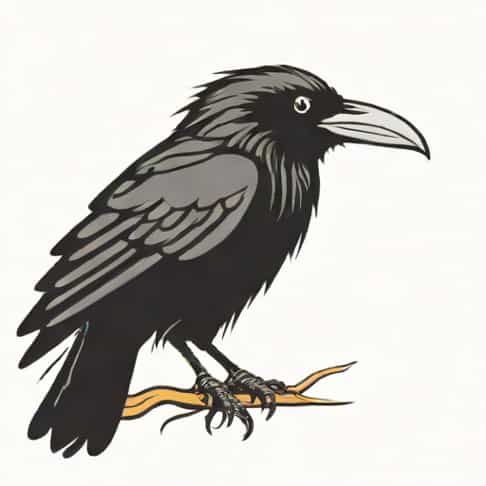
Edgar Allan Poe’s poem The Raven has captivated readers for generations, largely because of the mysterious refrain repeated by the titular bird Nevermore. The word carries an eerie, haunting quality that resonates deeply with themes of loss, despair, and the inescapability of fate. Understanding why the raven says Nevermore involves exploring the poem’s symbolism, the psychological state of its narrator, and Poe’s literary techniques. This topic examines the meaning behind the raven’s repeated utterance and why it has become one of literature’s most enduring and enigmatic phrases.
The Narrative Context of the Raven
In The Raven, the narrator is a man mourning the loss of his beloved Lenore. He is alone in his chamber, reading and reflecting, when a raven enters through the window. The bird perches upon a bust of Pallas Athena, the goddess of wisdom, and begins to speak a single word Nevermore. The narrator, initially curious, grows increasingly desperate as he interprets the raven’s repetition as a direct answer to his questions about life, death, and the possibility of reunion with Lenore in the afterlife.
The Raven as a Symbol
The raven itself is a symbol rich with meaning. In various cultures, ravens are associated with death, mystery, and omens. Poe’s choice of a raven, rather than another bird, emphasizes the dark, supernatural atmosphere of the poem. By saying Nevermore, the bird functions both as a literal presence and as a symbolic voice reflecting the narrator’s deepest fears and grief.
- Raven symbolizes death and the unknown.
- Perching on Athena’s bust links wisdom with inevitable truth.
- The bird’s repeated word mirrors the narrator’s growing despair.
The Meaning of Nevermore
The word Nevermore is both simple and profoundly ambiguous. On one level, it represents finality-the idea that certain things are gone forever. For the narrator, it confirms that he will never see Lenore again and that his grief is unending. Each repetition of Nevermore intensifies his despair, as he projects his fears and desires onto the bird’s cryptic utterance.
Nevermore as a Psychological Device
Poe uses the raven’s single word to explore the narrator’s mental state. The repetition creates a hypnotic, obsessive effect, emphasizing his descent into madness. The narrator begins by asking questions and then interprets the same word as different answers, revealing his vulnerability to suggestion and his obsessive focus on loss. The poem demonstrates how grief and loneliness can distort perception, making a single utterance take on multiple, often terrifying meanings.
The Intersection of Fate and Free Will
Another interpretation of Nevermore involves the tension between fate and free will. The narrator’s questions about whether he will be reunited with Lenore are met with the bird’s constant denial. This suggests that some aspects of existence-particularly death-are beyond human control. The raven’s unwavering response serves as a reminder that certain realities are immutable, no matter how desperately we wish otherwise.
Literary Techniques Enhancing the Effect
Poe employs several literary techniques to make the raven’s Nevermore so memorable and effective. The use of repetition creates rhythm and builds a sense of inevitability. Internal rhyme, alliteration, and meter contribute to the musicality of the poem, reinforcing the haunting atmosphere. Additionally, the gradual escalation of the narrator’s emotional intensity mirrors the psychological impact of the repeated word.
Repetition and Rhythm
The repeated use of Nevermore mimics a refrain in music, anchoring the poem and giving it a hypnotic quality. With each occurrence, the word grows more oppressive, paralleling the narrator’s increasing anxiety. The rhythm and cadence of the poem turn the word into more than language-it becomes an auditory symbol of inescapable despair.
Rhetorical and Emotional Layers
Poe’s choice of a single, monosyllabic word allows for multiple interpretations. While Nevermore seems definitive, its ambiguity invites the reader to question the reliability of the narrator’s perception. The word embodies the uncertainty and ambiguity of grief it is a denial, a prophecy, and a reflection of internal torment all at once. This layering contributes to the poem’s enduring fascination and emotional depth.
The Symbolic Relationship Between Raven and Narrator
The interaction between the narrator and the raven highlights themes of isolation, obsession, and the human desire for answers. The bird serves as a mirror, reflecting the narrator’s inner anguish rather than offering independent insight. In this sense, Nevermore is less a statement from the bird and more an articulation of the narrator’s own psychological state. By projecting his fears onto the raven, he externalizes his grief, making it tangible and inescapable.
Obsession and Desperation
As the poem progresses, the narrator fixates on the bird’s word, interpreting each repetition as confirmation of his worst fears. This obsessive questioning drives the tension and deepens the sense of hopelessness. The raven does not answer in the way a human interlocutor might; it only reinforces the permanence of loss, echoing the narrator’s obsession and despair.
Loneliness and Desire for Meaning
The narrator’s engagement with the raven also underscores a profound human need for meaning in the face of suffering. He seeks reassurance that death is not final or that love transcends mortality. The word Nevermore denies him that solace, emphasizing the stark reality that some questions have no comforting answers. This tension between hope and despair contributes to the poem’s timeless emotional resonance.
Why Nevermore Resonates Culturally
The enduring power of the raven’s word extends beyond the poem itself. Nevermore has become a cultural reference for unchangeable fate, eternal sorrow, and haunting loss. Its appeal lies in its simplicity and versatility; a single syllable conveys complex emotions and universal human experiences. Readers identify with the narrator’s grief, the feeling of helplessness, and the longing for answers, making Nevermore both specific to the poem and universally meaningful.
- Represents the finality of death and loss
- Symbolizes the human struggle with grief and despair
- Acts as a cultural shorthand for inescapable fate
The raven’s repeated word, Nevermore, is a powerful literary device that encapsulates the themes of Poe’s poem loss, grief, inevitability, and human despair. It serves as a mirror to the narrator’s psychological state, reflecting obsession, loneliness, and the search for meaning. By choosing a single, haunting word, Poe intensifies the poem’s emotional impact and creates a lasting symbol that resonates with readers across generations. Understanding why the raven says Nevermore involves recognizing the interplay of symbolism, psychological depth, and masterful literary craftsmanship, which together make this refrain one of the most iconic elements in English literature.