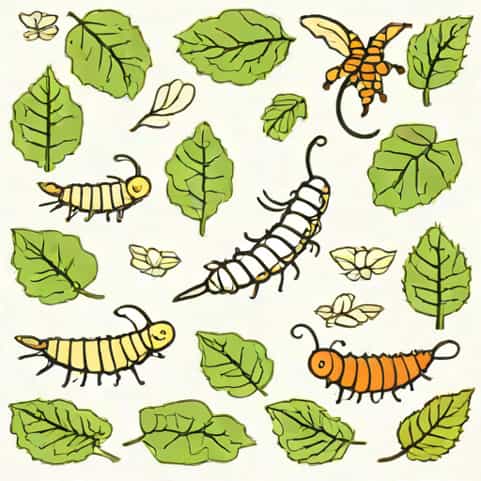
The silkworm has played a vital role in human history for thousands of years, especially in the production of silk, one of the most luxurious and sought-after fabrics in the world. Understanding the life cycle of silkworms not only gives us insight into nature’s fascinating processes but also highlights how human culture and economy have been shaped by a small insect. The stages of its development-egg, larva, pupa, and adult moth-are each essential to the creation of silk. This cycle is an incredible example of transformation, and it continues to capture the interest of scientists, historians, and everyday learners.
The Beginning of the Life Cycle Eggs
The life cycle of the silkworm begins when a female silk moth lays her eggs. A single moth can lay hundreds of tiny, pinhead-sized eggs at a time. These eggs are usually yellowish or gray in color, and under natural conditions, they remain dormant during the winter season. When spring arrives and the temperature becomes warm, the eggs hatch into larvae.
The hatching is carefully timed with the sprouting of mulberry leaves, which are the primary food source of silkworms. This synchronization ensures that the young silkworms have an immediate supply of fresh leaves to sustain their growth. Farmers who raise silkworms often store eggs under controlled conditions to align hatching with the availability of food.
The Larval Stage Rapid Growth
Once hatched, the silkworm enters its larval stage, also known as the caterpillar stage. This is the most important period in the life cycle of silkworms, as it is during this stage that they consume vast amounts of mulberry leaves and grow quickly. The larval stage typically lasts about 20 to 30 days, depending on environmental conditions.
During this stage, the silkworm undergoes a process known as molting. Since its skin cannot stretch endlessly, the silkworm sheds its old skin multiple times as it grows larger. Each molting stage is referred to as an instar, and silkworms generally go through five instars. By the time they reach the final instar, they are plump, creamy white, and about 7-8 centimeters long.
- First instarNewly hatched larvae are very small and black in color.
- Second instarThey grow larger and their appetite increases significantly.
- Third instarLarvae become visibly thicker and paler in shade.
- Fourth instarFeeding intensifies, and the silkworms prepare for their final growth stage.
- Fifth instarThe silkworms reach their maximum size and prepare to spin cocoons.
This stage is marked by continuous feeding and visible physical growth, laying the groundwork for the next transformation.
The Pupal Stage Spinning the Cocoon
The most famous stage of the life cycle of silkworms is the pupal stage, as it is here that silk production occurs. When the larva is fully grown, it stops eating and begins searching for a safe place to spin its cocoon. Using specialized silk glands, the silkworm produces a long, continuous filament of silk that can stretch over 1,000 meters in length.
The silkworm moves its head in a figure-eight pattern, carefully weaving the filament around itself until it is fully enclosed within a protective cocoon. This process takes about 2-3 days to complete. Inside the cocoon, the silkworm transforms into a pupa. For humans, this stage is crucial because the cocoon is harvested to produce silk threads, which are later spun into fabric.
In traditional silk production, the pupae are often boiled or steamed before the moth emerges, as this allows the cocoon to be unraveled into long, continuous threads. This process has been practiced for centuries and remains central to the silk industry.
The Adult Moth Completing the Cycle
After about two to three weeks inside the cocoon, the adult silk moth emerges if not interrupted by harvesting. The moth breaks open the cocoon, but in doing so, it cuts the silk filament into shorter strands, which makes it less useful for textile production. This is why many silk producers prevent the moth from emerging by intervening during the pupal stage.
The adult silk moth is unable to fly because of its large body and small wings. Its primary purpose is reproduction. Male moths are more active and seek out females, while female moths lay eggs soon after mating, beginning the cycle anew. Unfortunately, the adult moths live only a few days, as they lack functional mouthparts and cannot feed.
The Role of Mulberry Leaves
A key part of the silkworm’s life cycle is its dependence on mulberry leaves. These leaves provide all the nutrition the larvae need to grow and produce silk. The close relationship between mulberry trees and silkworms is so strong that in many regions, large-scale cultivation of mulberry plants exists solely to support sericulture, the practice of silk farming.
The leaves are rich in proteins and nutrients, which are converted by the silkworm into fibroin, the main protein that makes up silk. Without mulberry leaves, the cycle cannot proceed naturally, which is why sericulture farmers carefully manage their availability throughout the year.
Human Connection to the Silkworm Life Cycle
For thousands of years, humans have relied on the life cycle of silkworms to produce silk, a material that has shaped trade, fashion, and culture across civilizations. Ancient China first discovered the process of reeling silk from cocoons, and the Silk Road spread this knowledge, creating connections between East and West. The silkworm became a bridge between nature and human innovation.
Even today, the process of raising silkworms remains largely the same. Farmers nurture eggs, provide mulberry leaves, and carefully monitor the larvae until they spin their cocoons. Although modern technology has improved efficiency, the natural stages of the silkworm life cycle remain unchanged.
Educational Importance of Studying the Life Cycle
The life cycle of silkworms is not only important economically but also educationally. Schools often use it as an example of complete metamorphosis, showing students how insects undergo distinct stages of development. It also demonstrates the delicate balance between humans and nature, as well as how small organisms can have massive impacts on global culture and industry.
Studying the silkworm encourages appreciation for biology, history, and even economics. It shows how natural processes are interwoven with human practices, creating systems of dependency and innovation.
The life cycle of silkworms-beginning with tiny eggs and culminating in adult moths-is a story of transformation, resilience, and human connection. Each stage plays a crucial role, from the larvae feeding on mulberry leaves to the pupae spinning cocoons of precious silk. While the silkworm itself may live a short life, its impact on humanity has been immense, shaping trade, culture, and craftsmanship for millennia. Understanding this cycle reminds us that even the smallest creatures can leave the largest legacies, spun into threads that continue to connect people across the world.