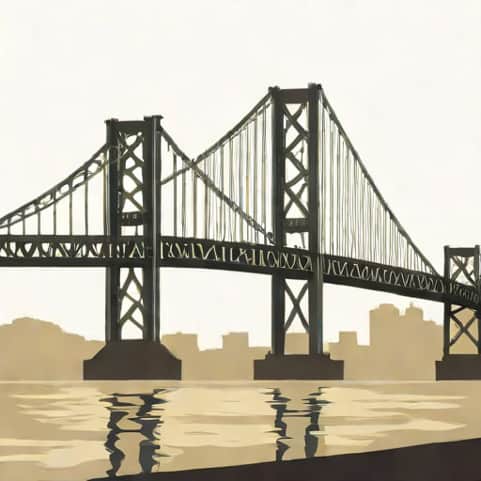
The Jacques Cartier Bridge is an iconic structure spanning the Saint Lawrence River in Montreal, Quebec, Canada. It serves as a vital transportation link connecting the island of Montreal to the city of Longueuil and other suburbs on the south shore. Known for its striking steel design and panoramic views of the river and city skyline, the bridge is both a functional piece of infrastructure and a symbol of Montreal’s architectural and engineering heritage. Since its opening in 1930, the Jacques Cartier Bridge has played a central role in the daily lives of commuters, tourists, and commercial traffic, making it one of the most recognized landmarks in the region. Its combination of historical significance, engineering innovation, and visual appeal continues to attract attention from locals and visitors alike.
History and Construction
The idea for the Jacques Cartier Bridge emerged in the early 20th century as Montreal’s population and industrial activity grew. The city required a reliable river crossing to accommodate increasing vehicular and commercial traffic. Construction began in 1925 under the guidance of experienced engineers, and the bridge was officially opened in 1930. The design and construction process reflected the engineering standards and architectural aesthetics of the era, combining functionality with elegance.
Engineering and Design
The Jacques Cartier Bridge is a steel truss cantilever bridge, a design chosen for its strength, flexibility, and suitability for spanning the wide Saint Lawrence River. Key features of its design include
- Multiple spans supported by steel trusses, providing both stability and durability
- Cantilever sections that allow for long central spans without the need for excessive piers in the water
- Roadways for vehicles, as well as pedestrian and cycling paths in later modifications
- Integration of lighting systems that highlight the bridge at night, enhancing both safety and visual appeal
- Capacity for heavy commercial traffic, reflecting its role as a major transportation artery
Renaming and Commemoration
The bridge was originally named the Montreal Harbour Bridge but was later renamed the Jacques Cartier Bridge in honor of the French explorer Jacques Cartier, who is credited with exploring parts of what is now Canada in the 16th century. The renaming reflects Montreal’s cultural heritage and celebrates the city’s historical ties to French exploration and settlement. Commemorative plaques and informational displays on the bridge provide educational insights for visitors and underscore its historical significance.
Modern Modifications and Maintenance
Over the decades, the Jacques Cartier Bridge has undergone several upgrades and renovations to accommodate increasing traffic volumes and modern safety standards. Key modifications include
- Expansion of lanes to improve traffic flow and reduce congestion
- Seismic retrofitting and structural reinforcements to enhance durability and safety
- Installation of pedestrian walkways and cycling paths, promoting alternative transportation
- Advanced lighting systems for night-time visibility and aesthetic appeal
- Regular maintenance programs to inspect and repair steel structures, paintwork, and roadway surfaces
Traffic and Transportation Role
The Jacques Cartier Bridge is a critical transportation link in Montreal’s infrastructure. It serves thousands of vehicles daily, including cars, buses, and commercial trucks. The bridge also supports public transit, including buses that connect to key transit hubs in Montreal and surrounding areas. Its pedestrian and cycling pathways provide safe access for non-motorized traffic, encouraging sustainable commuting options. The bridge’s strategic location and capacity make it indispensable for commuting, commerce, and tourism in the region.
Tourism and Scenic Views
Beyond its functional role, the Jacques Cartier Bridge is a popular tourist attraction. Its elevated position over the Saint Lawrence River offers spectacular views of Montreal’s skyline, Old Montreal, and the surrounding waterways. Photographers, walkers, and cycling enthusiasts often use the bridge to capture panoramic images or enjoy a leisurely stroll. Seasonal lighting displays further enhance the bridge’s appeal, making it a landmark visible from multiple vantage points across the city.
Events and Cultural Significance
The bridge is often incorporated into Montreal’s cultural events, including festivals, parades, and city celebrations. Its illuminated arches and central location make it a focal point for public gatherings and special occasions. The Jacques Cartier Bridge also serves as a symbol of connectivity, representing the link between Montreal and its surrounding communities. Its presence in artwork, photography, and local media underscores its cultural and aesthetic significance in addition to its functional role.
Architectural Features
The steel truss design of the Jacques Cartier Bridge is both practical and visually striking. The cantilever structure allows for long spans without numerous supporting piers in the river, which was essential for navigation and shipping. The bridge’s lighting system, installed in the 21st century, highlights its structural lines at night, making it a prominent feature of Montreal’s nighttime skyline. Architectural details, such as the symmetry of the trusses and the rhythmic spacing of support towers, contribute to the bridge’s enduring aesthetic appeal.
Safety Measures
Safety is a critical consideration for the Jacques Cartier Bridge. Measures implemented include
- Barrier systems to separate vehicular lanes from pedestrian and cycling paths
- Regular structural inspections and maintenance schedules
- Seismic reinforcements to withstand potential natural disasters
- Advanced lighting for night-time visibility
- Monitoring systems to manage traffic flow and respond to incidents
Environmental and Economic Impact
The Jacques Cartier Bridge contributes significantly to Montreal’s economy by facilitating the movement of goods, commuters, and tourists. Efficient transportation across the river reduces travel time and supports local businesses. The bridge also plays a role in environmental planning by providing pathways for cyclists and pedestrians, promoting sustainable commuting. Measures to maintain and improve its structural integrity ensure long-term benefits for both economic and environmental sustainability.
Future Developments
Ongoing projects and plans aim to further enhance the Jacques Cartier Bridge. These include updates to traffic management systems, improvements to pedestrian and cycling infrastructure, and potential aesthetic upgrades to the lighting and public spaces around the bridge. Future developments focus on maintaining its structural health, increasing capacity, and improving the overall experience for commuters and visitors.
The Jacques Cartier Bridge is much more than a transportation structure; it is a symbol of Montreal’s history, culture, and engineering excellence. From its construction in the early 20th century to modern upgrades and its role in tourism, the bridge has maintained its relevance and importance in the city’s landscape. Its combination of functionality, scenic beauty, and cultural significance makes it an essential part of Montreal’s identity. Whether admired for its engineering, used as a commuting route, or photographed for its stunning views, the Jacques Cartier Bridge continues to connect communities, inspire visitors, and serve as an enduring landmark for generations to come.