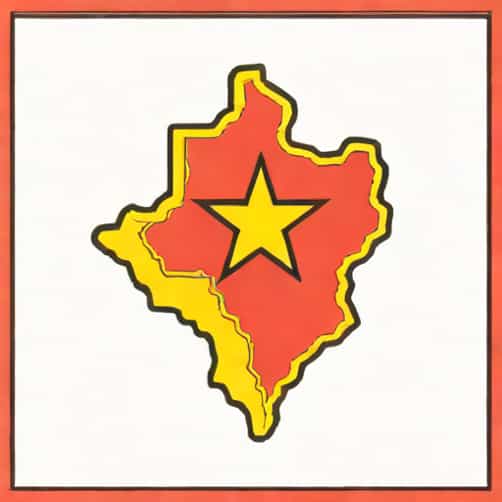
The Republica Democratica del Congo, officially known in English as the Democratic Republic of the Congo, is one of the largest and most resource-rich countries in Africa. It is a land filled with immense natural wealth, complex cultural diversity, and deep historical significance. Despite its abundant resources, the nation has faced political challenges, economic struggles, and conflicts that continue to shape its present reality. Understanding the Democratic Republic of the Congo requires looking at its geography, history, economy, society, and its potential for the future.
Geography of the Republica Democratica del Congo
The Democratic Republic of the Congo is the second-largest country in Africa by land area and is located in Central Africa. It is bordered by nine countries Angola, Burundi, Central African Republic, Republic of the Congo, Rwanda, South Sudan, Tanzania, Uganda, and Zambia. The country’s geography is dominated by the vast Congo River Basin, which is home to dense rainforests, rivers, and fertile land.
Climate and Environment
The climate of the Republica Democratica del Congo is generally tropical, with high temperatures and heavy rainfall in many regions. The rainforest is second only to the Amazon in size, making it one of the most important ecosystems on Earth. This biodiversity includes thousands of plant and animal species, many of which are unique to the region.
Natural Resources
The DRC is famous for its rich natural resources. It has vast reserves of copper, cobalt, diamonds, gold, and coltan, which is essential for modern electronics. Despite this, many communities live in poverty because of poor resource management, corruption, and conflict. The country’s immense potential remains underdeveloped.
Historical Background
The history of the Democratic Republic of the Congo is complex and marked by colonialism, independence movements, and internal conflicts. Each period has left a lasting impact on the nation’s identity and governance.
Colonial Period
The area was colonized in the late 19th century by King Leopold II of Belgium and became known as the Congo Free State. This period was marked by exploitation, forced labor, and atrocities against the local population. Later, it became the Belgian Congo until independence was achieved in 1960.
Independence and Political Struggles
After independence, the Republica Democratica del Congo experienced political instability. Patrice Lumumba, the first Prime Minister, was assassinated, and Joseph Mobutu (later Mobutu Sese Seko) seized power. Mobutu ruled for decades, renaming the country Zaire and creating a highly centralized regime. His fall in the 1990s led to wars and further instability.
Conflict and Peace Efforts
The late 20th and early 21st centuries brought devastating conflicts often referred to as the Congo Wars. These wars involved multiple African nations and left millions dead, either through violence or disease and famine caused by instability. Even today, certain regions face rebel activity and violence, particularly in the eastern provinces.
- First Congo War (1996-1997) led to the end of Mobutu’s rule.
- Second Congo War (1998-2003) became the deadliest conflict since World War II.
- Continued unrest remains a challenge in eastern Congo.
Culture and Society
The Republica Democratica del Congo is home to more than 200 ethnic groups and over 200 languages and dialects. French is the official language, but Lingala, Swahili, Kikongo, and Tshiluba are widely spoken. This linguistic and cultural diversity is a source of pride and identity for the Congolese people.
Music and Arts
The country is famous worldwide for its music, particularly Congolese rumba and soukous, which have influenced African music for decades. Artists from the DRC are celebrated across the continent, and dance plays an important role in daily life and cultural celebrations.
Religion and Traditions
Christianity is the dominant religion, with Roman Catholicism and Protestantism widely practiced. Traditional beliefs and practices remain influential, especially in rural areas. Religious institutions also play an important role in providing education and social services.
Economy of the Republica Democratica del Congo
The economy of the Democratic Republic of the Congo is heavily based on mining. Minerals such as cobalt, copper, and coltan are critical for the global technology industry. However, despite this wealth, the majority of the population lives in poverty, and infrastructure remains underdeveloped.
Agriculture
Agriculture employs a large portion of the population. Crops such as cassava, maize, rice, and coffee are widely grown. However, poor infrastructure and limited investment have held back agricultural development.
Challenges to Development
Several challenges limit economic growth, including corruption, political instability, and poor governance. Additionally, armed conflict disrupts production and trade. International organizations and local leaders are working toward reforms, but progress is slow.
Current Political Situation
The DRC is a republic with a president as the head of state. Elections have often been contentious, with disputes over transparency and fairness. Despite these challenges, recent transitions of power show some progress toward democracy. Citizens continue to hope for greater political stability and effective leadership.
Future Prospects
The Republica Democratica del Congo has the potential to be a powerful nation in Africa due to its size, resources, and population. With better governance, infrastructure investment, and peace, the country could achieve significant development. Efforts to improve education, healthcare, and job opportunities are essential for long-term stability.
Key Areas of Focus
- Strengthening democratic institutions.
- Improving resource management and reducing corruption.
- Investing in healthcare, education, and infrastructure.
- Promoting peace and reconciliation in conflict-affected regions.
The Republica Democratica del Congo is a nation of contrasts-rich in resources yet struggling with poverty, full of cultural wealth but marked by conflict. Its history, geography, and society make it one of the most important countries in Africa. The future of the Democratic Republic of the Congo depends on overcoming political and economic challenges while harnessing its natural and human potential. By focusing on peace, development, and sustainable resource management, the DRC can work toward a brighter future for its people and the continent as a whole.