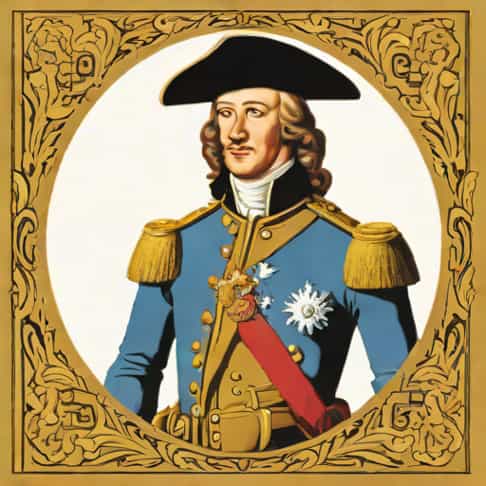
James Scott, 1st Duke of Monmouth, remains one of the most intriguing and controversial figures in British history. Born in 1649 as the illegitimate son of King Charles II and Lucy Walter, Monmouth’s life was marked by ambition, charm, and political intrigue. Despite his illegitimacy, he gained favor at court and rose to prominence, eventually being granted the title of Duke of Monmouth. His charisma, military skill, and royal connections allowed him to wield significant influence during a turbulent period in English history. However, his life also exemplifies the precarious nature of power, legitimacy, and rebellion in the 17th century, culminating in his involvement in a failed uprising against King James II, which ultimately led to his execution.
Early Life and Background
James Scott was born at Rotterdam in the Netherlands in 1649. His father, King Charles II, was in exile during the English Civil War, which placed James in a politically complicated environment from birth. His mother, Lucy Walter, was a Welshwoman of minor nobility, whose relationship with Charles II was both romantic and politically significant. Though illegitimate, James was recognized by his father to some extent, and he spent his early years navigating the complexities of royal favor, social expectations, and the limitations imposed by his birth status.
Childhood and Education
- Raised initially in the Netherlands during the king’s exile.
- Received education suitable for a nobleman, including languages, military training, and court etiquette.
- Developed early ambition and a keen awareness of court politics.
- Maintained connections with influential figures in both the Netherlands and England.
Monmouth’s upbringing combined privilege and limitation, giving him the skills needed to navigate a complex political landscape while reminding him constantly of the barriers posed by his illegitimacy.
Rise to Prominence
Following the Restoration of Charles II to the English throne in 1660, James Scott’s fortunes improved dramatically. He was granted several titles, including Duke of Monmouth, and became a prominent figure at the royal court. His charm and charisma earned him favor among nobles and the public alike, while his military competence secured him positions of command. Monmouth became a symbol of both hope and controversy, admired by many for his vigor and ambition, yet viewed with suspicion due to his illegitimate status and political aspirations.
Key Achievements
- Granted the title of Duke of Monmouth and other honors by Charles II.
- Appointed commander of English forces in several military campaigns, gaining recognition for his leadership.
- Acted as a patron of the arts and maintained a visible presence in court life.
- Developed a reputation as a Protestant champion, which would later influence political allegiances.
Monmouth’s rise illustrates how charisma, skill, and royal favor could compensate for questions of legitimacy in 17th-century England, though it also set the stage for future conflicts with established powers.
Political Ambitions and Controversy
Despite his successes, Monmouth’s position was always precarious due to his birth. As Charles II had no legitimate heirs for much of his reign, speculation about succession often focused on Monmouth. He became a focal point for Protestant hopes, particularly among those wary of the king’s Catholic brother, James II. Monmouth’s ambitions and the public support he garnered made him both a valuable ally and a potential threat in the eyes of the monarchy and political elites. His actions and intentions were frequently scrutinized, and he navigated a delicate balance between loyalty to his father and his own aspirations.
Challenges and Opposition
- Illegitimacy prevented him from being a legitimate heir to the throne.
- Political rivals at court viewed him with suspicion and sought to limit his influence.
- Religious tensions between Protestants and Catholics influenced his political support and opposition.
- His ambition and charisma sometimes led to overreach and miscalculation in court politics.
Monmouth’s life exemplifies the interplay of personal ambition, public perception, and political reality in the Restoration era, highlighting the risks of rising too quickly in a volatile environment.
The Monmouth Rebellion
The most famous episode of James Scott’s life was the Monmouth Rebellion of 1685. Following the death of Charles II, his brother James II, a Catholic, ascended the throne, provoking fear among Protestant factions. Monmouth, supported by a coalition of Protestant dissenters and commoners, led an armed rebellion to claim the crown. The campaign, however, was poorly organized, and Monmouth’s forces were decisively defeated at the Battle of Sedgemoor. The rebellion marked the culmination of Monmouth’s ambitions and demonstrated the difficulties of mounting a challenge against an established monarchy.
Key Events of the Rebellion
- Monmouth landed in the West Country of England with a small army of supporters.
- He sought to rally widespread support but struggled to gain momentum from local gentry and militias.
- The decisive Battle of Sedgemoor ended in defeat for Monmouth’s forces.
- Monmouth was captured shortly after the battle, marking the collapse of the rebellion.
The rebellion highlighted the limitations of charisma and popular support when faced with military and political realities, and it set the stage for Monmouth’s tragic end.
Execution and Legacy
James Scott, 1st Duke of Monmouth, was executed on 15 July 1685, just weeks after the failure of his rebellion. His death was a dramatic and symbolic event, reflecting both the ruthlessness of the monarchy and the peril inherent in challenging the established order. Despite his defeat, Monmouth’s legacy persisted in cultural memory as a figure of charm, ambition, and resistance. He was celebrated in literature and folklore, often romanticized as a heroic but ultimately doomed challenger to tyranny. His story continues to fascinate historians and enthusiasts interested in the dynamics of succession, rebellion, and Restoration politics.
Impact and Historical Significance
- Monmouth’s rebellion influenced subsequent policies regarding succession and security under James II.
- He became a symbol for Protestant resistance against perceived Catholic absolutism.
- Monmouth’s life inspired literary and historical accounts, cementing his place in cultural memory.
- His rise and fall exemplify the interplay between personal ambition, political opportunity, and historical circumstance.
Monmouth’s life remains a compelling study of how charisma, skill, and ambition intersect with historical forces, illustrating the complexities of leadership and legitimacy in 17th-century England.
James Scott, 1st Duke of Monmouth, is remembered as a charismatic, ambitious, and ultimately tragic figure in British history. Born illegitimate but rising to significant prominence, Monmouth navigated the opportunities and limitations of his time with skill and charm. His military and political endeavors, culminating in the Monmouth Rebellion, reflect both his aspirations and the inherent dangers of challenging established authority. Although defeated and executed, his life left a lasting impact on English history, symbolizing the tensions of succession, religion, and rebellion in the Restoration era. Monmouth’s story continues to captivate historians, writers, and the public, illustrating the enduring fascination with figures who dared to challenge the status quo and dream beyond the limits imposed upon them.