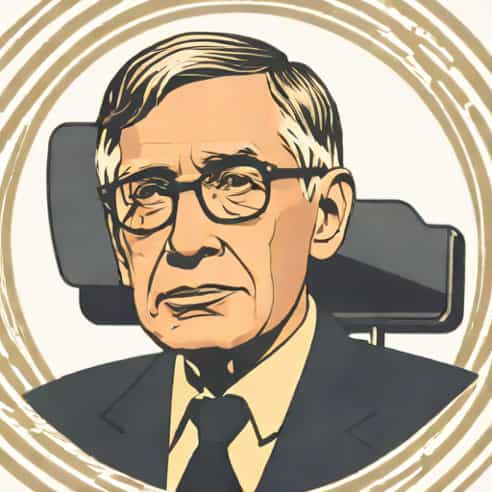
Stephen Hawking, one of the most renowned theoretical physicists of the modern era, captured the imagination of the world with his groundbreaking work on black holes, cosmology, and the nature of the universe. Beyond his scientific achievements, his personal beliefs have also sparked significant discussion and curiosity. Many have wondered whether Stephen Hawking was an atheist, given his scientific perspective and frequent commentary on the origins of the universe. Understanding Hawking’s views requires examining his statements on God, religion, and the relationship between science and faith, as well as considering how he reconciled his scientific work with questions about existence and creation.
Stephen Hawking’s Views on God
Stephen Hawking often addressed questions about God in interviews, books, and public lectures. While he showed deep respect for the philosophical implications of religion, his own statements suggested a naturalistic understanding of the universe. In his book The Grand Design, co-authored with Leonard Mlodinow, Hawking argued that the laws of physics could explain the creation of the universe without invoking a divine creator. He famously stated that because there is a law such as gravity, the universe can and will create itself from nothing, indicating that scientific principles, rather than divine intervention, underpin the cosmos.
Key Quotes on Religion
- I regard the brain as a computer which will stop working when its components fail. There is no heaven or afterlife for broken-down computers; that is a fairy story for people afraid of the dark.
- One can’t prove that God doesn’t exist, but science makes God unnecessary.
- It is not necessary to invoke God to light the blue touch paper and set the universe going.
These statements suggest that Hawking leaned toward atheism or at least a secular, scientific perspective. He focused on natural explanations for phenomena traditionally attributed to divine action, emphasizing evidence-based understanding over faith-based belief.
The Intersection of Science and Faith
Hawking acknowledged the philosophical and emotional aspects of religion but maintained that science offered more precise explanations. He explored questions about the origin of the universe, the Big Bang, and black holes, demonstrating that the universe could be understood through physical laws without requiring supernatural intervention. His approach reflects a broader scientific viewpoint, where empirical evidence guides conclusions about existence and reality.
Science as an Alternative to Religion
Hawking’s work often implied that science could fulfill the explanatory role traditionally held by religion. By studying the laws of physics, he sought to answer questions about why the universe exists, how it began, and what governs its behavior. His emphasis on natural laws suggested that the universe’s origins and evolution do not require a God, positioning him within a rationalist or atheistic framework.
Public Perception of Hawking’s Beliefs
Many media outlets and public discussions describe Stephen Hawking as an atheist, citing his frequent statements on religion and the non-necessity of God in cosmology. However, some sources indicate that Hawking’s views were nuanced. While he rejected traditional religious explanations, he occasionally acknowledged the human desire for meaning and the comfort that faith can provide. This distinction highlights that, although Hawking leaned toward atheism, he did not dismiss the cultural and personal significance of religious belief.
Misconceptions and Clarifications
- Hawking did not actively promote atheism in a doctrinal sense but rather explained his scientific perspective.
- He distinguished between spiritual comfort and empirical explanation, emphasizing that science addresses the latter.
- Some statements attributed to Hawking in popular media oversimplify his nuanced position on religion and God.
Hawking’s Philosophical Reflections
Stephen Hawking also engaged with philosophical questions about existence, consciousness, and the ultimate fate of the universe. He often explored concepts traditionally associated with theology, such as the meaning of life and the origins of creation, through a scientific lens. His reflections suggest a deep curiosity about fundamental questions while maintaining a commitment to rational inquiry and evidence-based reasoning.
Science as a Moral Compass
Although not religious, Hawking believed in the importance of ethics, responsibility, and global stewardship. He often discussed the potential consequences of scientific advancements, space exploration, and artificial intelligence, demonstrating that moral consideration is compatible with a secular worldview. This approach illustrates that one can engage with existential questions and human values without invoking religious frameworks.
Impact of Hawking’s Beliefs on Society
Stephen Hawking’s public statements on God and atheism influenced debates on science, religion, and education. His willingness to speak openly about his beliefs encouraged critical thinking and dialogue among scientists, educators, and the general public. By emphasizing evidence and natural law, Hawking contributed to a broader understanding of the universe that is accessible to both religious and non-religious audiences.
Educational Influence
- Promoted scientific literacy by demonstrating the explanatory power of physics and cosmology.
- Encouraged students and researchers to question assumptions and explore the universe empirically.
- Fostered discussions about the role of religion and science in explaining reality.
While Stephen Hawking did not formally align himself with any religious institution, his statements and writings suggest that he leaned toward atheism or at least a secular, scientific worldview. He emphasized that the laws of physics provide natural explanations for the universe’s origin and behavior, making a divine creator unnecessary from a scientific standpoint. However, he also acknowledged the philosophical and emotional dimensions of human belief, reflecting a nuanced perspective that respects the personal value of religion while prioritizing empirical evidence. Hawking’s legacy as a physicist, thinker, and communicator highlights the intersection of science, philosophy, and human curiosity, inspiring generations to explore the universe with rigor, wonder, and a commitment to truth.
In summary, Stephen Hawking’s beliefs can best be described as aligned with scientific naturalism and atheism, though he remained thoughtful and respectful toward religious perspectives. His life and work demonstrate that one can explore profound questions about existence, morality, and the cosmos without relying on traditional religious frameworks, while still engaging deeply with the human search for meaning and understanding.