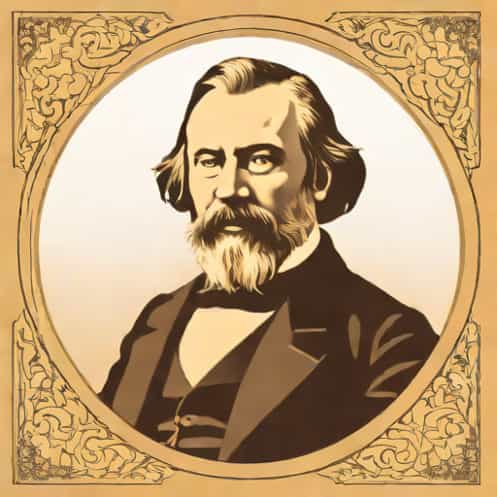
Johannes Brahms is often recognized as one of the great composers of the Romantic era, yet his music frequently exhibits the clarity, balance, and structural discipline associated with Classicism. While his contemporaries, such as Wagner and Liszt, explored radical forms and programmatic innovations, Brahms maintained a connection to the traditions of earlier composers like Beethoven, Haydn, and Mozart. This blending of Romantic expressiveness with Classical structure is one of the defining features of his work, and it is why many scholars describe Brahms as a classicist, despite his placement in the Romantic period.
The Influence of Classical Tradition on Brahms
Brahms’ deep respect for the Classical tradition is evident in multiple aspects of his compositional style. From a young age, he was immersed in the music of Bach, Beethoven, and Mozart. His studies of counterpoint, harmony, and form were grounded in these earlier composers, giving him a strong technical foundation. This Classical influence manifests in Brahms’ adherence to established forms such as sonata-allegro, rondo, and variation forms, even as he infused them with Romantic harmonic language and emotional depth.
Structural Discipline in Brahms’ Compositions
One hallmark of Brahms’ classicism is his structural discipline. Unlike some of his contemporaries, who often favored free-flowing, programmatic forms, Brahms meticulously constructed his symphonies, concertos, and chamber works with a sense of architectural precision. Each movement is carefully proportioned, thematic material is developed logically, and harmonic progressions follow coherent patterns. This disciplined approach reflects the influence of Classical composers, who valued form and balance as essential components of musical expression.
The Role of Counterpoint and Motivic Development
Counterpoint, a technique perfected by Bach and central to Classical composition, plays a crucial role in Brahms’ music. He often layers multiple voices in intricate interplay, creating a rich tapestry of sound that is both complex and clear. Brahms was particularly skilled in developing small motifs throughout a piece, a technique reminiscent of Beethoven’s approach. By manipulating motives through inversion, augmentation, and fragmentation, he achieved unity and coherence, qualities prized by Classical composers. This emphasis on motivic development highlights Brahms’ commitment to classicist principles within a Romantic expressive framework.
Harmony and Tonal Language
Although Brahms embraced the expanded harmonic palette of the Romantic era, his use of harmony remains grounded in traditional tonal principles. He often explored complex chromaticism and modulation, yet these elements are carefully controlled and serve the structural integrity of the piece. Unlike the more experimental harmonies of Wagner or Liszt, Brahms’ harmonies enhance clarity and balance, reflecting the influence of Classical masters who prioritized tonal relationships and formal cohesion. This careful balance of expressive freedom and structural control is a key reason Brahms is considered a classicist.
Orchestration and Instrumentation
Brahms’ approach to orchestration also reflects Classical sensibilities. While he expanded the Romantic orchestra and used its capabilities to great effect, he maintained transparency and clarity in texture. Each instrument has a defined role, and the orchestral sound is carefully balanced. This approach mirrors the practices of Haydn and Mozart, who emphasized clarity and proportion in orchestral writing. Brahms’ symphonies, in particular, demonstrate this classicist approach they are powerful and expressive but never chaotic or overly dense.
Examples of Brahms’ Classicist Tendencies
Several of Brahms’ works exemplify his classicist tendencies
- Symphony No. 1 in C MinorBrahms’ first symphony demonstrates meticulous sonata form structures, thematic development, and motivic cohesion reminiscent of Beethoven’s symphonic style.
- Piano Concerto No. 2 in B-flat MajorThe concerto combines Romantic virtuosity with classical clarity of structure and balance between soloist and orchestra.
- Variations on a Theme by HaydnThis work directly engages with Classical tradition, using a theme from Haydn and exploring it through sophisticated variation techniques.
These examples highlight Brahms’ ability to integrate classical principles within a Romantic idiom, producing music that is both emotionally compelling and structurally sound.
Brahms and Emotional Restraint
Another aspect of Brahms’ classicism is his emotional restraint. While Romantic composers often emphasized extreme expression and dramatic contrasts, Brahms preferred measured, controlled emotional content. His music conveys depth and passion, but it does so through subtle development, thematic transformation, and careful pacing. This restraint reflects a classicist approach, emphasizing balance and proportion over unbridled emotional display. Brahms’ ability to express profound emotion without sacrificing structural clarity is a defining feature of his artistry.
Legacy and Influence
Brahms’ classicist tendencies have had a lasting impact on music history. He demonstrated that Romantic expressiveness could coexist with Classical principles, creating works that are timeless in both technical mastery and emotional depth. Later composers, including those in the 20th century, studied Brahms for his skillful integration of form, harmony, and motivic development. His example shows that adherence to classical ideals does not limit creativity but rather provides a framework within which innovation can flourish.
In summary, Johannes Brahms embodies classicism through his respect for traditional forms, structural discipline, use of counterpoint and motivic development, controlled harmonic language, transparent orchestration, and measured emotional expression. Even as a Romantic composer, his music maintains a strong connection to the principles of Beethoven, Haydn, and Mozart. Brahms demonstrates that classicist ideals-balance, coherence, and structural clarity-can coexist with Romantic expressiveness, making his work a unique bridge between two eras. By studying Brahms, we gain insight into how the principles of Classicism can inform and enrich the expressive potential of music, resulting in compositions that are both emotionally resonant and structurally masterful.