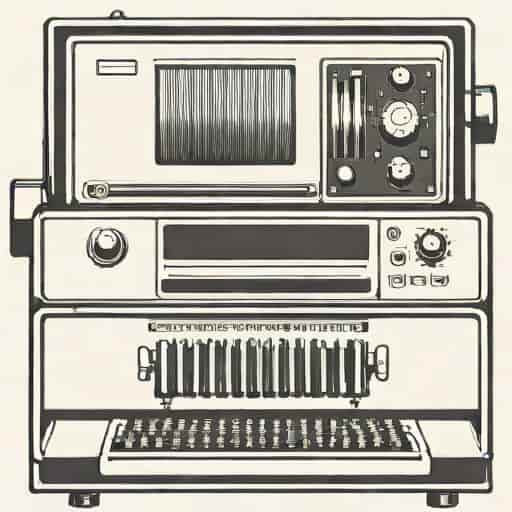
The IBM Hollerith machine is a landmark in the history of computing, representing one of the earliest examples of automated data processing. Named after Herman Hollerith, the inventor who revolutionized the way large amounts of data could be analyzed and tabulated, this machine laid the foundation for modern computing systems. Originally developed for use in the 1890 United States Census, the Hollerith machine significantly reduced the time and labor required to process census data. Its invention marked a turning point in both government and business data handling, demonstrating the potential of mechanized computation long before electronic computers became mainstream. Understanding the IBM Hollerith machine provides insight into the evolution of technology, the growth of IBM as a company, and the early innovations that shaped modern data management.
Origins and Invention of the Hollerith Machine
The Hollerith machine was invented by Herman Hollerith in the late 19th century as a solution to the growing challenge of processing census data efficiently. Before the invention, census data was manually tabulated, a process that could take years to complete. Hollerith’s approach involved encoding information onto punched cards, which could then be read and counted by electromechanical machines. Each hole in the punched card represented specific data, such as age, gender, or occupation. This system allowed for rapid sorting and calculation, reducing processing time and minimizing human error. Hollerith’s innovation was first used in the 1890 U.S. Census, cutting data tabulation from eight years to just one, an unprecedented achievement at the time.
Hollerith’s Punched Card System
The core innovation of the Hollerith machine was its punched card system. Punched cards served as a physical medium to store data in a format that machines could read automatically. Key aspects of this system included
- Predefined positions on the card corresponding to specific categories of information.
- The use of electromechanical readers to detect holes and record counts.
- Compatibility with sorting and tabulating machines for large-scale data processing.
This approach allowed large datasets to be processed with unprecedented speed and accuracy. Businesses and government agencies soon recognized the potential of this system for applications beyond census work, including accounting, payroll, and inventory management.
Development of IBM and Commercialization
Hollerith’s invention eventually became the foundation for the company that would evolve into IBM. In 1896, Hollerith founded the Tabulating Machine Company to produce and sell his machines for commercial and governmental use. Over time, the company merged with other entities and, in 1924, was renamed International Business Machines (IBM). IBM continued to refine Hollerith’s designs, expanding their use in business, finance, and government operations. The Hollerith machine played a critical role in establishing IBM as a leader in data processing and set the stage for later innovations in computing.
Applications Beyond the Census
While the initial application of the Hollerith machine was census data tabulation, its functionality quickly found broader uses. Organizations used the machine for
- Payroll management, including calculation of wages and deductions.
- Inventory tracking and management for large manufacturing businesses.
- Statistical analysis for research institutions and government agencies.
- Financial reporting and bookkeeping in banks and insurance companies.
These applications demonstrated the versatility and efficiency of the Hollerith machine, showing that automated data processing could improve productivity across a wide range of industries.
Technical Features of the IBM Hollerith Machine
The IBM Hollerith machine was an electromechanical device that combined precision engineering with innovative design. Some of its technical features included
- An electromechanical card reader capable of detecting punched holes and converting them into counts.
- Sorting mechanisms to organize cards according to specific data categories.
- Tabulators that could add and summarize information automatically.
- Interchangeable components to customize the machine for specific applications, such as different data formats or reporting needs.
The integration of these features made the Hollerith machine a sophisticated tool for its time, capable of processing vast amounts of data quickly and accurately compared to manual methods.
Impact on Data Processing
The introduction of the Hollerith machine transformed how organizations approached data management. Key impacts included
- Significant reduction in time required to process large datasets.
- Improved accuracy by minimizing human error in calculations.
- Standardization of data collection and processing methods across organizations.
- Inspiration for subsequent developments in mechanical and electronic computing devices.
By automating repetitive and time-consuming tasks, the Hollerith machine allowed organizations to focus on analysis and decision-making rather than manual tabulation.
Legacy and Influence on Modern Computing
The IBM Hollerith machine is widely recognized as a precursor to modern computers. Its design principles, including the use of binary data representation and mechanical automation, influenced the development of later computing technologies. Key elements of its legacy include
Punched Cards in Computing
Punched cards remained a dominant data storage and input method for decades, used in mainframe computers throughout the mid-20th century. The concepts introduced by Hollerith-encoding data onto a physical medium and reading it mechanically-formed the basis for early programming and data processing systems, eventually evolving into electronic input methods.
IBM’s Growth and Technological Innovation
The success of Hollerith’s machine provided the foundation for IBM’s growth into a global technology leader. IBM continued to innovate, developing more advanced tabulators, accounting machines, and eventually electronic computers. The company’s focus on data processing, efficiency, and reliable hardware can be traced directly to the principles established by the Hollerith machine.
Historical Significance
The IBM Hollerith machine is more than just an old data processing tool; it represents a pivotal moment in the history of technology. It exemplifies how innovation can transform societal functions, making processes faster, more reliable, and more scalable. From government census operations to business accounting, the machine’s impact was felt across multiple sectors. Its invention also highlights the role of entrepreneurship, as Hollerith’s vision and company-building efforts directly led to one of the most influential technology corporations in history.
Preservation and Recognition
Today, Hollerith machines are preserved in museums and technology archives, celebrated for their role in computing history. They serve as tangible reminders of the ingenuity and mechanical engineering prowess of the late 19th and early 20th centuries. Scholars and enthusiasts study these machines to understand the evolution of data processing and the foundation they provided for modern computing systems.
The IBM Hollerith machine stands as a milestone in the development of computing technology. By introducing mechanized data processing and punched card systems, Herman Hollerith revolutionized the way large-scale information was managed. Its applications in census tabulation, business accounting, and statistical analysis demonstrated its versatility and efficiency. Beyond its immediate utility, the machine’s influence extended to the growth of IBM and the broader field of computing, paving the way for electronic computers and modern information technology. Understanding the IBM Hollerith machine allows us to appreciate the historical roots of data processing and the innovative spirit that continues to drive technological progress today.