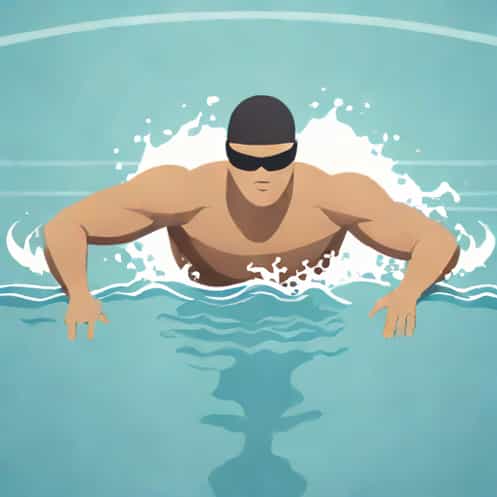
The 50-meter breaststroke is one of the most exciting and challenging events in competitive swimming. It requires a combination of explosive power, precise technique, and impeccable timing. Swimmers often wonder what constitutes a good 50m breaststroke time, as performance can vary greatly depending on age, experience, and level of competition. Understanding benchmarks for this short-distance race, along with the techniques and training strategies that can help improve performance, is crucial for both amateur and professional swimmers. Achieving a competitive time in the 50m breaststroke can boost confidence and open doors to higher-level competitions.
Understanding the 50m Breaststroke
The 50m breaststroke is a sprint event that focuses on speed and efficiency over a single length of a standard Olympic-sized pool. Unlike longer races, there is little room for error; every stroke, turn, and start can significantly impact the swimmer’s overall time. Breaststroke is unique because it combines symmetrical arm and leg movements with precise timing of the glide phase, making technique as important as raw strength.
Key Factors That Affect Performance
- Start and Reaction TimeA strong push off the blocks and a fast reaction time can shave crucial tenths of a second off a swimmer’s time.
- Stroke TechniqueEfficient arm pulls, proper kick timing, and minimal drag are essential for maximizing speed.
- Underwater PhaseThe underwater pullout and dolphin kick, allowed in breaststroke, can make a significant difference in sprint performance.
- Physical ConditioningStrength, power, and cardiovascular fitness all contribute to a swimmer’s ability to maintain explosive speed throughout the 50 meters.
- Mental FocusThe ability to maintain concentration and execute perfect technique under pressure is crucial in such a short race.
Benchmarks for a Good 50m Breaststroke Time
A good 50m breaststroke time can vary widely depending on the swimmer’s age, gender, and level of competition. Elite male swimmers often complete the distance in under 27 seconds, while elite female swimmers aim for sub-30-second times. For competitive age-group swimmers, times may range from 28 35 seconds for males and 32 38 seconds for females. Beginners and recreational swimmers may record times above 40 seconds, which can still be a solid achievement depending on experience and training.
Examples of Competitive Times
- World-class male swimmers 25 27 seconds
- World-class female swimmers 29 30 seconds
- High school male swimmers 28 33 seconds
- High school female swimmers 32 37 seconds
- Beginner or recreational swimmers 40+ seconds
It is important to note that what counts as a good time is relative to the swimmer’s goals, age group, and competitive level. Even improving by a few tenths of a second in the 50m breaststroke can be considered a significant achievement due to the short distance of the race.
Techniques to Improve 50m Breaststroke Performance
Improving a 50m breaststroke time requires a combination of technical refinement, physical conditioning, and mental preparation. Swimmers should focus on the following areas to maximize performance
Start and Dive
The start is critical in a sprint event. Swimmers should practice explosive starts from the blocks, ensuring a streamlined entry into the water with minimal drag. A strong underwater phase with a well-executed pullout can provide a competitive edge.
Stroke Mechanics
Optimizing the breaststroke technique involves synchronizing the arm pull with the leg kick and glide phase. Reducing unnecessary movements and maintaining a tight, streamlined position allows swimmers to conserve energy and maintain speed. Drills focusing on stroke efficiency can help refine these mechanics.
Kicking Power
The breaststroke kick is a major source of propulsion in the 50m sprint. Swimmers should develop strong leg muscles through targeted dryland training and in-pool kick sets. A quick, forceful kick combined with precise timing can significantly improve sprint times.
Turn and Finish
Although the 50m breaststroke typically does not require turns in a long-course pool, practicing finishes is essential. Swimmers must extend fully and touch the wall with optimal timing to avoid losing fractions of a second. A strong finish can be the difference between first and second place in such a short race.
Training Strategies for Sprint Success
Training for the 50m breaststroke involves a mix of sprint sets, technique drills, and strength conditioning. Swimmers often include high-intensity interval training (HIIT) to improve explosive power and anaerobic capacity. Dryland exercises such as squats, lunges, and core workouts strengthen muscles used in the breaststroke kick and arm pull. Flexibility exercises also play a crucial role, as proper range of motion in the hips and shoulders can enhance stroke efficiency.
Sample Training Focus
- Sprint sets 25 50 meter repetitions at maximum effort with short rest intervals
- Technique drills Arm pull, kick, and glide exercises for efficiency
- Strength training Leg, core, and upper body exercises for power
- Endurance training Shorter aerobic sets to maintain speed under fatigue
- Mental training Visualization and race strategy practice to improve focus
Mental Preparation for the 50m Breaststroke
In addition to physical training, mental preparation is critical for achieving a good 50m breaststroke time. Swimmers must develop the ability to remain calm under pressure, react quickly to the start signal, and maintain focus throughout the race. Visualization techniques, positive self-talk, and goal-setting strategies can enhance mental readiness and improve overall performance.
Race Day Tips
- Focus on a strong, explosive start to gain an early advantage.
- Maintain tight and efficient stroke mechanics throughout the sprint.
- Stay relaxed in the water to reduce drag and conserve energy.
- Use mental cues to sustain maximum effort and concentration.
- Finish aggressively, extending fully to touch the wall with precision.
Determining a good 50m breaststroke time depends on factors such as age, gender, and competitive level, but understanding benchmarks, techniques, and training strategies is key for improvement. Sprinting in the 50m breaststroke demands explosive power, technical precision, and mental focus. By refining stroke mechanics, enhancing kicking strength, practicing starts and finishes, and developing mental resilience, swimmers can achieve impressive times and compete effectively at any level. Continuous training, dedication, and attention to detail are essential for swimmers aiming to excel in this fast-paced and highly competitive event.