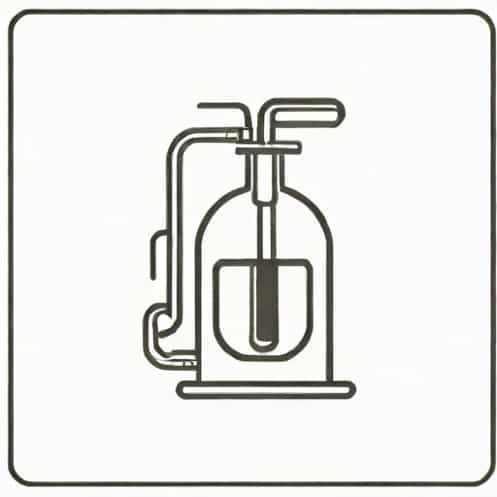
Gas to liquid condensation is a fundamental physical process that occurs when a substance in its gaseous state transitions into a liquid state due to changes in temperature or pressure. This process is commonly observed in everyday life, such as the formation of dew on grass in the morning or the droplets that form on the outside of a cold beverage. Understanding gas to liquid condensation is not only important in natural phenomena but also plays a crucial role in various industrial applications, including refrigeration, chemical processing, and environmental management. By studying the principles behind condensation, scientists and engineers can optimize systems for energy efficiency, safety, and sustainability.
The Science Behind Gas to Liquid Condensation
Condensation occurs when gas molecules lose enough kinetic energy to overcome the forces that keep them apart, allowing them to cluster together and form a liquid. This typically happens when the gas is cooled or compressed. Temperature and pressure are the two primary factors influencing condensation, and they are directly related through the gas laws. The process is governed by thermodynamic principles, particularly those involving energy transfer and phase changes.
Temperature and Kinetic Energy
As the temperature of a gas decreases, the kinetic energy of its molecules also decreases. When the kinetic energy drops below a certain threshold, the intermolecular forces, such as Van der Waals forces or hydrogen bonding, become strong enough to pull the molecules together. This results in the transition from gas to liquid. For instance, when water vapor cools in the atmosphere, it condenses into tiny droplets that form clouds or precipitation.
Pressure and Condensation
Pressure also plays a significant role in gas to liquid condensation. Increasing the pressure on a gas reduces the space between molecules, making it easier for intermolecular forces to bring them together into a liquid state. This principle is applied in industrial gas liquefaction processes, where gases like nitrogen, oxygen, and natural gas are compressed and cooled to form liquids for storage and transport.
Common Examples of Gas to Liquid Condensation
Condensation is a phenomenon that occurs in both natural and man-made systems. Some common examples include
- Morning DewWhen the temperature of grass drops overnight, water vapor in the air condenses into tiny droplets on the surface.
- Cloud FormationWater vapor in the atmosphere condenses into liquid droplets to form clouds, which can eventually lead to rain.
- FogWhen warm, humid air cools near the ground, gas-to-liquid condensation produces visible fog.
- Cold BeveragesThe water droplets that form on a glass of ice-cold drink are a result of moisture in the surrounding air condensing on the cooler surface.
Industrial Applications of Gas to Liquid Condensation
Gas to liquid condensation is utilized in a wide range of industrial processes. Understanding and controlling condensation can enhance efficiency, safety, and cost-effectiveness. Some notable applications include
Refrigeration and Air Conditioning
Refrigeration systems rely on the condensation of refrigerant gases to remove heat from a space. In an air conditioning system, the refrigerant absorbs heat as it evaporates in the indoor coil, then releases that heat as it condenses in the outdoor coil. This cycle of evaporation and condensation is crucial for cooling buildings and preserving perishable goods.
Chemical Processing
Many chemical processes involve condensing gases into liquids for separation, purification, or reaction purposes. For example, distillation uses controlled condensation to separate components of a mixture based on their boiling points. Condensation is also vital in the production of liquid fuels from gaseous hydrocarbons in processes such as gas-to-liquid (GTL) technology.
Environmental Control
Gas to liquid condensation can help control environmental pollution by capturing harmful gases and converting them into liquids for safe disposal or reuse. Scrubbers, for instance, use condensation principles to remove acidic gases or particulate matter from industrial emissions, reducing air pollution and protecting public health.
Factors Affecting Gas to Liquid Condensation
Several factors influence the rate and efficiency of condensation. Understanding these factors is essential for both natural observation and industrial application
- Temperature DifferenceThe greater the difference between the gas temperature and the condensation surface, the faster the condensation occurs.
- HumidityHigh humidity increases the likelihood of condensation, as more water vapor is present to transition into liquid form.
- Surface AreaLarger surfaces provide more space for gas molecules to condense, accelerating the process.
- PressureHigher pressure can facilitate condensation by bringing gas molecules closer together.
Gas to liquid condensation is a vital physical process with significant implications in nature and industry. By understanding how temperature, pressure, and molecular interactions influence the transition from gas to liquid, we can predict, control, and optimize condensation in various contexts. From the formation of morning dew to industrial gas liquefaction, condensation plays an essential role in energy management, environmental protection, and technological advancement. Studying and applying the principles of gas to liquid condensation allows scientists and engineers to develop efficient systems, reduce waste, and enhance sustainability, making it a critical concept in both scientific research and practical applications.