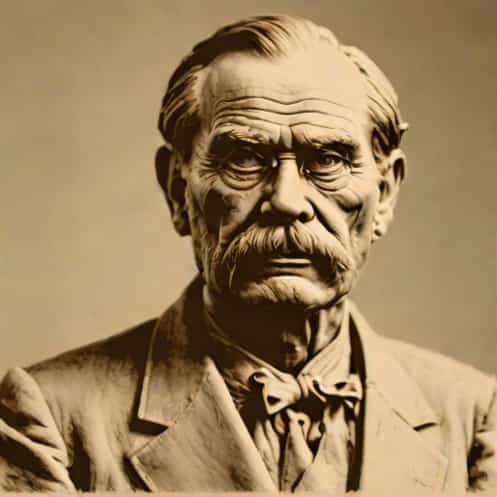
Gutzon Borglum is a name that resonates in the world of American art and history, primarily due to his role as the sculptor of Mount Rushmore. His life and work reflect a combination of artistic vision, technical skill, and a deep engagement with American identity. Beyond his most famous project, Borglum’s contributions to sculpture and public art reveal a career full of ambition, controversy, and lasting influence. Exploring facts about Gutzon Borglum helps illuminate the complexities of his legacy and the cultural context in which he created some of the nation’s most iconic monuments.
Early Life and Background
Gutzon Borglum was born on March 25, 1867, in Idaho Territory, which later became part of the state of Idaho. He grew up in a family of Danish immigrants, and his father, a photographer and editor, encouraged creativity and artistic expression. From an early age, Borglum showed a talent for drawing and modeling, skills that would form the foundation of his later work in sculpture. His upbringing in the American West exposed him to diverse landscapes and cultures, experiences that influenced his appreciation for monumental and public art.
Education and Artistic Development
Borglum’s formal art education began in the United States but soon expanded to Europe. He studied at the San Francisco School of Design and later traveled to Paris to attend the École des Beaux-Arts. While in Europe, he absorbed classical techniques, studied Renaissance art, and honed his skills in large-scale sculpture. These experiences shaped his distinctive style, blending traditional methods with a uniquely American vision.
Career and Major Works
Gutzon Borglum’s career spanned decades and included a wide range of projects, from statues of historical figures to large-scale memorials. While Mount Rushmore is his most famous work, many other contributions to public art helped define his reputation as one of America’s leading sculptors.
Stone Mountain and Early Controversies
Before Mount Rushmore, Borglum worked on the Confederate Memorial at Stone Mountain, Georgia. This project was highly controversial because it commemorated the Confederacy, a symbol associated with slavery and racial oppression. Borglum’s involvement in Stone Mountain ended due to disagreements with the project’s organizers, but the experience helped him develop techniques for carving massive stone surfaces, which he later applied at Mount Rushmore.
Mount Rushmore National Memorial
The Mount Rushmore project, begun in 1927 and largely completed in the 1940s, became Borglum’s signature achievement. The memorial features the faces of four U.S. presidents George Washington, Thomas Jefferson, Theodore Roosevelt, and Abraham Lincoln. Borglum’s vision was to create a monument that celebrated the nation’s founding principles and expansion while inspiring patriotism and historical reflection. The work involved immense technical challenges, including carving into granite cliffs and coordinating a large team of workers. Borglum’s leadership, artistic skill, and persistence were critical to the project’s success.
Artistic Style and Influence
Understanding the facts about Gutzon Borglum includes examining his artistic style. He combined realism with monumental scale, aiming to convey both the likeness and the symbolic power of his subjects. His works often emphasized strength, leadership, and heroism, reflecting his interest in history and national identity.
Sculpture Techniques
Borglum was known for his innovative techniques in carving stone. He used dynamite for large sections of granite while relying on finer tools for detail work. This combination of methods allowed him to work efficiently on massive projects without sacrificing artistic quality. His approach influenced subsequent generations of sculptors who faced similar challenges with large-scale public art.
Influence on American Public Art
Borglum’s vision extended beyond individual projects. He believed that sculpture should be accessible to the public and should inspire national pride. His emphasis on large-scale monuments contributed to the popularity of public memorials in the United States during the early 20th century. Artists and architects who followed his work drew inspiration from his ability to merge artistic skill with patriotic themes.
Personal Life and Legacy
Gutzon Borglum’s personal life was complex, reflecting both his ambition and his strong personality. He married and had children, and his family life influenced some of his later projects. His son, Lincoln Borglum, played a significant role in completing Mount Rushmore after Gutzon’s death in 1941. Borglum’s determination and vision left a lasting impact on American culture and public art.
Recognition and Honors
Throughout his career, Borglum received recognition for his contributions to sculpture and public monuments. He was celebrated for his technical mastery and his ability to convey historical significance through art. Mount Rushmore, in particular, solidified his place in American history as one of the most influential sculptors of his time.
Controversy and Criticism
Despite his achievements, Borglum’s legacy is not without controversy. His involvement in projects such as Stone Mountain and his associations with certain political movements have led to debates about how to interpret his work. Critics argue that some of his monuments reflect exclusionary or problematic views, while supporters emphasize his artistic innovation and technical skill.
Key Facts About Gutzon Borglum
- Born on March 25, 1867, in Idaho Territory to Danish immigrant parents.
- Studied at the École des Beaux-Arts in Paris, absorbing classical and Renaissance art techniques.
- Worked on Stone Mountain before creating Mount Rushmore, developing skills in large-scale stone carving.
- Designed Mount Rushmore to honor four U.S. presidents and symbolize American ideals.
- Used innovative carving techniques, including dynamite for large sections and finer tools for details.
- Believed in public art as a means to inspire patriotism and educate citizens about history.
- Passed away on March 6, 1941, before Mount Rushmore was fully completed; his son Lincoln Borglum helped finish the project.
Enduring Impact
Gutzon Borglum’s contributions continue to influence American art and public monuments. Mount Rushmore remains one of the most visited and recognized landmarks in the United States, symbolizing the nation’s history and artistic achievement. His work also serves as a reminder of the challenges and responsibilities involved in creating public memorials that reflect national identity.
Lessons from Borglum’s Life
Examining the facts about Gutzon Borglum reveals lessons about ambition, creativity, and the intersection of art and history. His dedication to monumental sculpture demonstrates the importance of vision, technical skill, and perseverance. At the same time, the controversies surrounding some of his projects encourage reflection on the broader social and political implications of public art.
Gutzon Borglum remains a pivotal figure in American art history, whose life and work offer insights into both the possibilities and complexities of large-scale sculpture. From his early years in Idaho to the monumental achievements at Mount Rushmore, Borglum’s legacy continues to inspire, provoke discussion, and shape the way Americans understand art, history, and national identity.