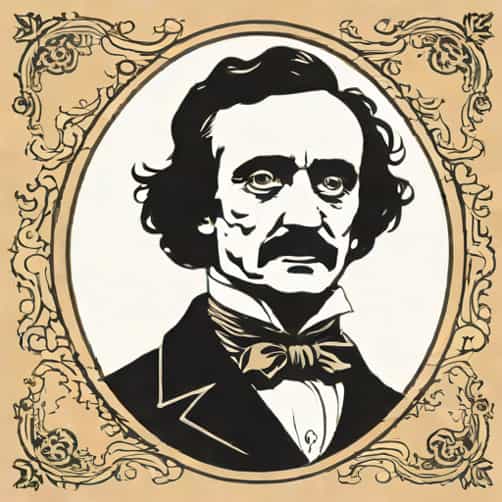
When people speak of the beginnings of detective fiction, one name that consistently stands out is Edgar Allan Poe. Among his most influential works, The Murders in the Rue Morgue remains a cornerstone in the evolution of mystery literature. This story, first published in 1841, not only entertained readers of its time but also introduced an entirely new literary genre – the detective story. Through his meticulous construction of character, logic, and suspense, Poe set the foundation for future writers such as Arthur Conan Doyle and Agatha Christie. The tale of a brutal double murder in a Parisian apartment continues to fascinate readers and scholars for its psychological depth and inventive narrative.
The Birth of Modern Detective Fiction
The Murders in the Rue Morgue is widely regarded as the first modern detective story. Before Poe, crime narratives existed, but none combined intellectual analysis, psychological insight, and deductive reasoning in the way this story did. The protagonist, C. Auguste Dupin, uses logic and observation to solve a seemingly impossible crime – the vicious murder of two women in a locked room. His approach to problem-solving, which he calls ratiocination, represents a methodical and rational way of uncovering truth from chaos. This was a revolutionary literary concept, influencing how mystery and crime would be written for centuries to come.
The Character of C. Auguste Dupin
Dupin is a prototype for the modern detective – calm, intellectual, and observant. He relies on reasoning rather than brute force, a characteristic later reflected in Sherlock Holmes and other literary investigators. Poe’s creation of Dupin was inspired by his fascination with logic and human psychology. Dupin’s analytical abilities allow him to place himself inside the mind of both the criminal and the victim, which gives him an edge over traditional law enforcement. This psychological method distinguishes Poe’s detective stories from others of his time.
The Plot and Setting of The Murders in the Rue Morgue
The story begins with a philosophical reflection on analytical minds and quickly transitions into the shocking events that occur on the Rue Morgue. Residents of Paris are horrified by reports of a gruesome double homicide – Madame L’Espanaye and her daughter have been found brutally murdered in their apartment. The door was locked from the inside, and witnesses heard terrifying screams in multiple languages. With no clear suspect and no apparent motive, the Parisian police are baffled. Dupin, intrigued by the mystery, offers to investigate on his own terms.
The Investigation Process
Dupin’s investigation showcases his brilliance in observation and reasoning. He visits the crime scene, examines evidence, and listens to witness testimonies. Instead of focusing on superficial details, Dupin analyzes inconsistencies. He notices that the voices heard by witnesses do not belong to a single language, and the strength needed to commit the murders exceeds that of any ordinary person. Through deduction, Dupin concludes that the murderer is not human but an orangutan that escaped from its owner – a shocking revelation that solves the puzzle.
Symbolism and Themes in Poe’s Work
Beyond its surface as a detective story, The Murders in the Rue Morgue explores several profound themes. One of the most significant is the contrast between logic and chaos. Dupin represents the power of human reason to bring order to confusion. His calm and methodical demeanor stands in opposition to the violent and animalistic behavior of the orangutan, symbolizing primal instinct. Poe seems to suggest that within the human condition lies both intellect and savagery – two forces in constant tension.
Another key theme is the nature of perception. Poe invites readers to question how easily appearances can deceive. The police and witnesses all draw conclusions based on emotion and assumption, while Dupin succeeds because he observes without bias. This emphasis on analytical observation over intuition reflects Poe’s fascination with human cognition and the process of thought itself.
The Role of the Narrator
As with many of Poe’s works, The Murders in the Rue Morgue is told from the perspective of an unnamed narrator who is a close friend of Dupin. His purpose is not merely to recount events but to serve as a contrast to Dupin’s brilliance. Through his limited understanding, readers experience the mystery from an everyman’s point of view. This narrative technique allows Poe to reveal the complexity of Dupin’s reasoning gradually, creating suspense and admiration for his intellect.
Impact on Literature and Culture
Edgar Allan Poe’s The Murders in the Rue Morgue was groundbreaking not just for its narrative but for the genre it inspired. The concept of a detective solving a mystery through reason, supported by a loyal narrator, became a formula later perfected by Arthur Conan Doyle in his Sherlock Holmes stories. The influence extends beyond literature into film, television, and even modern crime-solving media. Dupin’s analytical approach can be seen in every fictional detective who follows clues, analyzes evidence, and reaches conclusions that others overlook.
The Legacy of Dupin and Poe
Poe wrote two more stories featuring C. Auguste Dupin The Mystery of Marie Rogêt and The Purloined Letter. Each continues the theme of logical deduction and psychological insight. Dupin’s character is often cited as the intellectual ancestor of Holmes, Hercule Poirot, and countless other fictional detectives. Even the relationship between Dupin and his narrator inspired the dynamic between Holmes and Watson. Through these innovations, Poe’s work became an essential part of literary history and the foundation of a genre that continues to thrive.
Psychological Depth and Human Nature
Poe’s genius lies not only in crafting an engaging mystery but also in exploring the human mind. The story delves into fear, curiosity, and the desire to understand the unknown. The violent crime at the center of the tale reflects humanity’s darker impulses, while Dupin’s rationality represents the pursuit of knowledge and truth. Poe’s fascination with madness, intellect, and the boundaries of sanity adds layers of meaning that transcend the plot. This psychological dimension is what makes The Murders in the Rue Morgue timeless and continually relevant.
The Balance Between Realism and Imagination
Although the story features a sensational and exotic twist – the orangutan as the culprit – Poe maintains a strong sense of realism through logical reasoning. Every bizarre element is explained scientifically, giving readers a sense of satisfaction and closure. The combination of gothic horror and rational deduction became Poe’s trademark style, one that set him apart from his contemporaries. His ability to blend imagination with intellect remains one of his greatest achievements.
The Enduring Power of The Murders in the Rue Morgue
Nearly two centuries after its publication, The Murders in the Rue Morgue continues to be celebrated as a literary milestone. Edgar Allan Poe’s creation of a detective who uses pure reason to solve an impossible crime changed storytelling forever. The tale is more than just a mystery; it is a study of human intelligence, perception, and emotion. Its structure, logic, and suspense have inspired generations of writers and readers alike. In this story, Poe not only gave birth to detective fiction but also demonstrated the boundless possibilities of the human mind – a true masterpiece of literary innovation that continues to define the genre today.