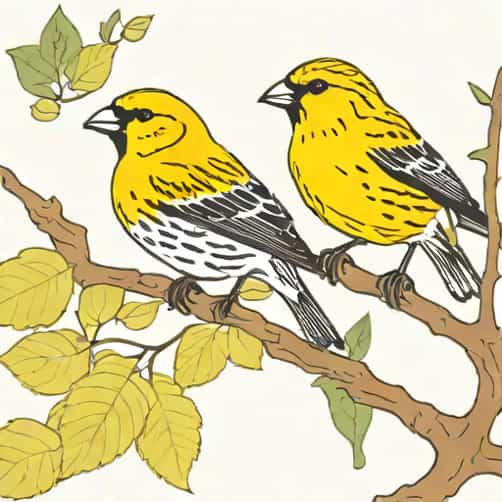
Bird enthusiasts often come across two small yet captivating species in the European countryside – the Siskin and the Yellowhammer. At first glance, these birds may appear somewhat similar due to their yellow tones and lively behavior, but they belong to different families and exhibit unique physical, behavioral, and ecological characteristics. Understanding the difference between Siskin and Yellowhammer not only enhances birdwatching experiences but also deepens one’s appreciation for the biodiversity of European avifauna.
Overview of the Siskin and the Yellowhammer
The Siskin, scientifically known asSpinus spinus, is a small finch species belonging to the Fringillidae family. It is often found in coniferous and mixed forests across Europe and Asia. The bird is known for its vibrant yellow and black plumage, active feeding habits, and delightful trilling songs.
The Yellowhammer, orEmberiza citrinella, belongs to the bunting family, Emberizidae. This species is common in open farmland, hedgerows, and grassy countryside areas. It is easily recognized by its bright yellow head and brown streaked back, along with its melodic and repetitive song that many describe as a little bit of bread and no cheese.
Physical Appearance and Identification
The Siskin’s Distinct Features
The Siskin is a small, agile bird, measuring around 11 to 12 centimeters in length. Males are characterized by a striking combination of yellow and green plumage, with black caps and black wings adorned with yellow bars. Females, on the other hand, are duller, featuring more greenish-brown shades and less prominent markings. The Siskin’s bill is short and pointed, perfectly adapted for extracting seeds from cones.
The Yellowhammer’s Appearance
The Yellowhammer is slightly larger, about 15 to 16 centimeters long. It displays a more vibrant yellow hue overall, especially on the male’s head, chest, and underparts. Its back and wings are brown with dark streaks, providing camouflage among grass and shrubs. Females and juveniles appear duller, with less yellow and more streaked plumage. The Yellowhammer’s bill is conical and strong, ideal for cracking seeds rather than extracting them.
Key Differences in Physical Traits
- The Siskin has a smaller, slimmer body compared to the Yellowhammer.
- Male Siskins feature a black cap and chin, while Yellowhammers lack black markings on the head.
- Yellowhammers have a brighter, golden-yellow coloration, whereas Siskins show more greenish-yellow tones.
- The Siskin’s wings display distinctive yellow bars, while the Yellowhammer’s wings are more uniformly brown and streaked.
Habitat and Distribution
Another major difference between Siskin and Yellowhammer lies in their preferred habitats and range. Although both are native to Europe, they occupy different ecological niches.
Siskin Habitat
Siskins are closely associated with forests, especially coniferous woodlands rich in spruce, pine, or alder trees. They are also common in parks and gardens during the winter months when food sources in forests are scarce. Their distribution extends across most of Europe, including Scandinavia and parts of Asia, with many migrating southward during colder seasons.
Yellowhammer Habitat
In contrast, Yellowhammers thrive in open areas such as farmland, meadows, and hedgerows. They prefer environments with scattered bushes and access to seeds on the ground. While they also occur throughout Europe, they are more sedentary than Siskins, often staying within their breeding territories year-round, especially in western and southern regions where winters are mild.
Diet and Feeding Behavior
Both species primarily eat seeds, but their feeding styles and dietary preferences differ due to their distinct beak shapes and habitats.
What Siskins Eat
Siskins are adept at feeding on the seeds of conifers such as spruce and alder. Their fine, pointed beaks allow them to extract seeds directly from cones with remarkable precision. During winter, they may also visit bird feeders, where they eagerly consume sunflower seeds and niger seeds. Occasionally, Siskins supplement their diet with insects, especially when feeding chicks.
Yellowhammer’s Feeding Habits
The Yellowhammer’s diet is composed mainly of grass and cereal seeds, which it picks up from the ground. During the breeding season, it adds insects and other invertebrates to provide protein for its young. The Yellowhammer’s stronger bill enables it to crack open tougher seeds that Siskins cannot handle. They are often seen foraging on farmlands and along hedgerows, particularly after harvest seasons.
Song and Vocalization
Birdsong is one of the most enjoyable ways to identify different species in the wild. The difference between Siskin and Yellowhammer is clearly noticeable when you listen to their calls.
The Siskin’s Call
Siskins have a lively and musical song composed of fast trills and twittering notes. Their vocalizations are often described as cheerful and energetic, perfectly reflecting their active personalities. They communicate constantly while flying or feeding in flocks, creating a continuous chorus of chirps and whistles.
The Yellowhammer’s Song
The Yellowhammer’s song is more melodic and repetitive, consisting of a series of notes that gradually increase in pitch, ending with a drawn-out tone. Birdwatchers often describe it as sounding like the phrase a little bit of bread and no cheese. Males sing from exposed perches, such as fence posts or tree tops, to mark their territory and attract mates during spring and summer.
Behavior and Social Patterns
Behaviorally, the Siskin and Yellowhammer also differ in how they interact with their environment and other birds.
Siskin Behavior
Siskins are highly social birds, especially during the non-breeding season. They form flocks that can number in the hundreds, often mixed with other finch species. These groups move together in search of food, displaying agile flight patterns and synchronized movements. During breeding season, however, pairs become territorial and defend their nesting sites vigorously.
Yellowhammer Behavior
Yellowhammers are more solitary or found in small family groups. Males often perch in open areas to sing and defend their territory. Outside the breeding season, they may gather in loose flocks, sometimes joining other buntings or finches in farmland areas. Their ground-feeding behavior makes them vulnerable to predators, so they rely on camouflage and quick flight to stay safe.
Breeding and Nesting Habits
Siskins and Yellowhammers both breed during spring, but their nesting habits are distinct.
Siskin Nesting
Siskins build compact, cup-shaped nests high in conifer trees, typically using moss, twigs, and feathers. Females lay between three to five eggs, which they incubate for about two weeks. Both parents feed the chicks, which fledge after approximately two more weeks. Because of their forested habitat, Siskin nests are well-hidden from predators.
Yellowhammer Nesting
Yellowhammers prefer ground-level nests, often built in grassy banks or dense hedges. Their nests are made from dry grass, roots, and fine plant fibers. Females lay three to five eggs with unique dark scribble-like markings. This ground-level nesting exposes them to greater risks, but the eggs’ mottled appearance helps camouflage them effectively.
Conservation Status
Both species are widespread across Europe, but their populations face different challenges. Siskins are generally stable, benefiting from their adaptability and widespread range. In contrast, Yellowhammer numbers have declined in certain regions due to agricultural intensification and habitat loss. Conservation efforts promoting hedgerow preservation and wildlife-friendly farming practices are essential for maintaining their populations.
While the Siskin and Yellowhammer share some similarities as small, seed-eating European birds, their differences are quite pronounced in appearance, behavior, habitat, and song. The Siskin is a forest-dwelling, agile finch with greenish-yellow plumage and acrobatic flight, while the Yellowhammer is a bright yellow bunting that thrives in open farmlands and grasslands. Learning to distinguish between them enriches birdwatching experiences and reminds us of the diverse adaptations that make each species unique. Whether you hear the lively trill of a Siskin in the forest or the melodic tune of a Yellowhammer in the fields, both birds represent the beauty and harmony of nature’s song.