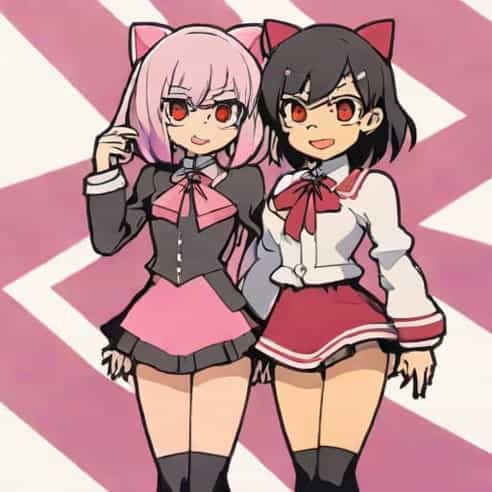
Danganronpa Ultra Despair Girls is a unique entry in the popular Danganronpa franchise, offering players a different perspective on the dark, thrilling world created by Spike Chunsoft. Unlike the main series, which focuses primarily on visual novel-style storytelling with murder mysteries, Ultra Despair Girls combines action, puzzle-solving, and exploration to immerse players in the dystopian setting of Towa City. Released initially in 2014 for the PlayStation Vita and later for PlayStation 4, PC, and other platforms, the game explores the conflict between despair and hope from a fresh perspective, centering on new characters while connecting to the overarching narrative of the Danganronpa universe. With its blend of engaging gameplay, dark humor, and complex themes, Ultra Despair Girls provides both longtime fans and newcomers with a distinctive experience.
Story and Setting
The story of Danganronpa Ultra Despair Girls takes place between the events of the first and second main Danganronpa games. Players are introduced to Komaru Naegi, the younger sister of Makoto Naegi, the protagonist of the original game. Komaru finds herself trapped in a city overrun by the Warriors of Hope, a group of children who have formed a despotic regime. The city, now a chaotic urban landscape filled with destruction and despair, becomes the backdrop for Komaru’s struggle to survive while uncovering the truth behind the city’s collapse. Players also meet Toko Fukawa, a familiar character from the first game, who assists Komaru using her split personality, Genocide Jill, adding an intriguing dynamic to the story and gameplay.
Main Characters
- Komaru NaegiThe protagonist who is thrust into a city controlled by despair-driven children. Her determination and resilience drive the narrative forward.
- Toko Fukawa / Genocide JillA complex character with a dual personality, serving as both an ally and a powerful tool in combat through her Genocide Jill persona.
- The Warriors of HopeThe antagonistic group of children, each with a distinct personality and motives, who embody despair and create obstacles for Komaru.
Gameplay Mechanics
Danganronpa Ultra Despair Girls deviates from the visual novel format and introduces third-person action gameplay. Players navigate through the city, solve puzzles, and combat hostile forces using a specialized hacking gun called the Hacking Gun. The gameplay emphasizes strategic thinking, as different types of Troops (enemy robots) require different approaches to defeat. The combination of shooting, exploration, and puzzle-solving ensures that players remain engaged throughout the story. Additionally, the partnership with Toko/Genocide Jill adds a layer of complexity, as players must use her abilities to solve environmental challenges and combat enemies.
Combat and Strategy
Combat in Ultra Despair Girls is unique compared to traditional Danganronpa gameplay. Players use the Hacking Gun to control enemy robots, turning them against other adversaries or using them to solve environmental puzzles. This mechanic encourages creative thinking, as simply shooting enemies is rarely the most effective strategy. Each Troop has specific weaknesses, and understanding these nuances is key to progressing through the game. Furthermore, managing Komaru’s limited resources and collaborating with Genocide Jill in combat scenarios adds depth to the gameplay.
Visual and Audio Design
The game maintains the distinctive visual style of the Danganronpa series, blending vibrant anime-inspired character designs with dark and dystopian urban environments. Towa City is depicted with a mix of destroyed cityscapes and twisted childlike motifs, reinforcing the unsettling atmosphere. The soundtrack complements the eerie and suspenseful tone, featuring a mix of tense melodies during combat sequences and atmospheric tracks during exploration. Voice acting further enhances the immersion, with English and Japanese options available for players.
Art and Animation
The character designs remain faithful to the franchise’s signature style, while the animation sequences during combat and story moments are fluid and visually engaging. The contrast between the city’s chaotic destruction and the youthful appearance of the Warriors of Hope creates a disturbing yet captivating visual narrative, emphasizing the theme of innocence corrupted by despair.
Thematic Elements
Danganronpa Ultra Despair Girls explores themes consistent with the main series, such as hope versus despair, morality, and survival under extreme circumstances. By focusing on the perspective of an ordinary character caught in extraordinary situations, the game highlights human resilience and the impact of societal collapse. The interactions between Komaru and Toko/Genocide Jill delve into psychological complexity, examining identity, duality, and the nature of human emotion under duress.
Hope and Despair
The central conflict of the game revolves around hope and despair. The Warriors of Hope embody extreme despair, using their innocence and perceived superiority to dominate the city. Komaru, representing hope and perseverance, must navigate this oppressive environment, often making morally challenging decisions. The game’s narrative reinforces the franchise’s overarching message about the enduring power of hope even in the face of overwhelming adversity.
Reception and Legacy
Danganronpa Ultra Despair Girls received positive reviews for its unique gameplay, engaging story, and expansion of the Danganronpa universe. Critics praised the action-oriented mechanics as a fresh take on the series, although some traditional visual novel fans found the shift in gameplay style unusual. The game’s dark humor, memorable characters, and strong thematic content resonated with players, solidifying its place in the franchise as a noteworthy entry. Over time, Ultra Despair Girls has become a fan favorite, particularly for its compelling narrative and the introduction of new gameplay mechanics that enrich the overall Danganronpa experience.
Impact on the Franchise
Ultra Despair Girls expanded the Danganronpa series by blending action and puzzle-solving elements with the franchise’s signature storytelling. Its introduction of new characters, exploration of different perspectives, and focus on psychological depth helped diversify the series and attract a wider audience. The game also influenced subsequent Danganronpa titles by demonstrating the potential for combining narrative-driven storytelling with more interactive gameplay mechanics.
Tips for New Players
- Familiarize Yourself with TroopsLearn the weaknesses and behavior patterns of enemy robots to effectively utilize the Hacking Gun.
- Use Genocide Jill StrategicallyCoordinate with Toko/Genocide Jill for solving environmental puzzles and overcoming tough combat scenarios.
- Explore ThoroughlyInvestigate every corner of Towa City to discover hidden items, clues, and story elements.
- Balance Combat and StrategyAvoid rushing into battles; consider the best approach for each type of enemy to conserve resources and maintain control.
- Pay Attention to Story ElementsThe narrative contains important clues and character development that enrich the gameplay experience.
Danganronpa Ultra Despair Girls offers a unique and compelling experience within the Danganronpa franchise, combining action, strategy, and rich storytelling. Its focus on Komaru Naegi and her journey through a city consumed by despair provides a fresh perspective on the series’ recurring themes of hope, despair, and morality. The introduction of new gameplay mechanics, such as the Hacking Gun and the partnership with Toko/Genocide Jill, adds depth and variety, appealing to both longtime fans and newcomers. With its engaging narrative, memorable characters, distinctive visual and audio design, and thematic depth, Ultra Despair Girls stands as a remarkable addition to the Danganronpa series, highlighting the franchise’s versatility and enduring appeal. For fans of psychological narratives, challenging gameplay, and immersive worlds, this game represents a must-play experience that expands and enriches the Danganronpa universe.