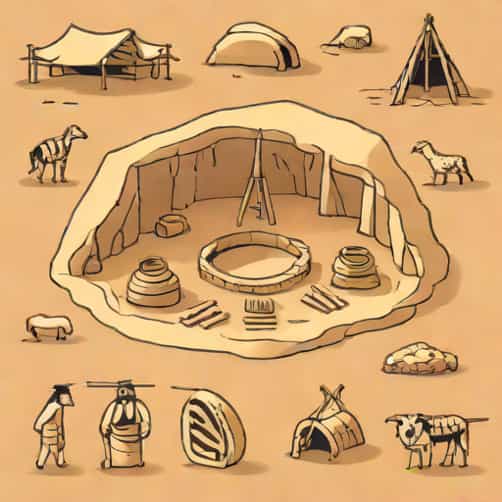
Çatal Hüyük, also spelled Catalhoyuk, is one of the most significant archaeological sites of the Neolithic period, offering remarkable insight into early human civilization. Located in modern-day Turkey, this settlement dates back to approximately 7500 BCE to 5700 BCE, making it over 9,000 years old. The discovery of Çatal Hüyük has provided historians, archaeologists, and anthropologists with valuable evidence about the transition from nomadic hunter-gatherer societies to settled agricultural communities. The site reveals not only architectural innovations but also social, cultural, and religious practices of early humans. Its unique structure, densely packed houses, and complex wall paintings make Çatal Hüyük a window into life during the Neolithic period and an essential site for understanding human prehistory.
Location and Discovery
Çatal Hüyük is situated in the southern part of central Turkey, near the modern city of Konya. The site occupies a flat plateau with fertile soil, which likely contributed to its selection as a permanent settlement. The abundance of agricultural land nearby supported the cultivation of crops such as wheat and barley. The site was first discovered in the late 1950s, and extensive excavations began under the direction of British archaeologist James Mellaart in the 1960s. Later excavations and research continued under other archaeologists, uncovering a wealth of artifacts and structural remains that reveal the daily lives and beliefs of its inhabitants.
Significance of the Neolithic Period
The Neolithic period, also known as the New Stone Age, marked a turning point in human history. This era is defined by the development of agriculture, domestication of animals, and the establishment of permanent settlements. Çatal Hüyük exemplifies these trends, showing how humans began to live in larger, organized communities, create specialized tools, and produce art that reflected their beliefs and experiences. The site helps historians understand how human societies evolved from simple, mobile groups into more complex, settled communities capable of supporting large populations.
Architecture and Urban Planning
One of the most striking features of Çatal Hüyük is its distinctive architectural style. The settlement was densely packed, with houses built closely together and without streets. Instead, residents moved across rooftops to enter other homes, creating a unique urban layout. The buildings were made of mud-brick, with flat roofs and multiple rooms that served different purposes. Houses often contained storage areas, hearths, and sleeping quarters, indicating a well-developed approach to domestic life.
Interior Decoration and Art
Inside the houses of Çatal Hüyük, archaeologists discovered an impressive array of wall paintings, murals, and carvings. These artworks often depicted scenes from daily life, animals, and symbolic or religious imagery. The presence of shrines and figurines suggests that religious and spiritual practices played a central role in the lives of the inhabitants. Artifacts found within the settlement also include pottery, tools made from obsidian, and decorative items, reflecting both practical needs and cultural expression.
Economic Activities and Agriculture
Çatal Hüyük provides important evidence about early agricultural practices. The inhabitants cultivated cereal crops such as wheat and barley, and they also domesticated animals including cattle, sheep, and goats. This combination of farming and animal husbandry provided a reliable food source, enabling the community to sustain a relatively large population. The discovery of storage pits and granaries indicates that the residents were capable of preserving surplus food, which contributed to the stability and longevity of the settlement.
Craftsmanship and Trade
The people of Çatal Hüyük were skilled craftsmen, producing tools, pottery, and ornaments from local materials. Obsidian, a volcanic glass, was commonly used to create sharp tools and blades, which were essential for farming, hunting, and domestic tasks. Evidence suggests that the community engaged in trade with neighboring regions, exchanging goods such as obsidian, shells, and other materials. This trade network indicates a degree of social organization and interaction with other contemporary settlements.
Social Structure and Daily Life
The social structure of Çatal Hüyük appears to have been relatively egalitarian, with little evidence of extreme social hierarchy. Houses were similar in size and design, suggesting that wealth and power were evenly distributed among families. Daily life involved farming, crafting, cooking, and participation in communal and religious activities. Archaeological findings indicate that women may have held prominent roles in the society, possibly in religious ceremonies, as evidenced by figurines and symbolic art.
Religious and Cultural Practices
Religious practices at Çatal Hüyük were closely integrated with domestic life. Shrines within homes contained figurines, altars, and wall paintings, suggesting that worship and ritual activities took place within private and communal spaces. The prevalence of mother goddess figurines indicates a possible focus on fertility and the importance of agriculture and reproduction in sustaining the community. Animals and other natural elements were also depicted in art, highlighting a spiritual connection to the surrounding environment.
Significance of the Findings
The excavation of Çatal Hüyük has transformed our understanding of early human settlements. It provides concrete evidence of advanced architecture, complex social organization, and cultural expression during the Neolithic period. The site challenges earlier assumptions about the simplicity of early human societies and demonstrates that people were capable of remarkable innovation, community planning, and symbolic thought thousands of years ago. Findings from Çatal Hüyük are frequently studied in anthropology, archaeology, and history courses, making it a central subject for understanding human prehistory.
Influence on Modern Archaeology
Çatal Hüyük has influenced the development of archaeological methods and approaches. The careful stratigraphic excavations, analysis of artifacts, and study of spatial arrangements have set standards for subsequent Neolithic research worldwide. Researchers continue to analyze soil samples, plant remains, and human remains to learn more about diet, health, and environmental conditions. The site also demonstrates the importance of multidisciplinary research, integrating anthropology, archaeology, and environmental science to reconstruct early human life.
Challenges in Preservation
Preserving a site as ancient as Çatal Hüyük poses numerous challenges. The mud-brick structures are highly susceptible to erosion, and the increasing number of visitors requires careful management to prevent damage. Archaeologists and conservationists work together to maintain the site while allowing public access and educational opportunities. Preservation efforts also include digital documentation, reconstruction of certain structures, and protective coverings for exposed artifacts and murals.
Legacy of Çatal Hüyük
Çatal Hüyük remains a symbol of human innovation and resilience. Its discovery has provided unparalleled insight into the daily lives, beliefs, and social organization of Neolithic humans. As one of the earliest known permanent settlements, it serves as a reminder of the critical transition from nomadic lifestyles to agricultural communities. Researchers continue to study the site, uncovering new information about early human civilization and the origins of urban living.
Çatal Hüyük, a Neolithic site found in modern-day Turkey, is one of the most important archaeological discoveries of the 20th century. Its densely packed houses, advanced agricultural practices, artistic achievements, and complex social organization provide a comprehensive view of early human society. The site exemplifies the shift from nomadic to settled life, highlighting the role of agriculture, trade, and cultural practices in sustaining large communities. The ongoing research at Çatal Hüyük continues to reveal insights into human prehistory, making it an invaluable resource for archaeologists, historians, and students around the world. By studying this site, we gain a deeper appreciation of human ingenuity, community development, and the origins of civilization.