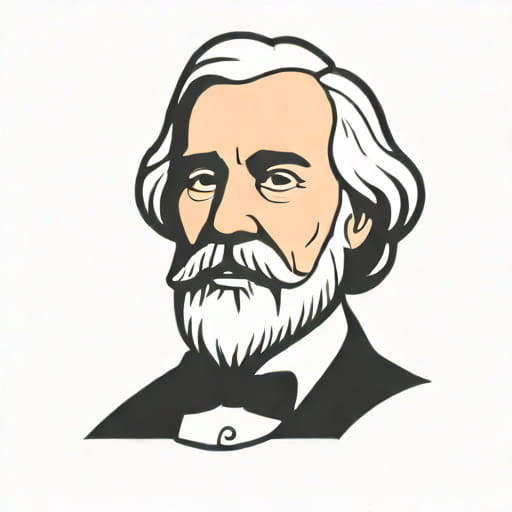
Henry Wadsworth Longfellow was one of the most influential American poets of the 19th century, known for his lyrical style, narrative poems, and contributions to American literature. Born in Portland, Maine, in 1807, Longfellow became a prominent figure in both literary circles and public life, leaving a lasting legacy through his poetry, translations, and teaching. His works often combined romanticism with historical themes, reflecting both the beauty of everyday life and the grandeur of past events. Longfellow’s poetry was widely read and appreciated during his lifetime, and many of his poems, such as Paul Revere’s Ride and The Song of Hiawatha, continue to resonate with readers today. Understanding the life, works, and impact of Henry Wadsworth Longfellow provides valuable insight into 19th-century American literature and culture.
Early Life and Education
Henry Wadsworth Longfellow was born on February 27, 1807, in Portland, Maine, to Stephen Longfellow, a lawyer and congressman, and Zilpah Wadsworth Longfellow. From a young age, Longfellow displayed an interest in literature and language, influenced by the educated environment of his household. He attended Bowdoin College, where he excelled in languages and literature, graduating in 1825. During his time at Bowdoin, Longfellow formed lifelong friendships with notable figures such as Nathaniel Hawthorne, who would later influence American literature alongside him.
Studies Abroad
After completing his education at Bowdoin, Longfellow traveled to Europe to study languages and literature further. He spent time in Spain, Italy, and Germany, immersing himself in classical literature and foreign languages. This exposure significantly influenced his later works, particularly his translations and adaptations of European poetry. His travels helped him develop a deep appreciation for cultural diversity and literary traditions, which he integrated into his writing upon returning to the United States.
Academic Career
Upon returning to America, Longfellow began his academic career, first teaching at Bowdoin College, where he focused on modern languages and literature. In 1835, he accepted a position at Harvard College, becoming a professor of modern languages. Longfellow was the first American to translate Dante’s Divine Comedy into English, a significant achievement that highlighted his mastery of languages and literary skills. His work as an educator allowed him to influence generations of students and helped him gain recognition as a literary scholar in addition to his role as a poet.
Influence as a Teacher
Longfellow’s teaching style was known for its enthusiasm and dedication. He emphasized not only the study of languages but also the cultural and historical contexts of literature. His efforts inspired many students to appreciate foreign literature and poetry, broadening the scope of American literary education. This combination of scholarship and teaching contributed to Longfellow’s reputation as a respected figure in both academic and literary circles.
Major Works and Literary Style
Longfellow’s literary output was extensive, covering various genres, including narrative poems, lyrical poetry, translations, and adaptations. His writing style is characterized by clarity, musicality, and an emphasis on emotion and imagination. He often drew inspiration from historical events, folklore, and everyday life, crafting poems that were both accessible and profound.
Notable Poems
- Paul Revere’s RideThis poem celebrates the heroism of Paul Revere during the American Revolution, capturing the excitement and urgency of the historic midnight ride.
- The Song of HiawathaA narrative poem based on Native American legends, written in trochaic tetrameter, which became one of Longfellow’s most famous works.
- EvangelineA long narrative poem telling the story of an Acadian girl separated from her lover, emphasizing themes of love, loss, and perseverance.
- The Courtship of Miles StandishA historical narrative poem combining romance and historical events from early colonial America.
- A Psalm of LifeA lyrical poem offering inspirational advice, emphasizing optimism, action, and living life with purpose.
Translation and Adaptation
Longfellow was also known for his translations and adaptations of European works. His translation of Dante’s Divine Comedy and Goethe’s works brought important European literature to American readers. These efforts helped establish Longfellow as a bridge between American and European literary traditions, enriching the cultural landscape of the United States.
Personal Life and Challenges
Longfellow’s personal life was marked by both joy and tragedy. He married Mary Potter in 1831, but she died tragically in 1835, leaving him devastated. He later married Frances Appleton in 1843, with whom he had six children. Despite personal losses, Longfellow remained dedicated to his writing and teaching. In 1861, a tragic accident in which his wife’s dress caught fire profoundly affected him, yet he continued to produce poetry that reflected both sorrow and hope.
Impact of Personal Experiences
Longfellow’s personal experiences influenced his poetry, often infusing it with themes of love, loss, and resilience. His ability to channel emotion into verse contributed to the enduring popularity of his works. Readers often connect with the sincerity and humanity present in Longfellow’s poetry, which combines narrative skill with deep emotional resonance.
Recognition and Legacy
During his lifetime, Longfellow achieved widespread acclaim, both in America and abroad. He was the first American poet to translate Dante, the first American to be honored in Westminster Abbey’s Poets’ Corner, and a celebrated public figure. His poetry was widely read, taught in schools, and frequently quoted, helping to shape the American literary canon. Longfellow’s emphasis on accessible, emotive, and moral poetry made him a popular figure among readers of all ages.
Influence on American Literature
Longfellow’s influence extends beyond his poetry. He contributed to shaping American literary identity by promoting themes of nationalism, cultural awareness, and moral reflection. His works inspired future generations of writers, educators, and poets. Longfellow also played a role in popularizing narrative poetry and making literature accessible to the general public, bridging the gap between high literary art and everyday readership.
Henry Wadsworth Longfellow remains a towering figure in American literature, celebrated for his lyrical style, narrative poetry, and contributions as an educator and translator. From his early life in Maine to his influential career at Bowdoin and Harvard, Longfellow combined scholarship, creativity, and emotion to produce works that resonate across generations. Poems such as Paul Revere’s Ride, The Song of Hiawatha, and Evangeline continue to captivate readers, reflecting both historical events and universal human experiences. His translations and adaptations further demonstrate his role as a cultural bridge, enriching American literature with European influences. Longfellow’s legacy endures through his poetry, teaching, and the inspiration he provides to writers and readers, affirming his place as one of America’s most cherished literary figures.