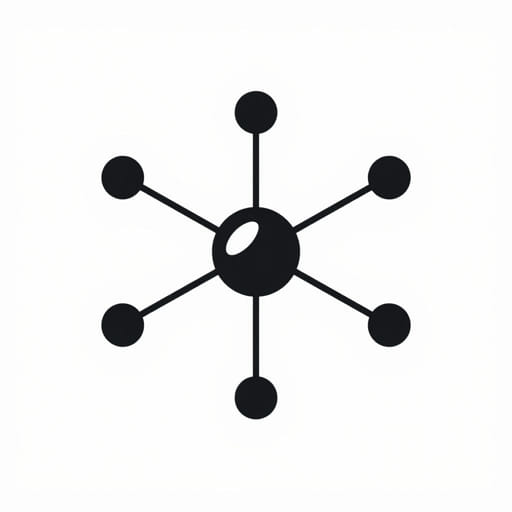
The term ‘node’ is widely used across various fields such as science, technology, mathematics, and even everyday language. Despite its frequent usage, many people might not fully grasp its comprehensive meaning or the different contexts in which it applies. Understanding what a node is, and how it functions in different domains, can clarify many complex topics ranging from computer networks to biology. This topic aims to explain the meaning of ‘node’ in clear, accessible language, exploring its definitions, applications, and significance.
General Definition of Node
At its core, a node can be described as a distinct point or unit within a larger system, network, or structure. It usually represents a connection, a junction, or an individual element that links to others. The term ‘node’ comes from the Latin word nodus, meaning knot, which reflects the idea of a point where things come together or intersect.
Because of its flexible meaning, ‘node’ takes on specific definitions depending on the field of study or context in which it is used. However, the general concept remains similar: a node is a key point within a system that has importance because of its relationships or connections to other parts.
Node in Computer Science and Networking
One of the most common contexts where the term ‘node’ is used is in computer science and networking. Here, a node refers to any device or point within a network that can send, receive, or forward information. Nodes can be computers, printers, modems, or any other device that participates in a network.
Types of Nodes in Networks
- Client Nodes: Devices that request and use services from a server.
- Server Nodes: Devices that provide resources or services to other nodes.
- Router Nodes: Nodes that direct data traffic within or between networks.
- Switch Nodes: Devices that connect multiple nodes within the same network segment.
In networking diagrams, nodes are often represented as points or dots connected by lines to illustrate the flow of data. The efficiency and functionality of a network can depend heavily on how nodes interact and communicate with each other.
Importance of Nodes in Computer Networks
Nodes are crucial for the structure and operation of networks. Each node can process or relay data, which allows for distributed communication and resource sharing. The failure or removal of a key node can disrupt the network, indicating how integral nodes are to connectivity and performance.
Node in Mathematics and Graph Theory
In mathematics, especially in graph theory, a node is often called a ‘vertex.’ It represents a point where lines or edges meet. Graphs consist of vertices (nodes) connected by edges (lines). This concept is used to model relationships and structures such as social networks, transportation systems, and more.
For example, in a social network graph, each person can be considered a node, and the friendships or connections between them are the edges. The study of nodes and their interconnections helps mathematicians understand complex networks and optimize paths, flows, and structures.
Properties of Nodes in Graphs
- Degree: The number of edges connected to a node.
- Adjacent Nodes: Nodes that are directly connected to a given node.
- Isolated Node: A node with no connections (degree zero).
Understanding these properties is fundamental in analyzing networks for efficiency, robustness, and vulnerability.
Node in Biology
In biology, the term ‘node’ describes several key points or structures within living organisms. One of the most familiar usages is in the context of plant anatomy, where a node refers to the part of a plant stem where leaves, branches, or flowers originate. Nodes play an essential role in growth and reproduction.
Additionally, in human anatomy, nodes can refer to lymph nodes, which are small, bean-shaped structures that are part of the lymphatic system. Lymph nodes filter lymph fluid and are critical in the body’s immune response.
Significance of Nodes in Biology
- Plant Nodes: Serve as points of growth and facilitate nutrient transport.
- Lymph Nodes: Act as filters and help fight infections by trapping harmful substances.
- Neural Nodes: In neuroscience, nodes of Ranvier are gaps in the myelin sheath of nerve cells, essential for rapid signal transmission.
Nodes in biology illustrate how the concept applies to living systems, marking important functional points that enable life processes.
Node in Other Contexts
Beyond science and technology, ‘node’ also finds application in other areas:
- In Astronomy: Nodes refer to the points where an orbit crosses a plane, such as the ecliptic plane of the Earth’s orbit. They are important for understanding eclipses and orbital mechanics.
- In Medicine: Apart from lymph nodes, nodes can refer to parts of the heart’s electrical conduction system, like the sinoatrial (SA) node, which acts as the natural pacemaker.
- In Linguistics: Nodes are used in syntax trees to represent elements such as words or phrases in a sentence structure.
These varied uses emphasize how versatile the concept of a node is, always referring to a key point within a system.
Common Characteristics of Nodes Across Fields
Although the specific meaning of ‘node’ varies by discipline, some common characteristics can be identified:
- Connection Point: A node usually serves as a point where connections happen or converge.
- Individual Unit: It acts as a distinct element within a larger system.
- Functional Importance: Nodes often play a crucial role in the operation or structure of the system.
- Interaction: Nodes typically interact with other nodes, forming networks or structures.
Why Understanding the Meaning of Node is Important
Recognizing what a node is and how it functions is essential in many modern fields. For example, in technology, understanding nodes is critical for network design, troubleshooting, and cybersecurity. In biology, knowledge of nodes can aid medical diagnosis and research. In mathematics, analyzing nodes helps solve complex problems and optimize systems.
Additionally, the concept of a node can help improve problem-solving skills by encouraging one to think in terms of systems and connections rather than isolated parts.
the meaning of ‘node’ varies depending on the context but consistently refers to a critical point or element within a system where connections are made. Whether in computer networks, mathematics, biology, or other areas, nodes are fundamental components that enable interaction, function, and structure. Understanding nodes not only aids in comprehending complex systems but also enriches our general knowledge of how interconnected the world truly is.