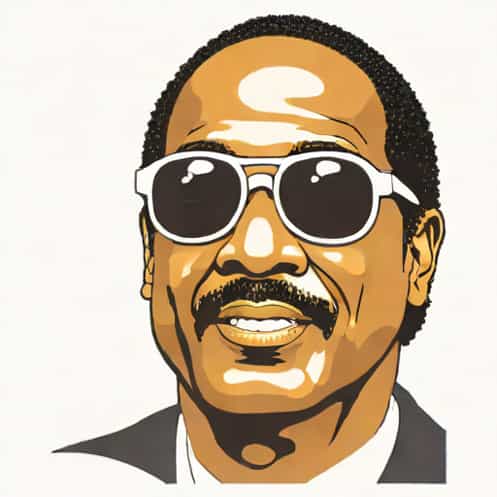
Stevie Wonder is a legendary musician whose talent and influence have transcended generations. Known for his soulful voice, incredible piano skills, and groundbreaking contributions to Motown and popular music, he is also one of the most famous blind artists in history. Questions about the extent of his blindness often arise because his remarkable musical abilities and engaging public presence can make it hard for some to imagine that he has had very limited vision throughout his life. Understanding how blind Stevie Wonder is requires a closer look at his medical history, early life, and how he navigated the world as a visually impaired musician.
Early Life and Cause of Blindness
Stevie Wonder was born Stevland Hardaway Judkins on May 13, 1950, in Saginaw, Michigan. He was born six weeks premature, which contributed to complications in his eyes. The medical condition known as retinopathy of prematurity (ROP) led to his blindness. ROP occurs when abnormal blood vessels develop in the retina of premature infants, potentially causing partial or total blindness. In Stevie Wonder’s case, the condition resulted in severe vision impairment from birth, leaving him blind in both eyes.
Extent of Blindness
Stevie Wonder is considered legally blind. Legal blindness is defined in the United States as having a visual acuity of 20/200 or worse in the better eye with corrective lenses, or a visual field of 20 degrees or less. In Wonder’s case, his blindness is profound, meaning he has very little or no light perception. Despite this, he has learned to navigate the world using his remaining senses, particularly hearing and touch, which have been instrumental in his music career.
Adaptation and Musical Development
Being blind from an early age significantly shaped Stevie Wonder’s approach to life and music. He learned to play instruments and read music using Braille music notation. His early exposure to sound and rhythm became a primary means of understanding his environment. Music offered a channel for self-expression and communication, and it allowed him to interact with the world in ways that did not rely on sight.
Early Career and Musical Talent
Stevie Wonder’s musical talent became evident at a young age. He was signed by Motown’s Tamla label when he was just 11 years old and quickly gained fame as a child prodigy under the stage name Little Stevie Wonder. His ability to play multiple instruments, compose, and perform without needing visual cues amazed audiences and industry professionals alike. His blindness did not hinder him from mastering complex arrangements or performing on stage; instead, it often heightened his sensitivity to sound and timing.
Impact of Blindness on His Life and Work
Stevie Wonder’s blindness influenced both his personal and professional life. Navigating public spaces, touring, and managing a high-profile career required adaptations and support. Despite these challenges, he became a highly independent artist. His blindness has also been cited as a factor contributing to his exceptional auditory skills, allowing him to detect nuances in music that others might miss. This heightened perception is a defining characteristic of his signature sound.
Public Perception and Misconceptions
Many people are surprised by the extent of Stevie Wonder’s blindness because of his public appearances and ability to interact confidently with audiences. Some assume he might have partial vision due to his mobility and awareness of surroundings. However, those who know his life story emphasize that his achievements have been accomplished despite profound blindness, not because of any visual ability. This makes his accomplishments even more extraordinary.
Technological and Personal Adaptations
Throughout his career, Stevie Wonder has used various technologies and techniques to support his work. For instance, he uses Braille and audio devices for reading music, and he relies heavily on memorization and tactile feedback when performing instruments. Modern technology has further enhanced his ability to compose and produce music independently, making it possible to create complex arrangements without relying on sight.
- Braille music notation Allows reading and writing of music through tactile patterns.
- Memorization Stevie Wonder often memorizes entire compositions before performing.
- Assistive technology Audio and tactile devices assist in navigation and music production.
Influence on Music and Culture
Stevie Wonder’s blindness has not limited his creativity; in fact, it has contributed to his unique perspective on music and life. Many fans and musicians see his achievements as an inspiration, demonstrating that physical limitations do not restrict artistic potential. His music often includes themes of perseverance, social justice, and hope, resonating with a global audience and showing that talent transcends physical ability.
Legacy and Inspiration
Stevie Wonder’s life and career serve as a testament to overcoming adversity. His blindness, while significant, has not defined him; instead, it has shaped a distinctive path that emphasizes resilience, creativity, and innovation. He has inspired countless individuals with disabilities to pursue their passions and has become an iconic figure in music, culture, and advocacy. Through his achievements, he illustrates how challenges can be transformed into strengths.
Stevie Wonder is profoundly blind, having little to no vision due to retinopathy of prematurity. Despite this, he has achieved extraordinary success as a musician, composer, and cultural icon. His blindness has influenced his life, sharpening his auditory skills and fostering a deep connection to music. Understanding how blind Stevie Wonder is enhances appreciation for his talents and achievements, highlighting a story of resilience, creativity, and inspiration that continues to resonate worldwide.