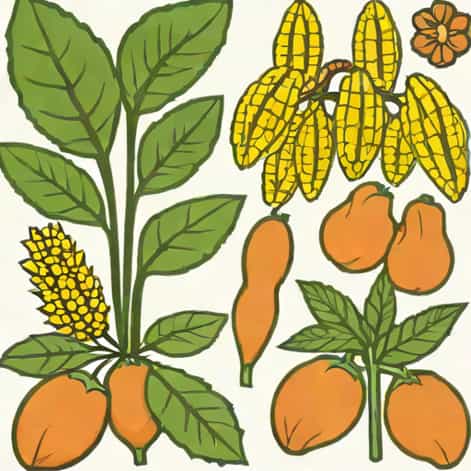
Yams, coffee, and sorghum are three important crops that have played a significant role in the agricultural history of many regions around the world. These crops have been cultivated for centuries, providing essential nutrition, economic value, and cultural significance to the communities that grow them. Each of these plants has unique characteristics, cultivation requirements, and historical contexts that have influenced how and where they are grown. Understanding the cultivation of yams, coffee, and sorghum provides insight into global agriculture, trade, and the ways in which humans have adapted to different environments to sustain their livelihoods.
Yams A Staple Root Crop
Yams are a staple food in many parts of Africa, Asia, and the Caribbean. They are tuberous roots that can be stored for long periods, making them an important source of food security. Yams thrive in tropical climates with well-drained soil and adequate rainfall. In West Africa, countries like Nigeria, Ghana, and Ivory Coast are known for their extensive yam cultivation. The crop is traditionally grown using mounds or ridges, which help with drainage and root development. Yams are not only a food source but also hold cultural and ceremonial significance in many communities, often being featured in festivals and rituals.
Varieties and Uses of Yams
There are several varieties of yams, including white yams, yellow yams, and water yams, each with distinct textures and flavors. These varieties can be boiled, roasted, fried, or mashed, making them versatile in cooking. Beyond consumption, yams are sometimes used in traditional medicine and as a source of starch for industrial applications. The cultivation of yams requires careful attention to planting and harvesting schedules, as the crop typically takes six to twelve months to mature depending on the variety.
Cultivation of Coffee
Coffee is one of the most widely traded commodities in the world and has a cultivation history that spans several continents. Originating in Ethiopia, coffee plants thrive in tropical and subtropical climates with high altitudes and consistent rainfall. The main coffee-growing regions today include parts of Africa, Central and South America, and Asia. Coffee is grown primarily for its seeds, known as coffee beans, which are harvested, processed, and roasted to produce the popular beverage enjoyed globally.
Types of Coffee Plants
The two most commercially important coffee species are Arabica (Coffea arabica) and Robusta (Coffea canephora). Arabica coffee is known for its mild flavor and aromatic qualities, while Robusta is valued for its higher caffeine content and resilience to diseases. Coffee cultivation requires careful attention to soil quality, shade management, and pest control. Harvesting is labor-intensive, often done by hand, with careful sorting to ensure the quality of the beans. Coffee cultivation has not only economic significance but also social and cultural impact, shaping traditions, economies, and lifestyles in coffee-growing regions.
Sorghum A Resilient Grain
Sorghum is a versatile cereal crop grown primarily in Africa, Asia, and parts of the Americas. Known for its drought tolerance and adaptability to poor soils, sorghum has been a critical food source in arid and semi-arid regions. It is cultivated for multiple purposes, including human consumption, animal feed, and industrial use, such as biofuel production. Sorghum is typically grown in areas with moderate rainfall, and it can withstand conditions that would challenge other cereal crops like wheat or maize.
Uses and Benefits of Sorghum
Sorghum grains are rich in nutrients, including carbohydrates, protein, fiber, and essential minerals. They are used to make porridge, flatbreads, beer, and other traditional foods. Additionally, sorghum stalks can be used as fodder for livestock or as a raw material for building and craft purposes. The crop’s resilience makes it an important tool for food security, particularly in regions prone to drought and other climatic challenges.
Historical Context of Cultivation
The cultivation of yams, coffee, and sorghum has a long history shaped by geography, trade, and human innovation. Yams have been cultivated in West Africa for thousands of years, spreading to the Caribbean and other tropical regions through migration and trade. Coffee’s cultivation spread from Ethiopia to the Middle East, and eventually to Europe and the Americas, driven by global demand and colonial expansion. Sorghum, native to Africa, has been grown for centuries and adapted to diverse climates, becoming an important staple in Asia and the Americas as well.
Impact on Trade and Economy
The cultivation of these crops has had a significant impact on regional and global economies. Yams provide a critical source of income for smallholder farmers in Africa. Coffee has created entire economies around its production, export, and trade, influencing international markets and employment. Sorghum, while less globally traded than coffee, plays a crucial role in local economies, food security, and sustainable agriculture. The cultivation of these crops demonstrates the intricate link between agriculture, culture, and economic development.
Modern Cultivation Practices
Today, the cultivation of yams, coffee, and sorghum continues to evolve with technological advances and sustainable farming practices. Farmers employ methods to increase yield, improve soil fertility, and reduce the impact of pests and diseases. Irrigation systems, organic fertilizers, and crop rotation are commonly used to maintain soil health and ensure long-term productivity. For coffee, innovations in shade management and post-harvest processing have improved bean quality and reduced environmental impact. Sorghum cultivation increasingly benefits from drought-resistant varieties and modern mechanization.
Challenges in Cultivation
Despite their importance, these crops face challenges. Yams are vulnerable to pests and diseases such as yam mosaic virus, which can reduce yield. Coffee plants are affected by climate change, pests like the coffee borer beetle, and fluctuating market prices. Sorghum cultivation is impacted by soil degradation, water scarcity, and competition from other crops. Addressing these challenges requires research, innovation, and support for farmers to ensure sustainable production and food security.
The cultivation of yams, coffee, and sorghum has shaped human history, culture, and economy across continents. Each crop offers unique nutritional, economic, and cultural benefits while presenting specific challenges for farmers and communities. Yams provide essential sustenance and cultural significance, coffee drives global trade and social traditions, and sorghum offers resilience and adaptability in harsh environments. Understanding the history, cultivation, and modern practices of these crops highlights their continued relevance and importance in sustaining communities worldwide. By appreciating the efforts involved in growing these crops and the benefits they provide, we gain a deeper respect for agriculture and its role in human civilization.