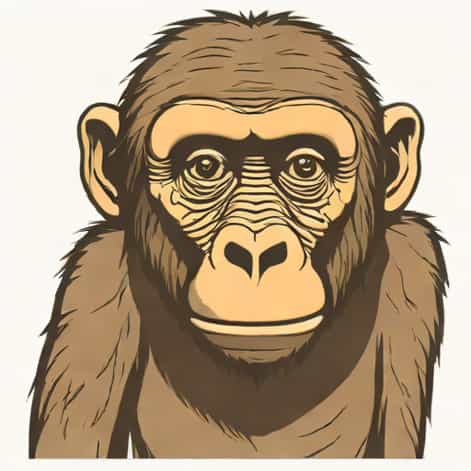
Lucy, the Australopithecus afarensis, is one of the most famous and important fossil discoveries in the study of human evolution. Found in 1974 in the Afar region of Ethiopia by paleoanthropologist Donald Johanson and his team, Lucy provided groundbreaking insight into the early stages of hominin development. Her skeleton, which is approximately 3.2 million years old, is remarkably well-preserved and represents about 40% of a complete skeleton, making her one of the most complete early hominid fossils ever discovered. The discovery of Lucy helped scientists better understand the anatomy, locomotion, and lifestyle of early human ancestors.
The Discovery of Lucy
Lucy was discovered at a site called Hadar in the Afar Triangle of Ethiopia. The site has yielded numerous important fossils, but Lucy stood out because of the completeness of her remains. Donald Johanson and his team stumbled upon her skeleton in November 1974 while carefully excavating the area. The fossil was named Lucy after the Beatles’ song Lucy in the Sky with Diamonds, which was playing at the excavation camp the night of the discovery. This playful naming belied the enormous scientific significance of the find.
Significance of the Discovery
Lucy’s discovery was significant because it provided clear evidence of bipedalism in early hominins. Prior to her discovery, scientists debated whether bipedal walking preceded or followed brain enlargement in human evolution. Lucy’s skeletal structure, particularly her pelvis, leg bones, and knee joints, showed adaptations for walking upright on two legs. This finding suggested that walking on two legs evolved long before the development of a larger brain in hominins, changing the understanding of early human evolution.
Physical Characteristics of Lucy
Lucy was relatively small, standing about 3 feet 5 inches (approximately 1 meter) tall and weighing around 64 pounds (29 kilograms). Her small size and gracile (slender) build reflect typical characteristics of Australopithecus afarensis. Despite her small stature, her skeletal features provide remarkable insight into her locomotion and daily life.
- Pelvis and LegsLucy’s pelvis is shaped in a way that supports upright walking. Her femur angles inward toward the knees, a characteristic seen in modern humans but absent in other primates.
- Feet and ToesHer feet had arches similar to modern humans, which would have helped absorb shock while walking, although some features suggest she could still climb trees.
- Arms and HandsLucy had longer arms than modern humans, indicating that climbing and arboreal activity were still part of her lifestyle.
- Skull and Brain SizeLucy’s brain was relatively small, roughly 375 to 500 cubic centimeters, about the size of a modern chimpanzee brain, which reinforces the idea that bipedalism evolved before significant brain enlargement.
Behavior and Lifestyle
Lucy likely lived in a mixed environment of open grasslands and scattered trees. Her body structure indicates she spent most of her time on the ground walking upright, but she probably climbed trees for safety and to forage for food. Evidence from other Australopithecus afarensis fossils suggests a diet consisting of fruits, leaves, nuts, and possibly small animals. Lucy and her species likely lived in social groups, as modern primates do, which would have helped with protection from predators and cooperative foraging.
The Scientific Importance of Lucy
Lucy’s discovery provided crucial evidence for understanding human evolution. She helped scientists establish that bipedalism was one of the earliest defining traits of hominins. Her skeleton also offered insight into the physical capabilities and limitations of early hominins, bridging the gap between modern humans and our primate relatives.
Contributions to Paleoanthropology
- Confirmed that bipedalism evolved millions of years before large brain size.
- Provided a nearly complete skeleton that could be studied in detail for anatomical comparisons.
- Helped establish Australopithecus afarensis as a key species in human ancestry.
- Opened the door for further discoveries in the Afar region and other parts of East Africa.
Lucy’s Legacy
Lucy remains one of the most iconic fossils in the history of anthropology. Her discovery sparked worldwide interest in human evolution and inspired new generations of scientists to study early hominins. Museums around the world have displayed casts of Lucy’s skeleton to educate the public about our evolutionary history. She continues to symbolize the connection between humans and our ancient ancestors, reminding us that walking upright was a crucial step in the journey that eventually led to modern humans.
Challenges and Controversies
Despite her importance, Lucy’s discovery has also led to debates in the scientific community. Some researchers have questioned the precise nature of her bipedalism, arguing that she may have retained significant tree-climbing abilities. Others have debated her classification within the Australopithecus genus. These discussions, however, highlight the complexity of interpreting fossil evidence and underscore the dynamic nature of paleoanthropology. Lucy’s discovery continues to inspire research, challenging scientists to refine their understanding of human evolution.
Lucy the Australopithecus afarensis represents a critical milestone in the study of human evolution. Her discovery revealed that walking upright preceded the development of a large brain and provided a wealth of information about early hominin anatomy and behavior. Standing as a symbol of our evolutionary past, Lucy has inspired generations of scientists and the public alike. Her story is a reminder of the careful detective work required to uncover our ancient history and the ongoing journey to understand where we come from and how humans evolved over millions of years.