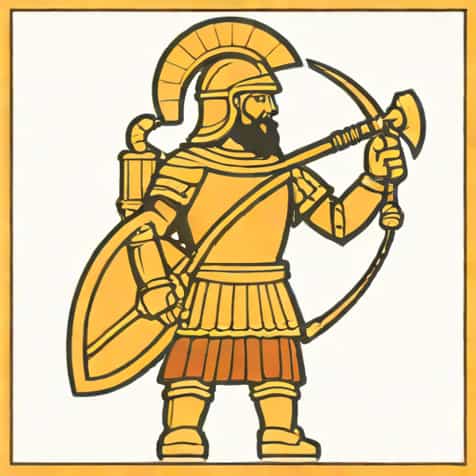
The Carthaginian army was one of the most fascinating military forces of the ancient world, renowned for its diversity, strategic ingenuity, and ability to project power across the Mediterranean. Unlike many contemporary armies that relied primarily on citizen-soldiers or conscripts from a single culture, the Carthaginian army was a cosmopolitan force composed of mercenaries, allies, and specialized units from different regions. This unique composition allowed Carthage to field large armies and adapt to a variety of combat scenarios, from naval engagements to desert warfare. Understanding what was unique about the Carthaginian army provides insight into how this powerful city-state maintained its influence and fought some of the most famous wars in antiquity, including the Punic Wars against Rome.
Composition of the Carthaginian Army
The Carthaginian army was highly distinctive due to its reliance on mercenaries and foreign troops. Carthage itself, located in modern-day Tunisia, did not maintain a large citizen army comparable to Rome. Instead, Carthaginian generals recruited soldiers from across North Africa, Iberia, Gaul, and even the eastern Mediterranean. This reliance on diverse troops allowed Carthage to field a wide variety of soldiers with specialized skills.
Mercenary Forces
One of the most notable features of the Carthaginian army was its heavy dependence on mercenaries. These hired soldiers came from a variety of regions, including Libyans, Numidians, Gauls, Iberians, and Balearic Islanders. Each group brought unique combat abilities. For example, Numidian cavalry were known for their speed and expertise in hit-and-run tactics, while Balearic slingers provided highly accurate ranged attacks. Mercenaries allowed Carthage to assemble large, flexible forces without overburdening its own citizenry.
Native Troops and Citizen Soldiers
Although heavily reliant on mercenaries, Carthage also fielded native troops, particularly in the form of Libyan infantry and cavalry. These forces often provided the backbone of the army, offering both local knowledge of terrain and loyalty to Carthaginian leadership. Citizen soldiers from Carthage itself were less common in large-scale campaigns but could be mobilized for defense of the city or critical battles near home territory.
Specialized Units
The Carthaginian army was unique for its wide range of specialized units, which gave it tactical flexibility on the battlefield. By integrating different types of troops, Carthaginian generals could tailor their forces to specific challenges, from pitched battles against heavily armored foes to guerrilla-style skirmishes in rough terrain.
Cavalry
Numidian cavalry were among the most celebrated elements of the Carthaginian army. Light, fast, and highly maneuverable, these horsemen excelled at reconnaissance, flanking maneuvers, and harassment of enemy formations. Their mobility allowed Carthaginian commanders to conduct complex battlefield strategies, particularly against slower infantry units.
Elephants
Another unique feature of the Carthaginian army was the use of war elephants, particularly during the campaigns of Hannibal Barca. Elephants were primarily sourced from North Africa and used to break enemy lines, instill fear, and create chaos among opposing troops. The psychological impact of these massive creatures on Roman and other armies was immense, and their inclusion demonstrated Carthage’s innovative approach to combining unconventional elements with traditional military tactics.
Infantry
The Carthaginian infantry was similarly diverse. Libyan infantry provided sturdy, heavily armed soldiers who could withstand direct assaults, while Iberian mercenaries often brought agility and skill in skirmishing. Gaulish warriors were known for their ferocity and ability to fight in close quarters. This combination of infantry types allowed Carthage to adapt its formations and tactics according to the enemy and battlefield conditions.
Strategic and Tactical Innovation
The Carthaginian army’s uniqueness was not limited to its composition; it also lay in its innovative strategies and tactical approaches. Carthaginian generals, especially Hannibal Barca, were renowned for their ingenuity in planning and executing complex maneuvers, often outsmarting numerically superior Roman forces.
Use of Terrain
Carthaginian generals were adept at using terrain to their advantage. Hannibal’s crossing of the Alps is one of the most famous examples of strategic brilliance, allowing him to bring elephants and a diverse army into northern Italy, surprising Roman forces. On the battlefield, Carthaginian commanders often positioned specialized troops like cavalry and elephants on key flanks, using the terrain to maximize their effectiveness.
Flexible Formations
Unlike armies with rigid structures, the Carthaginian army could adopt flexible formations suited to the composition of its forces. For example, infantry units could be arranged in depth to absorb attacks, while cavalry and elephants executed flanking maneuvers. This flexibility gave Carthage an edge in confrontations with more homogenous forces, particularly Roman legions that initially struggled against such diverse threats.
Psychological Warfare
The inclusion of unusual units such as elephants, exotic mercenaries, and highly mobile cavalry also provided a psychological advantage. Enemy troops often faced unfamiliar fighting styles and unexpected tactics, which could disrupt morale and create opportunities for Carthaginian forces to exploit weaknesses.
Challenges of a Diverse Army
Despite its advantages, the Carthaginian army also faced significant challenges due to its reliance on mercenaries and culturally diverse units. Mercenary loyalty was often conditional, and disputes over pay or cultural differences could lead to desertion or rebellion. For example, after the First Punic War, Carthage faced a large-scale revolt by unpaid mercenaries, illustrating the risks of depending heavily on foreign soldiers.
Coordination and Communication
Managing an army composed of soldiers from multiple regions required careful coordination and clear leadership. Differences in language, fighting style, and tactical understanding could complicate battlefield maneuvers. Successful Carthaginian commanders, like Hannibal, mitigated these challenges through strong leadership, discipline, and the strategic placement of units according to their strengths.
Logistical Considerations
Supplying a diverse army with different dietary and equipment needs added another layer of complexity. Carthaginian generals had to ensure that troops were adequately provisioned, that elephants were fed and cared for, and that mercenaries received payment to maintain morale. Effective logistics were therefore a crucial component of Carthaginian military success.
Legacy of the Carthaginian Army
The Carthaginian army left a lasting impact on military history, particularly through its innovative use of diverse forces, specialized units, and adaptive tactics. Hannibal’s campaigns during the Second Punic War remain studied for their brilliance, especially his ability to defeat larger Roman armies with a combination of strategy, surprise, and careful utilization of his unique troops. The army’s reliance on mercenaries and its multinational composition also influenced future military models, showing that flexibility and adaptation could be more effective than rigid homogeneity.
Influence on Modern Military Thought
Historians and military scholars often reference the Carthaginian army as an early example of combined arms warfare. The integration of infantry, cavalry, and war elephants demonstrates an understanding of tactical synergy and the effective use of specialized units to achieve strategic objectives. These lessons continue to inform modern military planning and historical analysis.
Cultural Impact
The fame of the Carthaginian army, particularly under Hannibal, has endured in literature, history, and popular culture. Stories of its tactical innovations, bold maneuvers, and the legendary crossing of the Alps have cemented its reputation as one of the most unique and formidable armies of the ancient Mediterranean world.
What was unique about the Carthaginian army lies in its diverse composition, innovative tactics, and strategic adaptability. By combining mercenaries from multiple regions, specialized units like Numidian cavalry and war elephants, and a flexible approach to formations and battlefield management, Carthage was able to project power effectively across the Mediterranean. While the reliance on foreign troops posed challenges in coordination, loyalty, and logistics, it also allowed Carthage to build a versatile and formidable military force. The legacy of the Carthaginian army, particularly its ingenuity under leaders like Hannibal Barca, continues to fascinate historians and military strategists, highlighting the enduring importance of innovation, diversity, and adaptability in warfare.