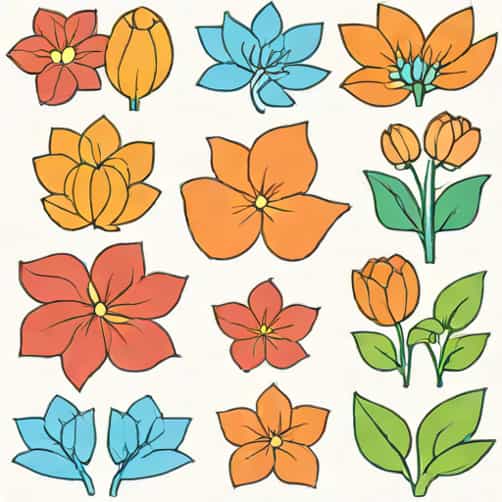
Flowers are one of the most important parts of flowering plants, and they play a key role in reproduction. For students in class 10, understanding the structure of a flower is a fundamental topic in biology. Two important parts of a flower that are often discussed and sometimes confused are the sepal and the petal. Although they may look similar in some plants, their structure, position, and function are different. Learning the difference between sepal and petal helps students clearly understand how flowers develop and how they support pollination and protection.
Basic Structure of a Flower
A typical flower consists of four main whorls arranged in concentric circles. These whorls are the calyx, corolla, androecium, and gynoecium. Sepals and petals form the outer two whorls of the flower.
The calyx is made up of sepals, while the corolla is made up of petals. Both structures are essential for the proper growth and function of the flower, but they serve different purposes. Understanding their role within the flower makes it easier to identify the difference between sepal and petal.
What Is a Sepal?
A sepal is the outermost part of a flower. All the sepals together form the calyx. Sepals are usually green in color and resemble leaves in appearance. Their main role is to protect the flower bud during its early stages of development.
Before a flower blooms, the sepals enclose and shield the delicate inner parts from physical damage, insects, and harsh environmental conditions. In many plants, sepals remain attached even after the flower has bloomed.
Characteristics of Sepals
Sepals have certain features that help distinguish them from petals. They are generally thicker and more leaf-like. Their green color indicates the presence of chlorophyll, which allows them to carry out photosynthesis in some plants.
- Usually green in color
- Form the outermost whorl of the flower
- Protect the flower bud
- Often leaf-like in structure
What Is a Petal?
A petal is a modified leaf that forms the corolla, which is the second whorl of the flower. Petals are usually brightly colored and may have attractive patterns or scents. Their main function is to attract pollinators such as insects, birds, and animals.
Petals play a vital role in pollination by guiding pollinators toward the reproductive organs of the flower. The shape, color, and fragrance of petals vary greatly among different plant species.
Characteristics of Petals
Petals are generally softer and more delicate than sepals. Their bright colors come from pigments other than chlorophyll. These visual and sensory features make petals effective in attracting pollinators.
- Usually brightly colored
- Form the second whorl of the flower
- Attract pollinators
- Often soft and thin in texture
Difference Between Sepal and Petal Based on Position
One of the easiest ways to understand the difference between sepal and petal for class 10 students is by looking at their position in the flower. Sepals are located on the outermost part of the flower. They surround and protect the flower when it is still in the bud stage.
Petals are located just inside the sepals. Once the flower blooms, petals become the most visible part of the flower due to their bright colors and attractive appearance.
Difference Based on Function
The functions of sepals and petals are quite different. Sepals mainly serve a protective role. They ensure that the developing flower bud remains safe from damage before it opens.
Petals, on the other hand, are involved in reproduction indirectly. Their main function is to attract pollinators, which helps in the transfer of pollen from one flower to another. This difference in function is a key point often highlighted in class 10 biology exams.
Difference Based on Color and Appearance
Color is another important point of difference between sepal and petal. Sepals are usually green, although in some plants they may be colored. Their green color helps them blend with the rest of the plant.
Petals are typically colorful, with shades of red, yellow, blue, pink, or white. These colors help flowers stand out in nature and catch the attention of pollinators.
Difference Based on Structure
Structurally, sepals are thicker and tougher compared to petals. This makes them suitable for protecting the flower bud. Their leaf-like structure supports their protective function.
Petals are thinner and softer. They may have special shapes or markings that guide pollinators toward nectar and pollen. This structural difference supports their role in pollination.
Sepals and Petals in Different Flowers
In some flowers, sepals and petals look very different and are easy to identify. However, in certain plants, sepals and petals may appear similar in color and shape. Such flowers are said to have a perianth instead of distinct sepals and petals.
Despite these variations, the basic difference between sepal and petal remains the same when their position and function are examined.
Importance of Sepal and Petal in Flowering Plants
Both sepals and petals are essential for the survival and reproduction of flowering plants. Sepals ensure that the flower develops safely, while petals increase the chances of successful pollination.
Without sepals, the flower bud would be exposed to damage. Without petals, many flowers would struggle to attract pollinators, reducing reproductive success.
Difference Between Sepal and Petal for Class 10 Exams
For class 10 students, understanding the difference between sepal and petal is important for exams and practical identification. Questions often focus on definition, function, color, and position.
Clear understanding helps students write accurate answers and draw labeled diagrams of flowers. It also builds a strong foundation for advanced topics in plant reproduction.
Simple Comparison Summary
In simple terms, sepals act like a protective cover, while petals act like an attraction tool. Both are modified leaves but serve different purposes in the life cycle of a flowering plant.
Remembering these basic ideas makes it easier to answer questions related to the difference between sepal and petal in class 10 biology.
The difference between sepal and petal is an important concept in understanding flower structure. Sepals form the outermost whorl and protect the flower bud, while petals form the inner whorl and attract pollinators.
Although they may sometimes look similar, their position, structure, color, and function clearly distinguish them. By learning these differences, class 10 students can better understand plant biology and appreciate how flowers are adapted for protection and reproduction.