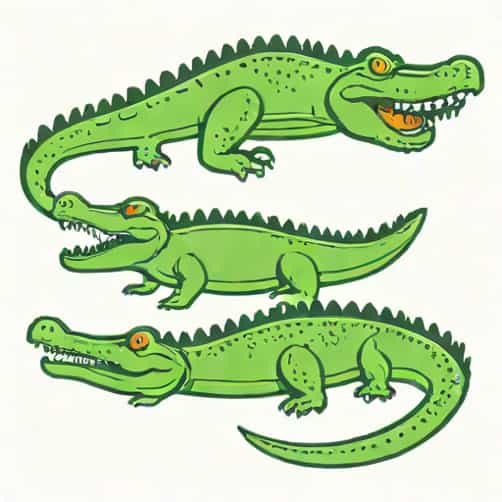
Many people use the words alligator and crocodile interchangeably, assuming they are the same reptile. While they do share similarities-both being large, semi-aquatic predators with long snouts and armored skin-they belong to different families and have distinct physical traits, behaviors, and habitats. Understanding the difference between an alligator and a crocodile can help you identify them correctly and appreciate the unique characteristics of each species. From their snout shapes to their preferred environments, these two reptiles tell a fascinating story of adaptation and survival.
Physical Differences Between Alligators and Crocodiles
Snout Shape
One of the easiest ways to tell an alligator from a crocodile is by looking at the shape of its snout. Alligators have a broad, U-shaped snout that looks wide and rounded at the end. This shape helps them crush hard-shelled prey such as turtles and clams. In contrast, crocodiles have a narrower, V-shaped snout that comes to more of a point. This design is better suited for catching fish and other smaller, agile prey. If you compare them side by side, the alligator’s snout appears shorter and wider, while the crocodile’s is longer and sharper.
Teeth and Jaw Alignment
The arrangement of the teeth is another major clue. When an alligator’s mouth is closed, only its upper teeth are visible because the upper jaw is wider than the lower one, effectively hiding the lower teeth. Crocodiles, on the other hand, have an upper and lower jaw that are about the same width. This means when a crocodile closes its mouth, its teeth interlock and both the upper and lower sets are visible. One particularly noticeable tooth-the fourth one on the lower jaw-sticks out over the upper lip in crocodiles, giving them a toothy grin.
Color and Skin Texture
The color of their skin is also an identifying feature. Alligators usually have darker, almost black skin with a greyish tint, which helps them blend in with the murky waters of swamps and slow-moving rivers. Crocodiles have lighter, olive-brown or tan skin with a more rugged, scaly texture. Their coloring helps them blend into the muddy riverbanks and saltwater estuaries where they often live. The difference in coloration reflects the environments each species inhabits and their need for camouflage.
Habitat and Geographic Range
Where Alligators Live
Alligators are primarily found in the southeastern United States and parts of China. The American alligator is the most well-known species, commonly found in Florida, Louisiana, Georgia, and other southern states. They prefer freshwater environments such as ponds, marshes, swamps, rivers, and lakes. The Chinese alligator, which is much smaller and critically endangered, lives in the Yangtze River basin. Alligators tend to avoid saltwater because their bodies cannot tolerate high salinity levels for long periods.
Where Crocodiles Live
Crocodiles have a wider global distribution and can live in both freshwater and saltwater environments. They are found in Africa, Australia, Southeast Asia, Central and South America, and parts of southern Florida. The saltwater crocodile, known as the largest living reptile, can thrive in coastal areas and even venture into the open sea. Unlike alligators, crocodiles possess specialized glands in their tongues that excrete excess salt, allowing them to survive in marine habitats. This difference in adaptability explains why crocodiles are more widespread around tropical regions.
Behavioral and Temperament Differences
Aggressiveness
One of the most notable behavioral differences between the two species is their temperament. Alligators are generally less aggressive toward humans than crocodiles. While they can still be dangerous, alligators often retreat if approached and are more likely to avoid conflict unless provoked or defending their nests. Crocodiles, in contrast, are known to be more territorial and aggressive. They may attack anything that enters their territory, including humans, making them far more dangerous in the wild.
Social Behavior
Alligators and crocodiles also differ in their social interactions. Alligators tend to be more tolerant of other alligators and can sometimes be seen basking together in the sun. Crocodiles, on the other hand, are more solitary creatures and are less tolerant of others invading their space. While both species communicate through vocalizations, body movements, and water vibrations, crocodiles are more likely to engage in aggressive displays when challenged.
Nesting and Parenting
Both alligators and crocodiles are attentive parents, but their nesting habits differ slightly. Alligators build their nests from vegetation, mud, and sticks, which helps generate heat through decomposition to incubate their eggs. Crocodiles typically dig holes in sandy or muddy banks to lay their eggs. In both species, the mother guards the nest fiercely until the eggs hatch, then carries the hatchlings to the water in her mouth. However, alligator mothers are often seen providing care to their young for several months, whereas crocodile mothers tend to be less nurturing after the hatchlings enter the water.
Size and Growth
Both reptiles can grow to impressive lengths, but crocodiles generally outsize alligators. Adult male American alligators typically reach lengths of 10 to 15 feet, with some rare individuals growing larger. In contrast, saltwater crocodiles can grow up to 23 feet long and weigh over 2,000 pounds. This makes crocodiles not only larger but also more powerful predators. Their massive size and strength enable them to take down large animals such as wildebeests, zebras, and even sharks in some regions.
Diet and Feeding Habits
Alligators and crocodiles share similar diets but adapt their feeding habits based on their habitat and available prey. Alligators prefer freshwater species such as fish, turtles, birds, and small mammals. Their strong jaws allow them to crush hard shells with ease. Crocodiles, especially larger ones, have a more diverse diet that includes fish, birds, reptiles, and large mammals. They are opportunistic feeders that will eat almost anything they can overpower. Crocodiles also have a stronger bite force compared to alligators, making them capable of tackling larger and tougher prey.
Adaptations and Evolutionary Traits
Both reptiles are part of the Crocodylia order and share a common ancestor from around 80 million years ago. Despite their similarities, evolution has shaped them differently to adapt to their respective environments. Alligators developed traits for freshwater living, such as dark coloration and slower metabolism, while crocodiles evolved salt glands and a tolerance for both salt and freshwater. These adaptations have allowed them to thrive in different ecosystems for millions of years, maintaining their position as top predators.
How to Tell Them Apart in the Wild
If you ever encounter one of these reptiles in the wild, there are a few simple clues to help identify which one you’re looking at
- Check the snout shape – broad and rounded means alligator; narrow and pointed means crocodile.
- Look at the teeth – if both upper and lower teeth are visible, it’s a crocodile.
- Observe the color – darker blackish-gray tones suggest an alligator; lighter olive-brown suggests a crocodile.
- Consider the location – if you’re in freshwater areas of the U.S., especially the Southeast, it’s most likely an alligator. In tropical regions or near saltwater, it’s probably a crocodile.
final remarkss
While alligators and crocodiles may look similar at first glance, the differences between them are quite distinct once you know what to look for. From the shape of their snouts to their habitats and behaviors, each reptile has evolved unique traits that suit its environment. Alligators thrive in freshwater regions with a calmer disposition, while crocodiles dominate both freshwater and saltwater habitats with a more aggressive nature. Understanding the difference between an alligator and a crocodile not only satisfies curiosity but also fosters a greater respect for these ancient, powerful creatures that have roamed the Earth since the age of the dinosaurs.