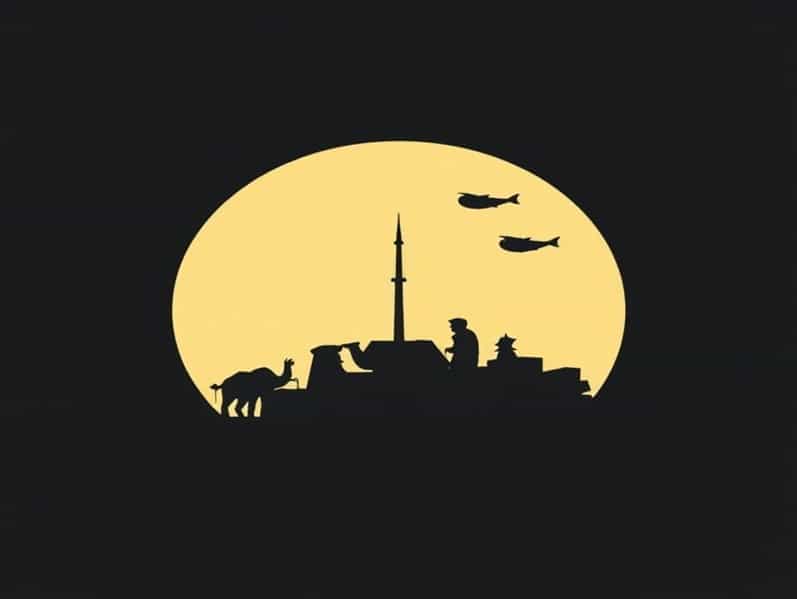
The Battle of Khartoum 2023 marked one of the most violent and devastating urban conflicts in recent African history. Taking place in Sudan’s capital city, it erupted between the Sudanese Armed Forces (SAF) and the Rapid Support Forces (RSF) in April 2023. The battle not only reshaped the political and humanitarian landscape of Sudan but also drew international attention due to its scale, destruction, and consequences for civilians. Understanding the causes, developments, and impact of the Battle of Khartoum 2023 is essential to grasp the country’s ongoing struggle for stability and peace.
Background of the Conflict
Before the outbreak of the 2023 battle, Sudan had been in a fragile political state following the ousting of long-time ruler Omar al-Bashir in 2019. His fall, after three decades of authoritarian rule, was expected to usher in a new era of democracy. However, tensions between the country’s military factions soon derailed the transition process.
The Sudanese Armed Forces, led by General Abdel Fattah al-Burhan, and the Rapid Support Forces, commanded by General Mohamed Hamdan Dagalo better known as Hemeti initially cooperated in removing Bashir. But their alliance quickly deteriorated as both leaders sought control over the future government, military structure, and economic resources. Negotiations to merge the RSF into the regular army stalled, and distrust grew between the two sides. The result was a full-scale confrontation in Khartoum, a city of more than five million people.
The Outbreak of the Battle of Khartoum
On April 15, 2023, heavy gunfire and explosions erupted across Khartoum as the RSF launched coordinated attacks on key military sites, including the presidential palace, the airport, and army headquarters. Residents woke to the sound of artillery and airstrikes as the city descended into chaos. The Sudanese Armed Forces quickly responded with counterattacks, leading to fierce street battles that engulfed much of the capital.
Within days, the conflict spread to neighboring cities such as Omdurman and Bahri, effectively turning the entire Khartoum metropolitan area into a war zone. Civilians were trapped in their homes without access to food, water, or electricity, as fighting disrupted essential services. Hospitals were damaged or overrun, making medical care nearly impossible to obtain.
Strategic Objectives of Both Sides
The SAF aimed to reassert control over key government installations and critical infrastructure, using air power and artillery strikes to weaken RSF strongholds. Meanwhile, the RSF sought to establish dominance in urban areas, leveraging mobility and guerrilla-style tactics. Their control of several neighborhoods allowed them to seize supply routes and loot resources, further intensifying the suffering of civilians.
Humanitarian Impact of the Battle
The humanitarian consequences of the Battle of Khartoum 2023 were catastrophic. Thousands of civilians were killed or injured, and millions were displaced both within Sudan and across its borders. The constant shelling and airstrikes destroyed residential buildings, markets, hospitals, and cultural landmarks. Aid agencies struggled to operate amid the violence, and many humanitarian workers were forced to evacuate.
Crisis in Basic Services
Essential services quickly collapsed as the fighting dragged on. Water supplies were cut off in many neighborhoods, leading to outbreaks of disease. The electricity grid was damaged, plunging much of Khartoum into darkness. Telecommunications were unreliable, isolating families and cutting them off from vital information.
- Hospitals faced severe shortages of medicine and fuel for generators.
- Food prices skyrocketed due to the closure of supply routes and looting.
- Schools and universities were forced to close indefinitely.
- Refugees poured into neighboring countries such as Egypt, Chad, and South Sudan.
International organizations like the United Nations and the Red Cross called repeatedly for ceasefires, but most attempts to halt the fighting collapsed within hours. The humanitarian crisis grew worse as both sides showed little regard for civilian safety.
International Reactions and Diplomacy
The global community reacted with alarm to the sudden escalation of violence in Khartoum. Neighboring countries feared the conflict could destabilize the wider region. Several peace initiatives were launched, primarily led by the African Union, the Intergovernmental Authority on Development (IGAD), and countries such as Saudi Arabia and the United States, which hosted peace talks in Jeddah.
However, the negotiations were marred by mistrust between the SAF and RSF, with each accusing the other of violating ceasefire agreements. Foreign governments evacuated their citizens from Sudan, and many embassies were temporarily closed. The ongoing battle demonstrated the difficulty of enforcing peace in a country with deep political and military divisions.
The Role of Khartoum in the Conflict
Khartoum’s strategic importance made it the central battleground of the war. As the capital city, it housed key government buildings, military headquarters, and international organizations. Control of Khartoum was seen as a symbol of legitimacy for both factions. The city’s dense population and infrastructure made it a challenging environment for combat, turning residential areas into contested zones.
The SAF utilized airstrikes and heavy artillery to target RSF positions, but these tactics also caused widespread collateral damage. The RSF, in turn, used urban cover and civilian buildings to shield their movements. This form of warfare devastated Khartoum’s infrastructure and heritage, reducing once-bustling neighborhoods to rubble.
Urban Warfare and Civilian Resistance
As the battle continued, many civilians organized local committees to provide aid, share information, and protect their communities. These grassroots networks became lifelines for residents trapped by the conflict. Despite immense risk, some citizens volunteered to deliver food and medicine to those in need.
The resilience of Khartoum’s population became a symbol of courage amid tragedy. Yet, the prolonged nature of the fighting eroded morale and forced many families to flee the city in search of safety.
Consequences for Sudan’s Political Future
The Battle of Khartoum 2023 severely undermined Sudan’s transition to civilian rule. With both military factions focused on consolidating power, the hopes for democracy and stability faded. Civilian leaders who had once been part of the transitional government found themselves sidelined or forced into exile. The ongoing conflict also deepened divisions along ethnic and regional lines, threatening to fragment the country further.
Economically, the war crippled Sudan’s already fragile system. Banks were closed, trade halted, and inflation soared. International investors withdrew, and the local currency plummeted. The destruction of Khartoum, the economic heart of the nation, pushed the country closer to collapse.
Regional and Global Implications
The conflict in Sudan has far-reaching implications for Africa and beyond. The instability threatens to spill over into neighboring countries, which are already grappling with their own economic and political challenges. The involvement of external actors, including regional powers with vested interests in Sudan’s resources and military influence, complicates the peace process further.
For the international community, the Battle of Khartoum serves as a stark reminder of how fragile political transitions can unravel without strong institutions and accountability. It underscores the need for coordinated diplomatic efforts that prioritize humanitarian aid and civilian protection.
Current Status and Outlook
As of the months following the battle, fighting continued sporadically across Sudan, though Khartoum remained the primary focus of the conflict. Both sides claimed territorial gains, but neither achieved a decisive victory. The humanitarian situation continued to deteriorate, with millions in need of food, shelter, and medical care.
Peace talks have been slow and fragile, with repeated ceasefire violations. Many observers believe that the conflict could drag on for years unless a comprehensive political solution is reached. The rebuilding of Khartoum will require massive international support, as much of the city’s infrastructure lies in ruins.
The Battle of Khartoum 2023 was more than a clash between two military factions it was a tragedy that exposed the deep fractures within Sudan’s political and social fabric. The violence turned the nation’s capital into a battlefield, devastated its economy, and inflicted immense suffering on its people. While the world watches and humanitarian organizations struggle to provide relief, the future of Sudan remains uncertain.
Yet, amid the destruction, the courage and solidarity of Khartoum’s residents stand as a testament to human endurance. The lessons of this battle are clear: without genuine dialogue, accountability, and commitment to civilian governance, peace will remain elusive. The fate of Sudan and the legacy of the Battle of Khartoum 2023 will depend on whether its leaders and the international community can work together to rebuild a nation shattered by war.