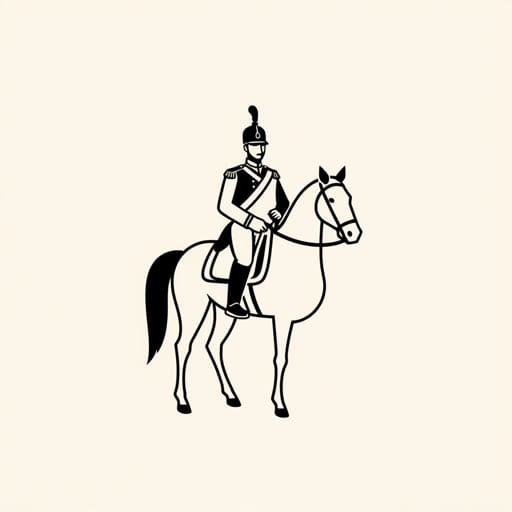
When tackling a crossword puzzle, especially those crafted by experienced editors, sometimes the clues refer to niche historical terms or specific cultural references. One such clue that can puzzle many solvers is Tsarist cavalryman. If you’ve come across this hint in a crossword and found yourself scratching your head, you’re not alone. This clue draws on military history, language origins, and some contextual knowledge of the Russian Empire. Understanding this clue can give not only the right answer but also an insight into a fascinating piece of history.
Breaking Down the Clue
Understanding ‘Tsarist’
The word ‘Tsarist’ refers to anything related to the Tsars of Russia, who were monarchs before the revolution of 1917. A Tsar was essentially the Russian equivalent of an emperor. The Tsarist period spans several centuries and includes famous figures like Ivan the Terrible, Peter the Great, and Nicholas II. In crosswords, the word Tsarist immediately points to pre-Soviet or Imperial Russian context.
Decoding Cavalryman
A cavalryman is a soldier who serves on horseback. In most historical contexts, cavalry units were known for their speed and mobility in battle. Combining Tsarist and cavalryman suggests the clue refers to a member of a mounted unit that served under the Russian Tsars.
With this understanding, solvers can start thinking of terms or titles historically used to describe Russian cavalry forces during the time of the empire.
Common Crossword Answer: Cossack
Why Cossack Fits
In most standard crosswords, especially in major publications like The New York Times or The Guardian, the answer to Tsarist cavalryman is typically Cossack. The term Cossack refers to a group of predominantly East Slavic-speaking people known for their military skills, particularly as cavalrymen.
- Letters: Cossack is a 7-letter word, which fits many standard crossword formats.
- Context: Cossacks were fiercely loyal to the Tsar and often served as elite cavalry units.
- Clarity: In the puzzle world, Cossack is widely recognized for its association with Tsarist military power.
Historical Background of Cossacks
Cossacks emerged in the 15th century in the border regions of the Russian and Polish-Lithuanian states. They formed semi-military communities, with strong traditions of self-governance and martial skill. Over time, many Cossack groups pledged allegiance to the Russian Empire in exchange for land and autonomy.
By the 18th and 19th centuries, Cossacks were well-integrated into the Imperial Russian Army. They played major roles in suppressing uprisings, patrolling borders, and participating in wars against the Ottoman Empire, France, and others.
Other Possible Answers and Variations
Less Common but Thematically Related Answers
While Cossack is the most straightforward and accepted answer, some other historical or region-specific terms could appear in different crossword settings:
- Dragoon A term used more broadly across Europe, including in Russia, for mounted infantry. Less likely but possible in thematic puzzles.
- Uhlan A light cavalryman used in Eastern European armies, including Russia, originally of Polish origin. Rare in standard crosswords.
- Hussar A term used across European armies for light cavalry. Russian hussars were part of the Tsarist forces but may be used in specialized or tough clues.
These alternatives are not usually the correct answer for Tsarist cavalryman, unless the puzzle uses a broader or themed approach. Always consider the number of squares and intersecting answers when assessing these possibilities.
Why Crossword Puzzles Use Historical Clues
Challenging the Solver
Crossword clues like Tsarist cavalryman are designed to test not just vocabulary but also knowledge of history and cultural nuance. They challenge solvers to think beyond modern contexts and dive into time periods where different terminologies prevailed.
Enhancing Educational Value
For many crossword fans, part of the fun is learning something new. A clue that leads to Cossack encourages players to explore who the Cossacks were, what role they played in history, and how language evolves. Crosswords can function as miniature history lessons, making them both entertaining and informative.
Tips for Solving Historical Crossword Clues
Know Your Time Periods
If a clue mentions Tsarist, Victorian, Feudal, or any other historical modifier, focus on the vocabulary and context used during that era. Terms that may sound obscure now could have been very common then.
Look for Clue Triggers
Words like soldier, cavalryman, leader, or warrior often pair with national or imperial modifiers. The clue structure gives away both the occupation and origin, making your search narrower.
Leverage Crossword Databases or Dictionaries
If you’re stuck, tools like crossword dictionaries or solving websites can provide hints. Searching the clue directly often leads to community discussions and explanations that improve understanding for future puzzles.
Check Crossing Clues
As with all crosswords, make use of the intersecting clues to figure out harder answers. Even one or two confirmed letters can point you toward the correct word. For example, seeing a C or K in the middle of Tsarist cavalryman may quickly lead you to think of Cossack.
The Lasting Legacy of the Cossack
Beyond crosswords, the term Cossack lives on in modern culture, literature, and even military references. They have become symbols of resistance, loyalty, and martial prowess in Eastern European storytelling. Their impact on Russian military history is significant, and their role in the rise and fall of the Tsarist regime is deeply recorded in historical texts.
In popular imagination, Cossacks often appear in folk songs, traditional dances, and even video games, usually depicted with their iconic outfits, horseback stances, and strict warrior codes. They’re more than just a crossword clue they’re a symbol of a bygone era filled with drama, loyalty, rebellion, and empire.
If you’re stuck on a crossword clue like Tsarist cavalryman, the answer is most likely Cossack. But understanding why that’s the correct solution adds a rich layer to the solving experience. Not only does it improve your puzzle-solving skills, but it also connects you to a fascinating historical narrative. Whether you’re a history buff or a casual puzzle fan, clues like these make the world of crosswords much more engaging and rewarding.