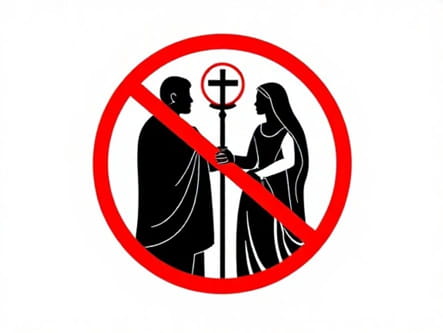
The question of whether the Bible prohibits polygamy has intrigued theologians, scholars, and lay readers for centuries. Polygamy, the practice of having more than one spouse at a time, is documented in various parts of the Old and New Testaments, but the biblical perspective on its permissibility is nuanced. While some argue that polygamy was tolerated in certain historical contexts, others maintain that Scripture promotes monogamy as God’s ideal for marriage. Understanding this topic requires examining biblical texts, historical practices, and the theological implications of marital relationships as outlined in the Bible.
Polygamy in the Old Testament
The Old Testament records numerous instances of polygamy among key figures, indicating that the practice was culturally and socially accepted in ancient Israel. Notable figures such as Abraham, Jacob, David, and Solomon had multiple wives. For instance, Solomon is described as having 700 wives and 300 concubines (1 Kings 113). These passages illustrate that polygamy existed but do not necessarily indicate divine endorsement of the practice.
Some scholars argue that polygamy in the Old Testament was more a reflection of societal norms rather than a command from God. Polygamous relationships often brought complications, jealousy, and family conflicts, which are depicted in stories like that of Jacob with Leah and Rachel, and David with his multiple wives. These narratives frequently highlight the negative consequences of polygamy rather than presenting it as a model for marital life.
God’s Ideal Marriage in the Old Testament
While polygamy was present, the Bible also hints at a monogamous ideal. Genesis 224 describes marriage as a union between one man and one woman Therefore a man shall leave his father and mother and be joined to his wife, and they shall become one flesh. This foundational text sets a precedent for monogamy, suggesting that the original design of marriage aligns with a one-to-one partnership. Even though polygamy was tolerated in historical contexts, the biblical narrative consistently portrays it as secondary to God’s intended ideal.
Polygamy in the New Testament
The New Testament further clarifies God’s design for marriage, leaning toward monogamy. Jesus emphasized the original creation design of marriage in Matthew 194-6, reiterating the Genesis account and reinforcing the one-flesh union between a man and a woman. The Apostle Paul also taught monogamous principles in his letters. For example, 1 Timothy 32 and Titus 16 prescribe that church leaders should be the husband of one wife, indicating a preference for monogamous relationships as a standard for spiritual and moral leadership.
Although the New Testament does not explicitly prohibit polygamy, it consistently emphasizes faithfulness, mutual love, and unity in marriage. The teachings suggest that while polygamy may have occurred, it is not aligned with the moral and spiritual framework intended for Christian life.
Implications for Christian Ethics
The biblical treatment of polygamy has ethical implications for contemporary readers. Monogamy is generally upheld as the standard for Christian marriage, emphasizing mutual respect, love, and partnership. Polygamy, on the other hand, is often associated with inequality, emotional strain, and social complications, which contrasts with the biblical vision of marital harmony and spiritual unity.
Historical Context and Cultural Influence
Understanding the Bible’s perspective on polygamy also requires considering historical and cultural contexts. In ancient Israel, polygamy could serve practical purposes, such as ensuring family lineage or creating political alliances. These contextual factors help explain why polygamy appears in Scripture without necessarily indicating divine approval. The cultural acceptability of polygamy at the time does not equate to an endorsement of it as a moral ideal for all generations.
Modern Christian Interpretation
Today, most Christian denominations advocate monogamy, drawing on both Old and New Testament principles. Scholars and pastors often highlight that while polygamy was historically practiced, God’s ideal has always been one man and one woman united in marriage. Contemporary Christian ethics interpret polygamy as inconsistent with the holistic biblical vision of love, fidelity, and unity.
Polygamy and Biblical Law
Some readers point to the laws in the Mosaic covenant that regulate, rather than prohibit, polygamy. Deuteronomy 2115-17 provides instructions on inheritance when a man has multiple wives, showing that polygamy was regulated to ensure justice and fairness. These laws reflect social realities of the time but do not serve as a moral endorsement of polygamy as an ideal practice. The regulations were about mitigating harm rather than promoting polygamy.
Lessons from Polygamous Figures
Examining the lives of polygamous figures in the Bible often reveals the difficulties associated with multiple marriages. Stories of rivalry, jealousy, and conflict, such as those between Sarah and Hagar or Rachel and Leah, demonstrate the emotional and spiritual challenges of polygamous arrangements. These narratives serve as cautionary examples, reinforcing the Bible’s underlying preference for monogamy as the stable and God-intended model for marital life.
the Bible presents a complex picture of polygamy. While historical instances of multiple wives existed and were sometimes tolerated, the scriptural emphasis points toward monogamy as God’s ideal for marriage. Both the Old and New Testaments highlight the importance of fidelity, unity, and mutual respect between spouses. Polygamy, when examined through biblical narratives and ethical teachings, appears as a tolerated social practice rather than a divine command. Modern Christian interpretation continues to uphold monogamy, drawing lessons from both historical examples and theological principles.
- Polygamy existed historically but was not God’s ideal.
- Monogamy is emphasized in both Old and New Testaments.
- Biblical narratives illustrate the challenges of polygamous relationships.
- Christian ethics today generally align with monogamous marriage.
- Regulations in the Mosaic law addressed social realities, not divine approval.
Understanding the biblical stance on polygamy involves studying the historical context, examining scriptural principles, and interpreting ethical teachings. The consistent message emphasizes marriage as a one-to-one partnership, guided by love, faithfulness, and spiritual unity, which remains relevant for believers seeking to follow biblical principles in contemporary life.