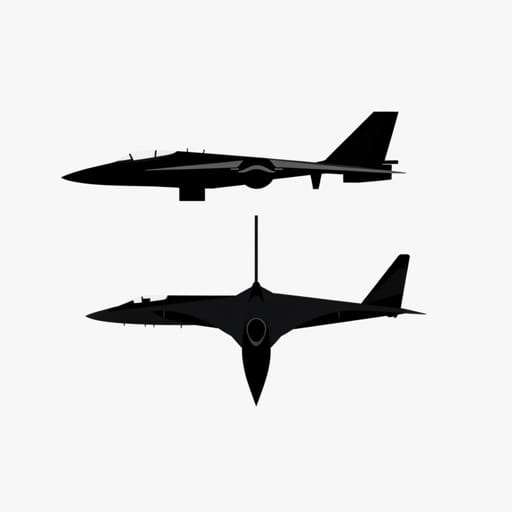
During the Cold War, both the Soviet Union and the United Kingdom pursued innovations in vertical takeoff and landing (VTOL) fighter jets, resulting in two distinct aircraft: the Yakovlev Yak-38 and the Hawker Siddeley Harrier. These planes represented very different approaches to the same problem how to deploy jet fighters from aircraft carriers or forward airbases without needing a long runway. While both jets could take off and land vertically, their performance, design philosophy, and combat capability varied significantly. Understanding the comparison between the Yak-38 vs Harrier sheds light on the evolution of VTOL aircraft and their impact on military aviation.
Background and Development History
Yak-38: Soviet Naval Experimentation
The Yakovlev Yak-38 was the first operational VTOL aircraft produced by the Soviet Union. Developed in the 1970s, it was intended to operate from the Kiev-class aircraft carriers, which were more like helicopter cruisers than full-sized carriers. The Soviet Navy lacked large-deck aircraft carriers like those of the US or UK, so the Yak-38 was a solution that allowed fixed-wing air support from smaller vessels.
Its design was heavily influenced by operational requirements rather than aerodynamic efficiency. The Yak-38 used one main engine for horizontal thrust and two vertically mounted lift jets located behind the cockpit. These lift engines were only used during takeoff and landing, adding significant weight but offering vertical lift capacity. However, the aircraft suffered from limitations in payload, range, and overall combat readiness.
Harrier: British Engineering Breakthrough
The Harrier was a British innovation, developed by Hawker Siddeley (later incorporated into British Aerospace). Unlike the Yak-38, the Harrier was a more versatile and widely used platform. First introduced in the late 1960s, it became the world’s first successful operational VTOL fighter. Its unique Pegasus turbofan engine allowed it to vector thrust through four rotating nozzles, enabling vertical and short takeoff and landing without the need for extra lift engines.
The Harrier was eventually adopted by multiple countries, including the United States, which developed its own variants under the AV-8B Harrier II program. The aircraft saw extensive service in multiple conflicts and became known for its agility and battlefield flexibility.
Design Comparison
VTOL Mechanism
- Yak-38: Used three engines one for forward propulsion and two lift jets that were only active during VTOL operations. This design added complexity, increased weight, and reduced fuel efficiency.
- Harrier: Relied on a single Pegasus engine with vectored thrust nozzles, which allowed a more compact and fuel-efficient design. This system also improved overall handling and simplicity.
Aerodynamics and Performance
- Yak-38: Limited maneuverability, subsonic speed (maximum around 1,150 km/h or 715 mph), and restricted range due to its inefficient lift system and smaller internal fuel capacity.
- Harrier: Superior agility, speed (close to 1,180 km/h or 730 mph), and range. Its design enabled better control during both vertical and horizontal flight.
Operational Capabilities
Combat Roles and Armament
One of the key differences in the Yak-38 vs Harrier comparison lies in their intended combat roles and the types of missions they could handle.
- Yak-38: Primarily intended for air defense of the fleet and limited ground attack missions. Its payload capacity was minimal, typically carrying short-range air-to-air missiles, unguided rockets, or bombs.
- Harrier: Designed as a multi-role fighter, capable of close air support, reconnaissance, air defense, and strike missions. It could carry a diverse array of weapons including AIM-9 Sidewinders, Paveway laser-guided bombs, cluster munitions, and 25mm cannon pods.
Service and Deployment
- Yak-38: Operated mainly by the Soviet Navy and briefly by the Russian Navy. Its deployment was limited to the Kiev-class ships, and it was retired in the early 1990s due to performance issues and the dissolution of the USSR.
- Harrier: Saw widespread use across different navies and air forces. It was deployed in conflicts such as the Falklands War, Gulf War, and Afghanistan. Its adaptability allowed it to operate from short runways, roads, and forward bases.
Reliability and Maintenance
Technical Issues and Safety
Reliability is a critical factor in any military aircraft. The Yak-38 was notoriously prone to mechanical failure, especially with its lift jets, which made it difficult to maintain and limited its operational availability.
The Harrier, while also a complex aircraft, proved to be more robust and reliable in the field. Its simpler engine configuration reduced potential failure points, and the aircraft underwent continuous improvement over its lifespan. Its proven track record in combat and training environments demonstrated its durability and safety under demanding conditions.
Legacy and Influence
Technological Influence
- Yak-38: Served as a stepping stone for the development of the more advanced Yak-141, which influenced later VTOL designs, including the F-35B Joint Strike Fighter. Despite its shortcomings, it contributed valuable data to VTOL research in the Soviet Union.
- Harrier: Remains one of the most iconic VTOL aircraft in history. Its design directly influenced future aircraft, including the AV-8B Harrier II and the F-35B. It demonstrated that a VTOL fighter could be both practical and effective in real-world combat scenarios.
Retirement and Successors
- Yak-38: Retired without a direct successor in service. The program was largely considered a failure, though its concept helped inform more modern Soviet designs that never reached full production.
- Harrier: Continued to evolve through multiple variants and remained in service with several countries for decades. Eventually retired in favor of the more advanced F-35B, which continues the VTOL legacy with fifth-generation capabilities.
When comparing the Yak-38 vs Harrier, it becomes clear that while both aircraft shared the goal of VTOL capability, their success and execution were vastly different. The Yak-38 was a bold experiment by the Soviet Union but fell short due to technical limitations and restricted combat capabilities. In contrast, the Harrier not only met its design objectives but exceeded expectations through decades of service across multiple nations and conflicts. It proved that VTOL fighters could play a vital role in modern warfare, paving the way for the future of vertical flight combat aircraft. In terms of engineering, operational history, and combat effectiveness, the Harrier clearly outperformed its Soviet counterpart and earned its place as a landmark in aviation history.