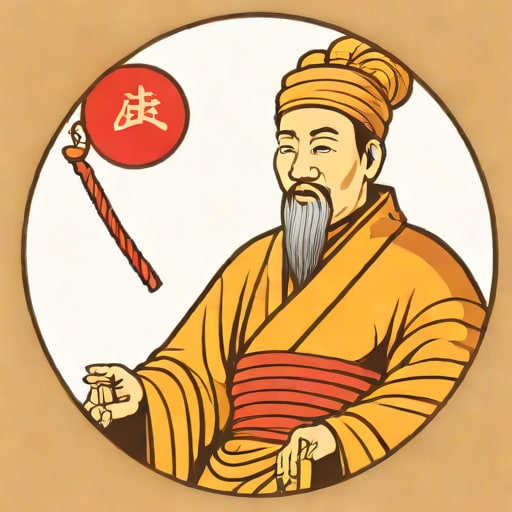
Xuanzang, a prominent Chinese philosopher and Buddhist monk of the Tang dynasty, is widely recognized for his profound contributions to philosophy, religion, and cross-cultural understanding. His intellectual pursuits and tireless efforts to translate Buddhist texts from India to China have left an enduring legacy that continues to influence scholars, spiritual practitioners, and students of philosophy worldwide. Xuanzang’s dedication to learning, his adventurous journey to India, and his scholarly rigor in translating sacred texts highlight his exceptional role as both a philosopher and a cultural bridge. Beyond his translations, Xuanzang’s philosophical interpretations and commentaries helped shape Chinese Buddhism, creating a foundation for future philosophical discourse and spiritual practice. His life exemplifies the pursuit of knowledge, the integration of theory and practice, and the importance of intercultural exchange in intellectual history.
Early Life and Education
Xuanzang was born in 602 CE in Henan province during the Sui dynasty. From a young age, he demonstrated a remarkable intellectual curiosity and a deep interest in Buddhist teachings. Recognizing his potential, his family and local teachers encouraged his studies in religious texts and classical Chinese learning. Xuanzang’s early education included the study of Buddhist sutras, Confucian classics, and philosophical treatises, which provided a comprehensive foundation in both religious and secular thought. His devotion to Buddhist philosophy intensified during his youth, prompting him to enter a monastic life in order to deepen his understanding and practice of the Dharma.
Monastic Training and Philosophical Development
As a monk, Xuanzang rigorously studied Buddhist philosophy, focusing on key doctrines, meditation practices, and textual analysis. He became particularly interested in the Yogacara school of thought, which emphasizes the role of consciousness and perception in understanding reality. Xuanzang’s training involved both intellectual study and contemplative practice, allowing him to develop a balanced approach to philosophy that integrated analytical reasoning with experiential insight. His early encounters with inconsistencies in available translations of Buddhist texts motivated him to seek a more accurate understanding, ultimately leading to his famous journey to India in search of original scriptures.
The Journey to India
Xuanzang’s journey to India is considered one of the most remarkable achievements in the history of Chinese philosophy and religious scholarship. In 627 CE, motivated by the desire to obtain authentic Buddhist scriptures and deepen his understanding of Buddhist philosophy, he embarked on a perilous overland journey along the Silk Road. The expedition lasted seventeen years and covered thousands of miles across deserts, mountains, and foreign territories. During this time, Xuanzang studied at prominent Indian monasteries, engaged with learned scholars, and collected a vast number of manuscripts that would later become foundational for Chinese Buddhism.
Significance of the Journey
The journey was not only a physical endeavor but also a profound intellectual and spiritual quest. By traveling to the source of Buddhist philosophy in India, Xuanzang gained access to original texts, commentaries, and oral teachings that were previously unavailable in China. This allowed him to correct inaccuracies in prior translations and to introduce new philosophical insights. His journey also facilitated cultural exchange, bringing Indian philosophical ideas, art, and religious practices into the Chinese context. The endeavor exemplified his commitment to truth, intellectual rigor, and the transformative power of knowledge.
Philosophical Contributions
Xuanzang’s contributions to Chinese philosophy are closely intertwined with his role as a translator and interpreter of Buddhist texts. He is particularly known for systematizing the Yogacara school, which he studied extensively during his time in India. This school emphasizes the role of consciousness in shaping human experience and understanding reality, offering profound insights into cognition, perception, and the nature of existence. Xuanzang’s commentaries clarified complex philosophical concepts, making them accessible to Chinese scholars and practitioners alike.
Key Philosophical Ideas
- Consciousness-Only (Vijnanavada)Xuanzang emphasized that all experiences are shaped by consciousness, and that understanding the mind is central to understanding reality.
- Interdependence and CausalityHe explored the intricate relationship between cause and effect, highlighting the interconnectedness of all phenomena.
- Integration of Theory and PracticeXuanzang stressed that philosophical study must be complemented by meditation and ethical practice to achieve genuine insight.
- Textual AccuracyHis translations aimed to preserve the original meaning of Indian texts, providing clarity and consistency for Chinese scholars.
Translation Work
One of Xuanzang’s most enduring contributions is his monumental work in translating Buddhist scriptures. After returning to China in 645 CE, he devoted himself to translating over 600 texts, encompassing sutras, commentaries, and treatises. His translations are known for their accuracy, clarity, and faithful representation of Indian philosophical concepts. Xuanzang developed a systematic translation methodology, including precise terminology, careful annotation, and consultation with fellow scholars to ensure correctness. His work significantly enriched Chinese Buddhist literature and provided a foundation for subsequent philosophical and religious studies.
Impact on Chinese Buddhism
Xuanzang’s translations and commentaries had a profound impact on Chinese Buddhism. By making Indian philosophical texts accessible and comprehensible, he facilitated the spread of Yogacara philosophy and inspired a new wave of scholarly inquiry. Monasteries and educational institutions began integrating his translated works into their curricula, influencing generations of monks, scholars, and lay practitioners. His work also contributed to the standardization of Buddhist terminology in Chinese, ensuring that philosophical discussions could be conducted with precision and clarity. The intellectual rigor and depth of his contributions cemented his legacy as both a philosopher and a cultural bridge between India and China.
Legacy and Influence
Xuanzang’s life and work continue to inspire scholars, philosophers, and practitioners worldwide. He is celebrated not only for his intellectual achievements but also for his courage, perseverance, and dedication to truth. His journey to India has been immortalized in literature, folklore, and popular culture, most famously in the classic Chinese novel Journey to the West, which blends historical events with imaginative storytelling. Xuanzang’s philosophical writings remain a critical resource for those studying Buddhist thought, Chinese philosophy, and the history of cultural exchange. His approach to integrating rigorous scholarship with personal practice serves as a model for intellectual and spiritual inquiry.
Modern Relevance
Today, Xuanzang’s teachings and translations are studied in universities, research institutes, and Buddhist seminaries around the world. His emphasis on consciousness, ethical practice, and careful study resonates with contemporary interests in mindfulness, psychology, and intercultural understanding. Scholars often reference his translations and commentaries when examining the transmission of ideas between India and China, highlighting the historical significance of his work. Xuanzang’s life story also serves as a testament to the importance of perseverance, curiosity, and the pursuit of knowledge across cultural boundaries.
Xuanzang, the Chinese philosopher and Buddhist monk, remains a towering figure in the history of philosophy and religious thought. His dedication to studying, translating, and interpreting Indian Buddhist texts not only transformed Chinese Buddhism but also facilitated cross-cultural intellectual exchange. Through his philosophical writings, commentaries, and translations, Xuanzang provided insights into consciousness, interdependence, and ethical practice that continue to influence scholars and practitioners today. His journey to India, a remarkable testament to courage and intellectual curiosity, exemplifies the power of knowledge to bridge cultures and generations. Xuanzang’s enduring legacy highlights the importance of integrating theory with practice, preserving cultural wisdom, and pursuing truth with unwavering dedication.