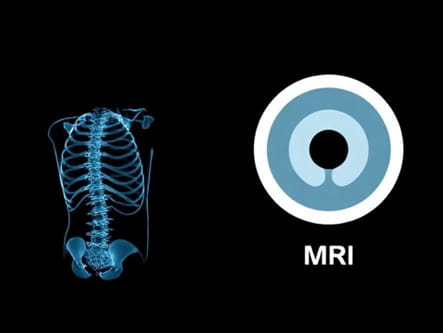
Back pain is one of the most common health complaints worldwide, affecting millions of individuals each year. Its causes can range from simple muscle strain to complex spinal disorders, making accurate diagnosis essential for effective treatment. Two of the most commonly used imaging modalities to evaluate back pain are X-ray and Magnetic Resonance Imaging (MRI). Each has distinct advantages, limitations, and specific clinical indications. Understanding the differences between X-ray and MRI is crucial for patients and healthcare providers alike to ensure timely diagnosis and appropriate management of back pain while minimizing unnecessary procedures.
Understanding X-ray Imaging for Back Pain
X-ray imaging, also known as radiography, uses ionizing radiation to produce images of the bones and some soft tissues in the body. For back pain evaluation, X-rays are typically focused on the lumbar, thoracic, or cervical spine, depending on the location of discomfort. X-rays are widely available, relatively inexpensive, and quick, making them a first-line imaging tool in many cases of back pain.
Key Features of X-rays
- Bone VisualizationX-rays provide excellent detail of bone structures, allowing detection of fractures, dislocations, and degenerative changes such as osteoarthritis.
- Quick ResultsX-ray imaging is fast and can often provide immediate insights in emergency settings.
- Low CostCompared to MRI, X-rays are significantly less expensive and more accessible in most healthcare facilities.
- Limited Soft Tissue ImagingX-rays cannot effectively visualize muscles, ligaments, or intervertebral discs, which can limit their diagnostic utility for certain back pain causes.
Understanding MRI for Back Pain
Magnetic Resonance Imaging (MRI) is an advanced imaging technique that uses powerful magnetic fields and radio waves to generate detailed images of both bones and soft tissues. MRI is particularly useful when X-ray imaging is insufficient for diagnosing the underlying cause of back pain. It is often preferred for evaluating intervertebral discs, spinal cord, nerves, ligaments, and other soft tissue structures that cannot be visualized with standard X-rays.
Key Features of MRI
- Soft Tissue ImagingMRI provides high-resolution images of discs, nerves, spinal cord, and surrounding soft tissues, allowing detection of herniated discs, spinal stenosis, or tumors.
- No RadiationUnlike X-rays, MRI does not use ionizing radiation, making it safer for repeated imaging if necessary.
- Detailed AnatomyMRI can reveal subtle changes in tissue composition and inflammation that may contribute to chronic back pain.
- Longer ProcedureMRI scans take longer than X-rays, often requiring the patient to remain still for 30 to 60 minutes.
- Higher CostMRI is more expensive and less widely available compared to X-ray, which can limit its use in some clinical settings.
Clinical Indications for X-ray
X-rays are generally recommended in situations where bone abnormalities are suspected or when quick assessment is necessary. Some common indications include
- Trauma or suspected fractures of the spine.
- Chronic back pain with possible degenerative changes.
- Assessment of spinal alignment, such as scoliosis or kyphosis.
- Follow-up after spinal surgery to evaluate hardware placement.
Clinical Indications for MRI
MRI is preferred when soft tissue pathology or nerve involvement is suspected. Indications often include
- Persistent back pain not explained by X-ray findings.
- Radiculopathy or nerve compression symptoms, such as leg pain, numbness, or weakness.
- Suspected spinal infections or tumors.
- Evaluation of intervertebral disc herniation or spinal stenosis.
Advantages and Limitations
Advantages of X-ray
- Fast and widely available.
- Cost-effective.
- Good for detecting fractures and bone abnormalities.
Limitations of X-ray
- Poor visualization of soft tissues and nerves.
- Radiation exposure, though minimal.
- May miss early or subtle degenerative changes.
Advantages of MRI
- Excellent soft tissue contrast and detailed images.
- No ionizing radiation.
- Can detect early pathology not visible on X-rays.
Limitations of MRI
- Higher cost and limited availability in some regions.
- Longer imaging time and potential discomfort in confined spaces.
- Not suitable for patients with certain metal implants or pacemakers.
Choosing Between X-ray and MRI
The decision to use X-ray or MRI depends on the patient’s symptoms, clinical history, and suspected underlying condition. In general
- X-ray is the first-line imaging tool for acute trauma, bone pain, or suspected fractures.
- MRI is reserved for cases where soft tissue involvement, nerve compression, or complex pathology is suspected.
- In many cases, X-ray and MRI are used complementarily. An X-ray may identify bone abnormalities that prompt further MRI evaluation for detailed soft tissue assessment.
Both X-ray and MRI play vital roles in the diagnosis and management of back pain. X-ray is ideal for assessing bone structures quickly and cost-effectively, while MRI provides superior imaging of soft tissues, nerves, and intervertebral discs. Understanding the strengths and limitations of each modality enables healthcare providers to make informed decisions, ensuring accurate diagnosis and effective treatment planning. For patients, awareness of these differences helps set realistic expectations about the diagnostic process and the potential benefits of each imaging option. Ultimately, the choice between X-ray and MRI should be guided by clinical indications, patient-specific factors, and the need for comprehensive evaluation of the spine and surrounding structures.