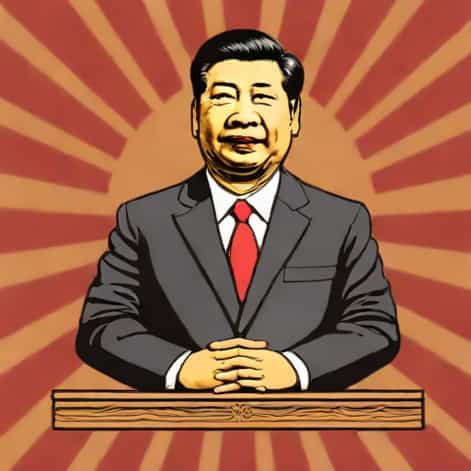
Xi Jinping is one of the most prominent political figures in the world today, serving as the General Secretary of the Communist Party of China (CPC), the President of the People’s Republic of China, and the Chairman of the Central Military Commission. His political career is deeply intertwined with the Communist Party, and understanding his affiliation is key to understanding his policies, leadership style, and influence both within China and globally. The Communist Party of China has been the ruling party since 1949, shaping the country’s economic, social, and political landscape. Xi Jinping’s leadership has reinforced the party’s central role in governance and the direction of China’s development.
Overview of Xi Jinping’s Political Party
Xi Jinping is a member of the Communist Party of China, the only governing political party in mainland China. The CPC was founded in 1921 and has maintained power through a single-party system, emphasizing Marxist-Leninist principles while adapting to contemporary economic and social conditions. Xi Jinping joined the Communist Party in 1974 and has spent decades rising through its ranks, gaining experience in provincial and central government roles before ascending to the top leadership position.
The Communist Party of China (CPC)
The CPC is the founding and ruling party of modern China. Its ideology is based on socialism with Chinese characteristics, which blends Marxist-Leninist theory with pragmatic economic policies. Under the leadership of the CPC, China has transformed from a largely agrarian society into one of the world’s largest economies. Xi Jinping’s role in the party reflects his commitment to maintaining the party’s dominance and ensuring stability within the country.
Xi Jinping’s Rise within the CPC
Xi Jinping’s political career is a story of steady advancement through the ranks of the CPC. His family background also influenced his early involvement; his father, Xi Zhongxun, was a veteran revolutionary and senior party official. Xi Jinping began his political journey at a young age, experiencing the Cultural Revolution firsthand and later gaining positions in local government. He served in several provinces, including Fujian and Zhejiang, where he demonstrated his administrative abilities and loyalty to the party.
Key Positions Held
- Governor of Fujian Province
- Party Secretary of Zhejiang Province
- Party Secretary of Shanghai Municipality
- Vice President of China
- General Secretary of the Communist Party of China
These positions allowed Xi Jinping to gain a deep understanding of the party’s operations and governance strategies. His leadership style, often described as pragmatic and centralized, reflects his long tenure within the CPC.
Xi Jinping’s Leadership and Policies
As the head of the Communist Party, Xi Jinping has implemented policies that reinforce the party’s authority and influence across all sectors of Chinese society. His political ideology, often referred to as Xi Jinping Thought on Socialism with Chinese Characteristics for a New Era, has been enshrined in the party constitution. This doctrine emphasizes the party’s control, economic reform, anti-corruption campaigns, and global influence.
Anti-Corruption Campaign
One of Xi Jinping’s most notable initiatives is the anti-corruption campaign, which targets party officials at all levels. The campaign aims to eliminate corruption, strengthen discipline within the CPC, and maintain public trust in the party. By enforcing strict rules and accountability measures, Xi has consolidated his control over the party and reaffirmed the central authority of the CPC.
Economic Policies
Xi Jinping’s policies within the CPC framework also emphasize economic modernization while maintaining state control. Key initiatives include
- Promoting technological innovation and self-reliance in critical industries
- Maintaining economic growth through state-owned enterprise reform
- Encouraging the Belt and Road Initiative to expand China’s global economic influence
Party Structure and Governance under Xi Jinping
The CPC operates with a hierarchical structure, where the General Secretary holds the most significant authority. Xi Jinping has strengthened the role of the central party leadership, ensuring that the party maintains influence over the military, judiciary, and government institutions. The party’s internal mechanisms, such as the Politburo and the Central Committee, function under his leadership to implement policy decisions consistently across the country.
Centralization of Power
Under Xi Jinping, the Communist Party has seen a centralization of power, with more decisions being made at the top levels rather than being delegated. This approach aims to create policy consistency, reduce bureaucratic inefficiencies, and enhance the party’s ability to respond to domestic and international challenges. Xi’s leadership style reflects his belief in the CPC’s essential role in guiding China’s future development.
Global Influence and the CPC
Xi Jinping’s leadership of the Communist Party also impacts China’s international relations. The CPC’s policies under Xi have emphasized China’s global influence, economic partnerships, and strategic positioning. Initiatives like the Belt and Road Initiative, international trade agreements, and active participation in global forums highlight the party’s role in shaping international affairs.
Soft Power and Diplomacy
The CPC under Xi has leveraged soft power through cultural diplomacy, economic aid, and global media outreach. This approach seeks to enhance China’s image worldwide and promote the party’s ideology as a model for development and governance. Xi’s personal role as a party leader involves navigating these international relationships to reinforce China’s position as a global power.
Challenges Facing Xi Jinping and the CPC
Despite the strong control of the CPC, Xi Jinping faces several challenges. These include domestic economic pressures, social inequality, international scrutiny, and managing a complex global landscape. Balancing party authority with economic modernization and public expectations requires careful policy decisions and effective governance. Xi’s leadership is tested by both internal party dynamics and external geopolitical factors.
Internal Party Challenges
- Maintaining loyalty and discipline among party officials
- Addressing regional disparities and local governance issues
- Managing generational changes within party membership
International Challenges
- Trade tensions and economic competition with other major powers
- Global criticism regarding human rights and governance practices
- Balancing cooperation and competition in multilateral organizations
Xi Jinping’s political party affiliation with the Communist Party of China is central to understanding his leadership, policies, and influence. The CPC has shaped modern China, and Xi’s role as General Secretary reinforces the party’s authority, guiding the country’s economic, social, and international strategies. His leadership reflects a combination of centralized control, ideological reinforcement, and pragmatic policymaking aimed at maintaining the party’s dominance. By understanding Xi Jinping’s position within the CPC, one gains insight into China’s governance, the party’s structure, and the direction of its domestic and international policies. The Communist Party of China remains the cornerstone of Xi Jinping’s political career, and his leadership will continue to impact China and the world for years to come.