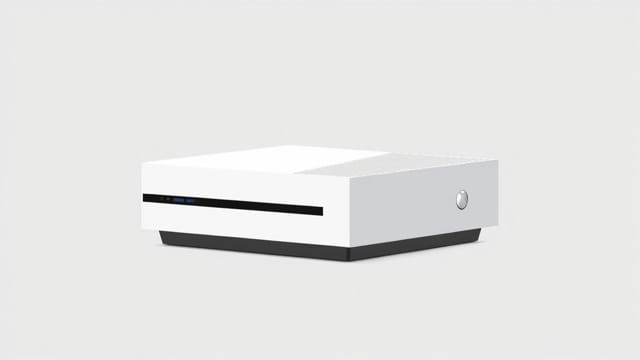
When Microsoft announced the Xbox Series S as a more affordable alternative to the Xbox Series X, it was seen by many as a smart move to broaden the next-gen console market. The Series S promised current-gen gaming at a lower cost, making the platform more accessible. However, as the generation progressed, players and developers began to realize that the Series S may not have been the ideal long-term solution. From performance bottlenecks to development limitations, the Xbox Series S has shown signs that its existence could be more of a hindrance than a help to the Xbox ecosystem.
Hardware Limitations Holding Back Developers
The GPU Bottleneck
The Xbox Series S was designed with a significantly less powerful GPU compared to the Series X. While it maintains the same CPU architecture, the graphical horsepower is drastically reduced, aiming for 1440p resolution instead of 4K. The problem lies in the fact that developers now need to scale down their games specifically to fit within the confines of the Series S hardware. This creates extra work, forces compromises, and leads to uneven performance across platforms.
- Games may run at lower frame rates on Series S
- Graphical fidelity often takes a hit, with missing textures or reduced effects
- Ray tracing is rarely implemented on the console
RAM Constraints
With only 10GB of RAM (compared to 16GB on the Series X), the Series S frequently struggles with games that are memory-intensive. This has led to frequent complaints about texture streaming issues, long load times, and system slowdowns issues that are becoming more pronounced as games get larger and more complex.
Compromised Gaming Experience
Next-Gen in Name Only
While marketed as a next-gen system, the Xbox Series S often delivers an experience that feels stuck between generations. Many AAA titles on Series S run at 1080p with visual settings similar to Xbox One X, and in some cases, worse. The promise of next-gen gaming is diluted by the reality that the hardware can’t always deliver it.
- Limited ray tracing or none at all
- Frequent upscaling instead of native resolution
- Performance drops in open-world or graphically demanding titles
Inconsistent Game Ports
Developers have been vocal about the difficulties of optimizing for the Xbox Series S. Some studios have requested to drop Series S support altogether, arguing that the hardware imposes unnecessary restrictions. While Microsoft mandates that all Xbox titles must support both Series X and Series S, this requirement has led to developers pulling back on their ambitions just to ensure compatibility across both consoles.
Storage Constraints and Hidden Costs
Insufficient Internal Storage
The Xbox Series S ships with a 512GB SSD, but only around 364GB of that is usable. With modern games easily exceeding 100GB, this leaves players with room for only a handful of titles at any given time. Constantly uninstalling and reinstalling games becomes a routine part of owning the console.
- Call of Duty titles can take over 150GB
- Game Pass encourages multiple downloads, further stretching limited space
- High-speed proprietary storage expansion is expensive
Cost of Expansion
To alleviate storage issues, players are pushed toward Microsoft’s proprietary expansion cards, which can cost nearly as much as the Series S itself. When factoring in these hidden costs, the initial affordability of the console becomes questionable, especially compared to Series X or even PC alternatives.
Misleading Market Positioning
False Sense of Next-Gen
Many casual gamers who purchased the Series S expected a full next-gen experience. Instead, they found themselves dealing with limitations, reduced graphical quality, and frustrating storage constraints. The branding made it sound like the Series S would only sacrifice resolution, but the performance and features missing from the experience are far more impactful than advertised.
Confusion for Developers and Players
The existence of a lower-tier system within the same generation complicates development and messaging. Developers must target two very different power levels, and players must understand that ‘next-gen’ may mean something entirely different depending on which Xbox you own. This inconsistency leads to a fractured player base and contributes to dissatisfaction.
The Game Pass Trap
Quantity Over Quality
The Series S is heavily marketed alongside Xbox Game Pass, encouraging users to try hundreds of games. While this sounds appealing, the reality is that the limited storage capacity means you can only have a few titles installed at once. Additionally, many Game Pass titles don’t run at their best on the Series S, especially newer, graphically demanding ones.
Streaming Limitations
Game Pass Cloud Streaming helps offset the storage issue, but it brings its own challenges latency, compression artifacts, and network dependency. This further highlights the weakness of the Series S as a standalone gaming system meant to keep up with modern standards.
Consumer Fatigue and Regret
Buyer’s Remorse
As the generation advances, more players are expressing regret over choosing the Xbox Series S. What seemed like a smart budget decision is now seen as a limitation. Many owners are upgrading to Series X or switching to other platforms entirely, leaving the Series S behind.
Future-Proofing Concerns
With upcoming titles growing in size and complexity, the Series S is already showing signs of struggling to keep up. There’s a growing fear among users that the console may be left behind in the latter half of the generation, or that games will suffer more and more compromises just to ensure Series S compatibility.
The Xbox Series S may have been built with good intentions, aiming to offer an affordable entry point into next-gen gaming. However, its underpowered hardware, storage limitations, and development constraints make it a questionable addition to Microsoft’s console lineup. What was once seen as a clever strategy now feels like a burden on the ecosystem. For many, the Xbox Series S was a mistake not because it doesn’t work, but because it holds back the very generation it was supposed to help lead.