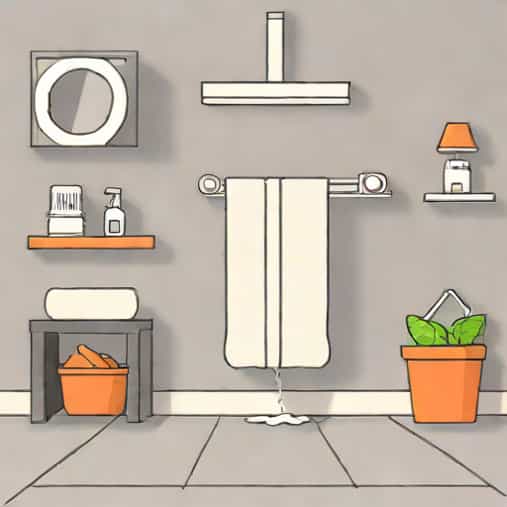
Many people wonder whether a simple household trick, such as hanging a wet towel, can effectively humidify a room. Indoor air can become dry due to heating systems, cold weather, or climate conditions, leading to discomfort, dry skin, and respiratory irritation. While humidifiers are commonly used to address these issues, some individuals seek low-cost, natural alternatives, including using wet towels. Understanding whether a wet towel can truly humidify a room requires exploring the science of evaporation, air circulation, and humidity, as well as considering the limitations and effectiveness of this method.
The Science Behind Humidifying a Room
Humidity refers to the amount of water vapor present in the air. Increasing indoor humidity involves adding moisture to the air, which can be achieved through various methods such as steam, evaporation, or mechanical humidifiers. The effectiveness of any humidification method depends on factors like room size, air circulation, temperature, and the amount of moisture being introduced.
Evaporation and Moisture Transfer
A wet towel works on the principle of evaporation. When water is exposed to air, molecules at the surface absorb energy and transition from a liquid state to a vapor state. This process adds water vapor to the surrounding air, thereby increasing humidity. The rate of evaporation depends on several factors
- Surface areaA larger towel or multiple towels expose more water to air, accelerating evaporation.
- Air circulationMoving air, such as from a fan or open window, enhances evaporation.
- TemperatureWarmer air holds more moisture, so a heated room may allow a towel to humidify more effectively.
- Initial humidityDry air absorbs moisture more readily than already humid air.
Understanding these factors helps explain why a wet towel can increase room humidity, though the effect may be modest compared to mechanical devices.
Effectiveness of a Wet Towel
While a wet towel can add some moisture to the air, its impact is generally limited. The amount of water contained in a single towel is relatively small, and the evaporation rate may not be sufficient to significantly alter humidity in larger rooms or over long periods. However, in small spaces, a wet towel or multiple towels can create noticeable improvement, particularly in dry environments.
Factors Limiting Humidification
- Room size Larger rooms require more moisture to achieve noticeable humidity changes.
- Airflow Poor circulation slows the distribution of water vapor.
- Surface water volume Towels hold limited water, which evaporates quickly unless replenished.
- Environmental conditions High ventilation or low temperatures can reduce effectiveness.
In essence, a wet towel is a temporary and small-scale solution, better suited for minor adjustments or supplementing other humidification methods.
How to Maximize the Effect
If you want to use a wet towel to humidify a room effectively, several practical steps can enhance the results. Positioning, airflow, and repeated wetting are key considerations.
Placement and Air Circulation
Hanging the towel near a heat source, such as a radiator, or placing it where airflow is consistent can increase evaporation. Fans can also help distribute moisture throughout the room, speeding up the humidification process. Ensuring the towel is spread out rather than bunched up maximizes surface area, allowing more water to evaporate into the air.
Maintenance and Water Replenishment
Since a towel can only hold a limited amount of water, it needs to be rewetted frequently to maintain humidity. Depending on room conditions, a towel may dry within a few hours. Using multiple towels or placing them in different parts of the room can also help achieve more uniform humidification.
Comparison with Mechanical Humidifiers
While wet towels offer a low-cost and simple way to add moisture to the air, they are far less efficient than mechanical humidifiers. Devices such as ultrasonic, evaporative, or steam humidifiers can consistently maintain desired humidity levels, monitor room conditions, and cover larger spaces. Wet towels cannot provide precise control over humidity and require ongoing attention.
Advantages of Wet Towels
- Low cost and readily available materials.
- No electricity or specialized equipment required.
- Safe and natural method for small spaces.
- Quick and simple setup for temporary relief.
Limitations Compared to Humidifiers
- Limited coverage area, especially in larger rooms.
- Inconsistent humidity levels depending on environmental conditions.
- Frequent maintenance needed to keep towels wet.
- Cannot precisely control humidity, making it less effective for sensitive conditions.
Additional Tips for Natural Humidification
Besides using wet towels, there are other natural methods to increase indoor humidity. Combining these strategies can enhance comfort and provide a healthier environment
- Place bowls of water near heat sources to encourage evaporation.
- Grow indoor plants, which release moisture through transpiration.
- Boil water on the stove or use stovetop steam to increase humidity temporarily.
- Shower or bathe with the bathroom door open to allow steam to escape into living areas.
These approaches, combined with wet towels, can provide a more effective solution for naturally humidifying a room without the use of electronic devices.
Health Benefits of Humidified Air
Maintaining proper indoor humidity has several advantages. Humid air can alleviate dry skin, reduce irritation in the respiratory system, and help prevent dry eyes. It also reduces the survival rate of some airborne viruses and can protect wooden furniture and flooring from cracking due to dryness. While a wet towel provides only modest humidity increases, it may still contribute to improved comfort in dry indoor environments.
Optimal Humidity Levels
Experts recommend maintaining indoor humidity levels between 30% and 50% for comfort and health. While wet towels alone are unlikely to achieve these levels in large rooms, they can supplement other measures to bring air closer to the ideal range, particularly in smaller spaces or during temporary periods of dryness.
A wet towel can humidify a room to a limited extent by using evaporation to release moisture into the air. Its effectiveness depends on factors such as room size, air circulation, temperature, and the amount of water available in the towel. While not a substitute for mechanical humidifiers, wet towels offer a low-cost, natural, and simple method for small spaces or temporary relief from dry air. Maximizing their effect requires proper placement, frequent rewetting, and good airflow. For sustained and controlled humidification, a dedicated humidifier is preferable, but wet towels remain a practical alternative for minor humidity adjustments. Understanding the science behind this method helps homeowners and renters improve indoor air quality in an accessible and eco-friendly way.