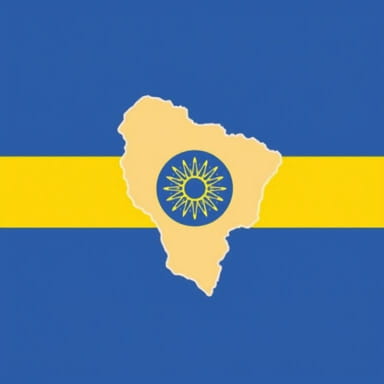
Bolivia is a landlocked country located in the heart of South America. Its strategic position gives it borders with five different countries and places it at a unique crossroads of geographical and cultural diversity. From the towering Andes Mountains to the dense Amazon rainforest, Bolivia’s location plays a vital role in shaping its identity, climate, economy, and biodiversity. Understanding exactly where Bolivia is located and what surrounds it helps reveal the richness and complexity of this fascinating nation.
Geographic Location of Bolivia
Central South America
Bolivia is centrally located in the continent of South America. This central positioning makes it a natural connection point between the western Andean regions and the eastern lowland plains. Despite being landlocked, Bolivia has a diverse topography that includes highlands, valleys, and tropical forests. It sits approximately between latitudes 10° and 23° South and longitudes 57° and 69° West.
Countries That Border Bolivia
Bolivia shares borders with five countries
- Brazilto the north and east
- Paraguayto the southeast
- Argentinato the south
- Chileto the southwest
- Peruto the west
These borders make Bolivia one of the most interconnected countries in South America, with access to a wide range of cultural and economic influences. Its proximity to Brazil and Argentina in particular plays a major role in trade and political relations.
Bolivia’s Regions and Landscapes
The Andes Mountains
The western part of Bolivia is dominated by the Andes Mountains, one of the most prominent mountain ranges in the world. This area includes the Altiplano plateau, which is home to major cities such as La Paz and El Alto. The Andes not only define Bolivia’s landscape but also influence its weather, agriculture, and transportation networks.
The Amazon Basin
To the north and northeast of Bolivia lies a portion of the vast Amazon Basin. This region is made up of tropical rainforest and is rich in biodiversity. Departments like Beni and Pando are located here, where the climate is hot and humid for much of the year. These areas are less populated but play a critical role in Bolivia’s environmental and ecological systems.
The Gran Chaco
In the southeast, Bolivia includes part of the Gran Chaco, a dry, lowland area that stretches into Paraguay and Argentina. This region is characterized by flat plains, dry forests, and thorny scrubland. Although it is sparsely populated, it supports cattle ranching and some agricultural activities.
The Yungas and Valleys
Between the high Andes and the Amazon lowlands lies a transition zone known as the Yungas. These cloud forests and subtropical valleys are lush and green, providing important agricultural lands and scenic beauty. They are known for coffee production and coca leaf cultivation, and they serve as vital corridors for biodiversity.
Administrative Divisions
Departments of Bolivia
Bolivia is divided into nine departments, each with its own capital and administrative structure
- La Paz
- Cochabamba
- Santa Cruz
- Potosí
- Oruro
- Chuquisaca
- Tarija
- Beni
- Pando
These departments are further divided into provinces and municipalities. The location of each department contributes to its unique cultural and economic characteristics. For example, Santa Cruz, in the eastern lowlands, is known as an economic powerhouse, while La Paz, located in the Andes, is the seat of government and political activity.
Major Cities and Their Locations
La Paz and El Alto
La Paz, one of Bolivia’s capitals, is located in the western part of the country at an altitude of over 3,600 meters. Nearby El Alto sits even higher and is one of the fastest-growing cities in Bolivia. These cities lie in the Andes and are known for their dramatic mountain landscapes and indigenous heritage.
Sucre
Sucre, Bolivia’s constitutional capital, is situated in the south-central part of the country. It sits at a more moderate altitude than La Paz and is known for its colonial architecture and historical significance. Sucre played a key role in Bolivia’s independence movement.
Santa Cruz de la Sierra
Located in the eastern region of Bolivia, Santa Cruz is the largest city in the country by population. It sits in the lowlands and has a tropical climate. Santa Cruz is a major center for commerce, industry, and agriculture and is considered Bolivia’s economic capital.
Cochabamba
Positioned in a central valley, Cochabamba has a temperate climate and is often referred to as the City of Eternal Spring. Its central location makes it a key transportation and cultural hub. Cochabamba is also known for its agricultural productivity.
Climatic Zones of Bolivia
Diverse Climate Regions
Bolivia’s location gives it a variety of climate zones
- Highland Climate– Cold and dry in the Andes and Altiplano region
- Tropical Rainforest Climate– Hot and humid in the Amazon Basin
- Temperate Climate– Mild weather in valley regions like Cochabamba
- Semi-arid Climate– Dry in the Gran Chaco and southern plains
This climate diversity affects agriculture, transportation, and settlement patterns. Farmers in the highlands grow potatoes and quinoa, while those in the lowlands focus on soybeans, sugarcane, and tropical fruits.
Strategic and Political Significance
Landlocked but Active
Although Bolivia does not have access to the sea, it maintains strong trade links with neighboring countries. The government has developed river ports on the Paraguay River to facilitate exports. Bolivia also participates in international organizations and maintains active diplomatic relations across Latin America and beyond.
Access to the Pacific
Historically, Bolivia had a coastline along the Pacific Ocean. However, it lost this territory to Chile in the War of the Pacific (1879-1884). The country still maintains its claim for sovereign access to the sea and continues to negotiate for port rights through treaties and international cooperation.
Bolivia is located in the central part of South America, bordered by Brazil, Paraguay, Argentina, Chile, and Peru. Its position gives it access to varied landscapes, climates, and ecosystems from the soaring Andes Mountains to the dense Amazon rainforest. This geographical diversity shapes every aspect of Bolivian life, from agriculture to culture and from infrastructure to political relations. Although landlocked, Bolivia has carved out an influential role in the region, standing as a country of rich history, natural beauty, and strategic location.