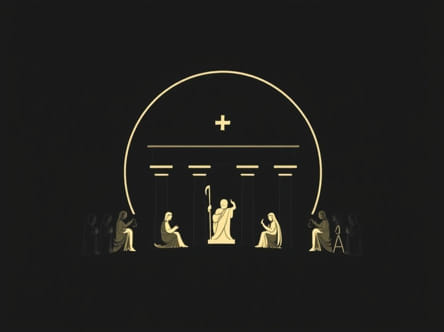
The Council of Ephesus was a significant event in the early history of Christianity, shaping the theological foundations of the Church and addressing controversies regarding the nature of Christ and the Virgin Mary. It was convened to resolve disputes that threatened the unity of the Christian faith and to clarify important doctrinal questions. The council played a critical role in defining orthodoxy and confronting heresies that had emerged during the early 5th century.
The Historical Context of the Council of Ephesus
The early 5th century was a period of theological tension within the Christian Church, particularly concerning the relationship between Jesus Christ’s divine and human natures. Nestorius, the Patriarch of Constantinople, proposed a doctrine that suggested a distinction between the divine and human aspects of Christ, leading to the belief that Mary should not be called Theotokos, or God-bearer,” but rather Christotokos, or “Mother of Christ.” This teaching sparked controversy and threatened the unity of the Church.
In response to the growing theological dispute, Emperor Theodosius II called for a general council of bishops to convene in the city of Ephesus in 431 AD. The purpose of this council was to address the Christological controversy, affirm orthodox teaching, and resolve disagreements between prominent church leaders of the time.
Key Figures at the Council of Ephesus
The Council of Ephesus brought together influential leaders from across the Christian world, each playing a vital role in the deliberations and decisions of the council
- St. Cyril of AlexandriaA staunch opponent of Nestorius, he argued that Christ is one person with both a divine and human nature united. Cyril emphasized that Mary could rightly be called Theotokos.
- Nestorius, Patriarch of ConstantinopleHe defended his view that Christ had two distinct natures and that calling Mary Theotokos was theologically inaccurate.
- John of AntiochA supporter of Nestorius, he initially opposed Cyril and sought to mediate a compromise, which delayed initial proceedings.
- Emperor Theodosius IIThe Roman emperor played a critical role by convening the council and enforcing its decisions within the empire.
The Proceedings of the Council
The Council of Ephesus officially began in June 431 AD in the city of Ephesus, located in present-day Turkey. The council was initially marked by tension and political maneuvering, as the opposing factions struggled to assert their theological positions. Cyril of Alexandria arrived early and convened local bishops before the official opening, which led to a controversial beginning of the council.
Nestorius was called to defend his teachings, but the council condemned his doctrine as heretical. He was accused of dividing Christ into two separate persons and undermining the reality of the Incarnation. Despite resistance from Nestorius and his supporters, the majority of the bishops voted to uphold the title Theotokos for Mary and affirmed the unity of Christ’s divine and human natures.
Decisions and Canons of the Council
The Council of Ephesus issued several critical decisions and canons that shaped Christian doctrine for centuries
- Condemnation of NestorianismNestorius’s teachings were formally condemned, and he was deposed from his position as Patriarch of Constantinople.
- Affirmation of Mary as TheotokosThe council declared that Mary could rightly be called the Mother of God, emphasizing the unity of Christ’s divine and human natures.
- Canons on Church DisciplineThe council issued twenty-two canons addressing ecclesiastical organization, clerical behavior, and jurisdiction, strengthening the structure of the Church.
Significance of the Council of Ephesus
The Council of Ephesus was instrumental in establishing orthodox Christology and reinforcing the authority of ecumenical councils in resolving theological disputes. By affirming the title of Theotokos and rejecting Nestorianism, the council helped unify the Church under a coherent doctrine of the Incarnation. This decision also set a precedent for future councils, demonstrating the importance of collective decision-making and doctrinal clarity within Christianity.
The council’s influence extended beyond theology to political and social spheres. The decisions affected the relationships between different regions of the empire, the standing of prominent church leaders, and the development of Christian practice and devotion. The affirmation of Mary as Theotokos also enhanced her role in Christian worship and theological reflection.
Aftermath of the Council
Following the Council of Ephesus, Nestorius was exiled to a monastery in the Egyptian desert, where he spent the remainder of his life. The divisions between the supporters of Cyril and Nestorius initially persisted, but over time, the orthodox position solidified. The council’s decisions were later ratified by subsequent church councils, reinforcing the rejection of Nestorianism and affirming the unified Christological doctrine.
The Council of Ephesus also paved the way for the Council of Chalcedon in 451 AD, which further clarified the nature of Christ and addressed lingering controversies. The theological framework established at Ephesus became a cornerstone of Christian belief and continues to influence Christian thought to this day.
The Council of Ephesus, held in 431 AD, was a pivotal moment in the history of Christianity. It addressed critical theological disputes regarding the nature of Christ and the role of the Virgin Mary, ultimately affirming the unity of Christ’s divine and human natures and condemning Nestorianism. The council set important precedents for church governance, doctrinal clarity, and the role of ecumenical councils in shaping Christian orthodoxy. Its decisions resonate throughout the centuries, highlighting the enduring significance of this historic assembly in defining the core beliefs of the Christian faith.