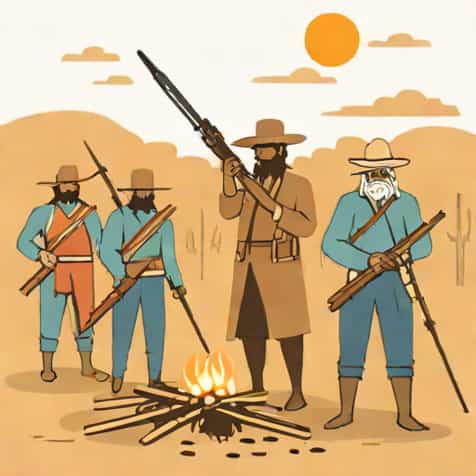
The Pottawatomie Massacre was a significant and violent event during the turbulent years of Bleeding Kansas, a period in American history when tensions between pro-slavery and anti-slavery factions escalated into open conflict. Taking place in May 1856, this massacre marked one of the most infamous acts of retaliation carried out by radical abolitionists in response to pro-slavery violence in Kansas Territory. The event highlighted the deep divisions in the United States over the issue of slavery and foreshadowed the coming Civil War. It involved the killing of several pro-slavery settlers along the Pottawatomie Creek, leaving a lasting impression on the history of the region and the nation as a whole.
Historical Context of Bleeding Kansas
To understand the Pottawatomie Massacre, it is essential to consider the historical backdrop of Bleeding Kansas. The Kansas-Nebraska Act of 1854 allowed settlers in these territories to determine whether slavery would be permitted, a concept known as popular sovereignty. This legislation overturned the Missouri Compromise, which had previously limited the spread of slavery. The act immediately sparked a rush of both pro-slavery and anti-slavery settlers into Kansas, each hoping to influence the outcome. Violent confrontations became common as both sides sought to establish dominance, resulting in what historians now call Bleeding Kansas.
Events Leading Up to the Massacre
The Pottawatomie Massacre was precipitated by a series of violent incidents between pro-slavery forces and abolitionist settlers. A key catalyst was the sacking of Lawrence, Kansas, in May 1856, by pro-slavery forces. During this raid, the town, which was a stronghold of anti-slavery settlers, was attacked and several buildings were destroyed. The destruction of property and threats to anti-slavery settlers fueled anger and fear among abolitionist groups, including John Brown and his followers. John Brown, a fervent abolitionist, believed that violent action was necessary to defend anti-slavery settlers and punish pro-slavery aggressors.
The Pottawatomie Massacre
On the night of May 24-25, 1856, John Brown and a small group of his followers carried out the attack along Pottawatomie Creek in Franklin County, Kansas. They targeted five pro-slavery settlers who were believed to be responsible for attacks on anti-slavery communities. Using broadswords, Brown and his men killed the settlers, leaving their bodies along the creek. Historical accounts suggest that the victims were selected due to their involvement in pro-slavery activities, although some modern historians debate the extent of their direct culpability. The massacre was a deliberate act of retaliation intended to send a warning to pro-slavery forces and protect anti-slavery settlers in the territory.
John Brown’s Role
John Brown was a central figure in the Pottawatomie Massacre and had already established a reputation as a militant abolitionist. He believed that moral conviction justified violent resistance against the institution of slavery. Brown’s actions at Pottawatomie were part of a broader pattern of militancy aimed at confronting pro-slavery forces in Kansas. While many viewed his actions as extreme, Brown saw them as necessary to challenge the spread of slavery and defend the lives of anti-slavery settlers. The massacre cemented his notoriety and foreshadowed his later involvement in the raid on Harpers Ferry in 1859.
Immediate Impact
The Pottawatomie Massacre escalated violence in Kansas and intensified national attention on the conflict. Pro-slavery settlers were outraged, and retaliatory attacks on anti-slavery communities increased. The killings contributed to a cycle of revenge that characterized Bleeding Kansas, where each act of violence provoked another. Newspapers across the country reported on the event, often sensationalizing it and portraying John Brown as either a hero or a villain depending on the publication’s political stance. This polarization highlighted the growing sectional tensions in the United States over the issue of slavery.
Public Reaction
The massacre provoked strong reactions both locally and nationally. Many Northern abolitionists defended Brown’s actions as justified resistance, arguing that violent measures were necessary in the face of pro-slavery aggression. Conversely, Southern pro-slavery advocates condemned the attack as evidence of Northern hostility and extremism. The event intensified the debate over slavery in Congress and further inflamed tensions that would eventually lead to the Civil War. Brown’s notoriety grew, and his image as a radical anti-slavery figure became a symbol of the moral and political struggle dividing the nation.
Long-Term Significance
The Pottawatomie Massacre is significant for several reasons. First, it demonstrated the extreme lengths to which both pro-slavery and anti-slavery factions were willing to go in Kansas Territory. Second, it highlighted the failure of popular sovereignty as a peaceful means of resolving the slavery question. Third, it brought John Brown into the national spotlight as a controversial figure committed to using violence in the cause of abolition. The massacre also contributed to the perception of Kansas as a battleground where the nation’s sectional conflict could no longer be contained, providing a preview of the Civil War that would erupt just a few years later.
Lessons from the Event
The Pottawatomie Massacre illustrates how moral conviction, political tension, and violent retaliation can intersect during periods of national crisis. It serves as a reminder of the dangers of extremism on both sides of a contentious issue and the consequences of political polarization. Historians study the event to understand the human and societal factors that contribute to cycles of violence, and to analyze the ethical and moral dilemmas faced by individuals like John Brown, who believed that extraordinary measures were required to confront injustice.
Historical Debate
Historians continue to debate aspects of the Pottawatomie Massacre, including the motivations of John Brown and the justification for the killings. Some argue that the massacre was a necessary response to pro-slavery aggression and helped protect anti-slavery settlers. Others contend that the killings were excessive and brutal, creating more violence than they prevented. The debate reflects broader questions about the use of violence in pursuit of social justice and the complex moral considerations inherent in resistance movements.
The Pottawatomie Massacre remains a critical event in American history, symbolizing the violent struggle over slavery in the mid-19th century. It occurred in the context of Bleeding Kansas, where competing factions clashed over the future of slavery in the territory. Led by John Brown, the massacre involved the killing of five pro-slavery settlers in retaliation for earlier attacks on anti-slavery communities. While controversial, the event underscores the intensity of sectional conflict and the moral and political complexities of the period. Its legacy continues to inform discussions of abolitionism, political violence, and the causes of the Civil War.
Key Points
- The Pottawatomie Massacre occurred in May 1856 in Kansas Territory.
- It was a violent retaliation led by abolitionist John Brown against pro-slavery settlers.
- The massacre killed five men along Pottawatomie Creek.
- The event escalated violence during Bleeding Kansas and drew national attention.
- John Brown became a controversial figure, viewed as both a hero and extremist.
- The massacre highlighted the failure of popular sovereignty and foreshadowed the Civil War.