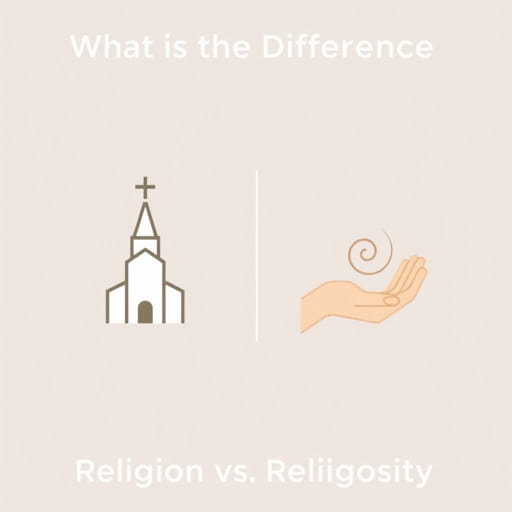
In modern society, discussions about faith, spirituality, and moral practice often bring up the terms religion and religiosity. While these words may seem interchangeable at first glance, they refer to distinct aspects of human engagement with the divine, ethical frameworks, and communal practices. Understanding the difference between religion and religiosity is essential for anyone studying theology, sociology, or cultural anthropology, as it allows for a more nuanced view of how individuals and communities interact with spiritual beliefs and moral systems. Exploring these differences provides insight into the structures, expressions, and personal commitments that shape faith experiences across different cultures and historical periods.
Defining Religion
Religion can be broadly defined as an organized system of beliefs, practices, rituals, and moral codes that connect individuals to a higher power, sacred entities, or transcendent principles. Religion often includes institutional structures, such as churches, mosques, synagogues, or temples, and prescribes communal and individual duties designed to maintain spiritual and moral order. Beyond worship, religion provides a framework for understanding life, death, ethics, and the purpose of existence. Scholars often emphasize that religion is a social and cultural system that encompasses both external practices and internal beliefs.
Key Characteristics of Religion
To better understand religion, it is helpful to examine its defining characteristics. These include
- Organized BeliefsReligion typically offers a structured set of doctrines or teachings about the nature of God, the universe, and human existence.
- Rituals and PracticesReligious observances, ceremonies, and sacraments help connect adherents to the divine or sacred.
- Moral and Ethical CodesReligion often prescribes principles that guide behavior, including rules for justice, charity, and interpersonal conduct.
- Community and Institutional StructureReligious communities provide support, identity, and shared practices for their members.
- Symbolism and Sacred TextsSymbols, myths, and scriptures help convey religious truths and reinforce collective identity.
Understanding Religiosity
Religiosity, by contrast, refers to the degree of personal devotion, commitment, or intensity with which an individual engages in religious beliefs and practices. It emphasizes personal expression and internalized faith rather than the formal or institutional aspects of religion. Religiosity can manifest in prayer, meditation, adherence to moral codes, participation in rituals, and a lifestyle guided by spiritual principles. Unlike religion, which is largely communal and structured, religiosity is often subjective and measured by personal conviction and consistency of practice.
Dimensions of Religiosity
Religiosity can be examined through several dimensions, which include
- BeliefThe depth of acceptance of religious doctrines and spiritual principles.
- PracticeParticipation in religious rituals, prayer, or ethical behaviors that reflect personal devotion.
- ExperienceThe subjective spiritual experiences and feelings of connection with the divine.
- KnowledgeUnderstanding and internalization of religious teachings and sacred texts.
- CommitmentThe degree to which religious beliefs influence daily life, decision-making, and interpersonal relationships.
Main Differences Between Religion and Religiosity
While religion and religiosity are interconnected, they are not identical. Recognizing the distinction is crucial for understanding personal faith, institutional practices, and cultural expressions of belief.
Institution vs. Individual
Religion is primarily institutional and communal, providing a framework of beliefs, practices, and moral guidelines for a group. Religiosity, on the other hand, is an individual measure of faith and devotion. A person can belong to a religion without being highly religious, and conversely, someone may be deeply religious without affiliating formally with an organized institution.
External Practices vs. Internal Commitment
Religion emphasizes external practices, rituals, and adherence to formal doctrines. Religiosity highlights internal commitment, personal devotion, and consistent application of beliefs in daily life. For example, attending services regularly reflects religious observance, while sincere prayer, moral integrity, and spiritual reflection reflect religiosity.
Structured vs. Subjective
Religion is structured, often codified in scriptures, dogmas, and ecclesiastical rules. Religiosity is subjective and flexible, depending on personal experience, interpretation, and depth of spiritual engagement. Two adherents of the same religion may exhibit very different levels of religiosity depending on their internalized beliefs and practices.
Examples to Illustrate the Difference
Examining real-life examples helps clarify the distinction between religion and religiosity.
Formal Participation Without Personal Commitment
A person who attends religious services weekly, observes holidays, and follows rituals due to family expectations or social convention demonstrates religious affiliation but may not exhibit high religiosity. Their engagement is primarily external and formal, focusing on participation rather than internalized faith.
Deep Personal Faith Beyond Institutional Bounds
Conversely, an individual may engage deeply in prayer, meditation, and moral reflection without formal membership in a religious institution. Such a person exhibits high religiosity through consistent spiritual practice, ethical living, and personal devotion, even if they do not participate in communal religious activities. This example illustrates that religiosity is about the quality and intensity of personal faith.
Historical Figures
Historical figures like Saint Francis of Assisi exemplify high religiosity. His personal devotion, humility, and moral commitment transcended formal religious structures, reflecting an intense internalized faith. On the other hand, some rulers who upheld religious institutions for political or social reasons without sincere belief exemplify formal religion without strong religiosity.
Significance of Understanding the Difference
Understanding the difference between religion and religiosity is important for multiple reasons. In sociology and anthropology, this distinction allows researchers to analyze cultural patterns of belief, participation, and personal devotion. In theology, it helps clarify the nature of spiritual maturity and moral integrity. In personal practice, understanding the distinction encourages individuals to cultivate internalized faith rather than relying solely on external conformity. Recognizing these differences promotes authentic spiritual development, ethical reflection, and meaningful engagement with faith traditions.
Implications for Education and Spiritual Growth
By distinguishing between religion and religiosity, educators and spiritual leaders can design programs that foster both institutional understanding and personal devotion. Religious education that balances knowledge of doctrines with opportunities for personal reflection, moral application, and spiritual practice helps cultivate individuals who are both knowledgeable and sincerely committed.
Implications for Community and Society
Communities benefit when members exhibit both religious affiliation and high religiosity. Institutional structures ensure cohesion, shared values, and organized worship, while personal devotion fosters ethical behavior, empathy, and moral responsibility. Recognizing the difference allows societies to appreciate diverse expressions of faith, from formal participation to deep personal commitment.
The difference between religion and religiosity lies in the distinction between formal institutional affiliation and personal spiritual devotion. Religion provides structured beliefs, rituals, and communal practices that guide individuals and communities in ethical and spiritual matters. Religiosity reflects the depth, sincerity, and intensity of personal commitment to those beliefs and practices. Understanding this difference is essential for evaluating faith, spiritual maturity, and ethical behavior in both historical and contemporary contexts. Examples ranging from biblical narratives to modern spiritual practices illustrate how religion and religiosity interact, sometimes overlapping but often representing distinct dimensions of human engagement with the sacred. By appreciating both the institutional and personal aspects of faith, individuals and societies can foster deeper understanding, meaningful spiritual practice, and ethical living that honors both communal tradition and personal conviction.