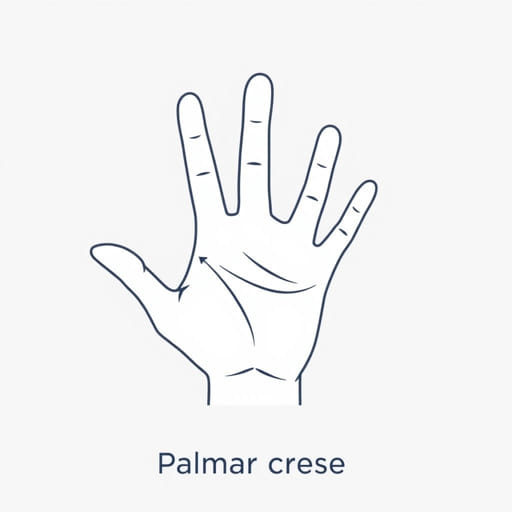
When looking at the palm of your hand, you’ll notice several lines that run across the skin. These lines are known as palmar creases. While they may seem like simple skin folds, palmar creases play an important role in hand function and flexibility. These creases develop early in fetal life and are present at birth. Their patterns vary between individuals, but they are often consistent enough to be used in medical evaluations, anthropological studies, and even biometric identification. Understanding what a palmar crease is helps shed light on both human anatomy and certain genetic or developmental conditions.
Definition of Palmar Crease
What Exactly Is a Palmar Crease?
A palmar crease is a natural fold or line on the skin of the palm. These creases are formed by the movement of the hand during development and continue to deepen as the skin adapts to repeated flexion and extension. Palmar creases are not just superficial markings they correspond to deeper structures in the hand and play a role in its function.
Formation During Fetal Development
Palmar creases begin to form around the 12th week of gestation. As the fetus moves and bends its hands, the skin folds along certain stress lines. These folds eventually become the permanent creases we see on the palms. The development of palmar creases is influenced by both genetics and fetal activity, which is why some patterns can be linked to developmental disorders.
Types of Palmar Creases
Main Creases in the Palm
There are three primary palmar creases found in most people:
- Distal transverse crease: Also known as the head line in palmistry, this crease runs across the top part of the palm, near the base of the fingers.
- Proximal transverse crease: Often referred to as the heart line in palmistry, this crease runs below the distal crease and is usually curved.
- Thenar crease (or radial longitudinal crease): This crease curves around the base of the thumb and is associated with thumb movement.
Single Palmar Crease
In some individuals, the two main transverse creases may fuse to form a single line that runs across the palm. This is known as a single palmar crease or simian crease. While it can appear in healthy individuals, it is more commonly seen in people with certain genetic conditions, such as Down syndrome.
Function of Palmar Creases
Enhancing Hand Flexibility
Palmar creases allow the skin of the palm to fold easily when gripping, holding, or flexing the hand. Without these creases, the skin would be too taut, restricting motion and making hand movements less efficient. They act similarly to the grooves in leather gloves, providing flexibility in key areas.
Grip and Dexterity
The presence of palmar creases enhances our ability to perform precise and complex movements. They enable better grip by allowing the skin to conform to objects during manipulation. This is particularly important in tasks that require fine motor control, such as writing, typing, or handling tools.
Medical Significance of Palmar Creases
Diagnostic Indicators
In medical examinations, doctors may observe the palmar creases for abnormalities or patterns that could indicate underlying health issues. Changes in the number, depth, or shape of these creases can be associated with genetic syndromes or developmental delays.
Conditions Associated With Palmar Crease Variations
- Down syndrome: A single palmar crease is common in individuals with Down syndrome, occurring in about 45% of cases.
- Fetal alcohol syndrome: Palmar crease anomalies may be observed in affected infants.
- Aarskog syndrome, Turner syndrome, and other genetic disorders: May also involve abnormal crease patterns.
Occupational and Age-Related Changes
Repeated use of the hands in manual labor or fine work can deepen the creases or form new ones over time. Additionally, aging may lead to more visible and pronounced palmar creases due to changes in skin elasticity and underlying tissue structure.
Anthropological and Cultural Relevance
Population Studies
Palmar crease patterns vary among different ethnic and demographic groups. Anthropologists have studied these patterns to understand human migration, genetics, and population differences. For instance, the frequency of single palmar creases may be higher in certain populations than others.
Palmistry and Cultural Beliefs
Though not based on science, many cultures have traditions involving palm reading or palmistry, where the lines on the palm are interpreted to predict personality traits or life events. The three main palmar creases are often assigned meanings such as heart line, head line, and life line. While this has no medical basis, it remains a part of many cultural traditions around the world.
Palmar Creases in Biometric Identification
Use in Forensics and Security
Palmar creases are unique to each individual, much like fingerprints. Some biometric systems use palm scans not only to read fingerprints but also to analyze the unique pattern of palm lines. This can be useful in forensics or high-security identification systems.
Advantages of Palm Scanning
Unlike fingerprints, palm scans cover a larger surface area and include more data points, including vein patterns and palmar creases. This provides a more comprehensive biometric profile and is harder to duplicate or forge.
Palmar Creases in Infants and Children
Developmental Screening
In pediatric medicine, examining a newborn’s palmar creases is part of the standard physical assessment. The presence, absence, or fusion of creases can provide early clues to developmental or chromosomal disorders. If abnormalities are found, further genetic testing may be recommended.
Normal Variations
It’s important to note that some children are born with unusual palmar crease patterns and grow up completely healthy. These variations can be purely cosmetic or inherited from parents without any clinical significance.
The palmar crease is much more than a simple line on the hand. It reflects both the functional design of human anatomy and the unique development of each individual. From aiding in grip and flexibility to providing diagnostic clues in medicine, the palmar crease plays a subtle yet vital role in our daily lives. Its presence from early fetal life to old age marks not just physical adaptability, but also individuality. While often overlooked, the palmar crease is a fascinating feature worthy of appreciation for its biological, medical, and cultural significance.