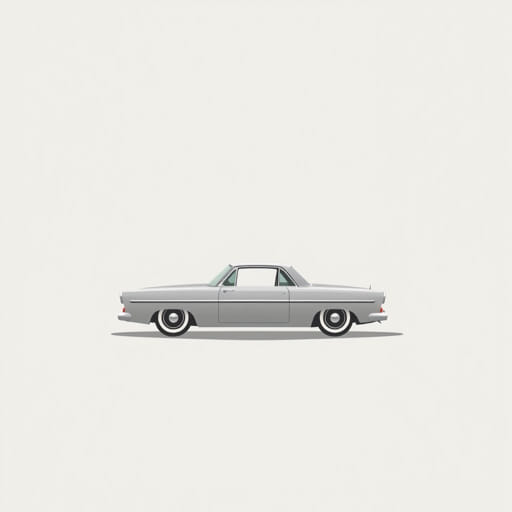
Studebaker was once a symbol of American ingenuity and industrial strength. From humble beginnings as a wagon manufacturer in the 19th century to its bold entry into the automotive industry, Studebaker enjoyed decades of success. However, as time passed, the company faced mounting competition, shifting consumer preferences, and internal challenges that ultimately led to its downfall. Understanding what happened to Studebaker reveals a fascinating story of ambition, innovation, and the harsh realities of a changing marketplace.
Origins of Studebaker
From Wagons to Automobiles
Studebaker began as a blacksmith shop in South Bend, Indiana, in the 1850s. The Studebaker brothers initially made their mark by producing high-quality wagons for farmers, miners, and later the U.S. military. These wagons were widely respected for their durability and craftsmanship.
As the 20th century dawned and the age of the automobile emerged, Studebaker made a strategic move. It entered the car manufacturing business in 1902 with electric vehicles, followed by gasoline-powered models by 1904. This transition positioned Studebaker as one of the first companies to shift from horse-drawn wagons to motorized transportation.
Peak Years and Popular Models
Innovation and Style
Throughout the 1920s and 1930s, Studebaker became known for its engineering excellence and stylish designs. It distinguished itself by producing cars that were not only reliable but also appealing to the eye. In the post-World War II era, Studebaker’s models such as the Champion, Commander, and the revolutionary 1950 ‘Bullet-Nose’ gained significant attention.
The company attracted praise for being ahead of its time. Designers like Raymond Loewy contributed to Studebaker’s reputation for sleek, futuristic aesthetics. This era marked the height of Studebaker’s popularity, with cars that appealed to middle-class Americans looking for innovation and value.
Challenges in a Competitive Market
The Big Three Dominate
Despite its creativity, Studebaker faced stiff competition from the Big Three automakers: General Motors, Ford, and Chrysler. These giants had deeper pockets, greater economies of scale, and more expansive dealership networks. As a result, Studebaker struggled to match their pricing and marketing power.
Studebaker also had relatively high production costs. Its factory in South Bend was older and less efficient compared to modernized plants operated by its competitors. As labor costs increased and materials became more expensive in the 1950s, Studebaker found it difficult to maintain profitability.
Merger with Packard
Strategic Partnership Turns Problematic
In 1954, Studebaker merged with Packard, another independent automaker known for luxury vehicles. The goal was to combine resources, reduce costs, and strengthen market presence. Initially, the Studebaker-Packard Corporation showed promise. However, internal tensions, management disagreements, and cultural differences between the two companies led to instability.
Packard’s financial position was weaker than believed, and Studebaker’s losses were more significant than anticipated. The merger failed to bring the turnaround executives had hoped for. Packard production ceased by 1958, and the combined company reverted to simply being Studebaker.
The Final Decade
Desperate Measures and Decline
Studebaker tried various approaches to remain viable during the 1960s. It introduced new compact and economical models such as the Lark, which initially sold well. The company also ventured into diversification, acquiring non-automotive businesses like Gravely (lawn equipment), Clarke Floor Machine, and STP (a motor oil brand).
Still, the automotive division continued to struggle. Sales declined sharply, and by 1963, Studebaker shut down its South Bend plant, consolidating operations in Hamilton, Ontario, Canada. This move was an attempt to reduce overhead and extend survival, but it only provided a temporary reprieve.
On March 17, 1966, Studebaker produced its final car, marking the end of its long journey in the auto industry.
Legacy of Studebaker
Innovation Remembered
Although Studebaker ceased making cars, its legacy continues to spark admiration. Car enthusiasts remember the company for its bold designs, commitment to quality, and willingness to take risks. Models like the Avanti, introduced in 1962, still turn heads with their distinctive looks and advanced features, including fiberglass bodies and high-performance engines.
Studebaker’s contribution to automotive history is not forgotten. The brand’s story is preserved in museums, collector circles, and car shows across the United States. Its journey from wagon manufacturer to innovative automaker is an enduring chapter of American industrial history.
Factors That Led to the Downfall
Key Reasons for Studebaker’s Failure
Several important factors explain why Studebaker could not survive in the competitive auto industry:
- Inefficiency: High production costs and outdated facilities placed Studebaker at a disadvantage compared to larger automakers.
- Limited Scale: Without the vast dealer and supply networks of competitors, Studebaker could not achieve the same reach or cost savings.
- Merger Missteps: The Packard merger failed to deliver on promises and drained valuable resources.
- Market Pressure: Changing consumer tastes and the rise of compact cars made it harder for Studebaker to compete.
- Inconsistent Leadership: Frequent changes in management led to strategic uncertainty and inconsistent product development.
Studebaker’s Impact Beyond Cars
Diversification and Business Evolution
After shutting down automobile production, Studebaker evolved into a holding company, eventually merging with Worthington Corporation to form Studebaker-Worthington. This new entity focused on industrial and defense-related products rather than consumer goods. Though it no longer bore the name Studebaker in the car industry, the legacy of innovation and adaptation lived on in other sectors.
The story of Studebaker is a powerful reminder of how innovation alone is not enough to survive in a competitive market. Despite its early success, visionary designs, and loyal customer base, Studebaker was unable to overcome structural disadvantages, rising costs, and fierce competition. Yet, the company left an indelible mark on automotive history. Today, Studebaker remains a symbol of creativity, resilience, and the pioneering spirit that once helped shape America’s industrial landscape.