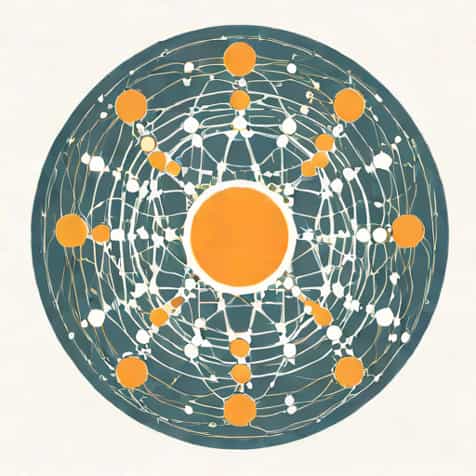
In cell biology, the phrase to nucleate a microtubule refers to a critical process that allows cells to build and organize their internal structure. Although the term may sound technical, the concept behind microtubule nucleation is essential for understanding how cells divide, move, and maintain their shape. Microtubules are not randomly formed; their growth begins in a controlled way at specific locations, and nucleation is the first step that makes this possible.
What Microtubules Are
Microtubules are tiny, hollow tubes that form part of the cytoskeleton of a cell. The cytoskeleton is a network of fibers that provides structure, organization, and transport pathways inside the cell.
Microtubules are made of protein subunits called tubulin. These subunits assemble into long, cylindrical structures that constantly grow and shrink depending on the needs of the cell.
Why Microtubules Are Important
Microtubules play several vital roles in cellular life. They help maintain the shape of the cell, act as tracks for transporting materials, and are essential during cell division.
Without properly formed microtubules, cells would struggle to organize their contents or divide accurately.
What Nucleation Means in Biology
In general terms, nucleation means the initial step where something begins to form. In biology, nucleation refers to the starting point where individual molecules come together to create a larger structure.
When discussing microtubules, nucleation describes the process by which tubulin proteins begin assembling into a stable structure that can grow into a full microtubule.
What It Means to Nucleate a Microtubule
To nucleate a microtubule means to initiate its formation by creating a stable starting site where tubulin subunits can attach and assemble. This step is necessary because spontaneous microtubule formation in the cell is inefficient and unstable.
Nucleation provides a foundation that allows microtubules to grow in a controlled and organized manner.
Why Microtubule Nucleation Is Necessary
Microtubules are dynamic structures, but forming them from scratch is energetically difficult. Tubulin subunits do not easily assemble on their own in the crowded environment of the cell.
Nucleation overcomes this challenge by offering a template that stabilizes the initial assembly of tubulin.
Where Microtubule Nucleation Occurs
In many cells, microtubule nucleation occurs at specific locations known as microtubule-organizing centers. The most well-known example is the centrosome in animal cells.
These organizing centers ensure that microtubules grow in the correct direction and arrangement.
The Role of the Centrosome
The centrosome is a key structure that coordinates microtubule nucleation. It contains specialized protein complexes that promote tubulin assembly.
By anchoring microtubules at one end, the centrosome helps establish cellular polarity and organization.
The Gamma-Tubulin Ring Complex
A crucial component in microtubule nucleation is the gamma-tubulin ring complex, often abbreviated as γ-TuRC. This complex acts as a template for microtubule formation.
Gamma-tubulin is a type of tubulin specifically involved in nucleation rather than elongation.
How the Gamma-Tubulin Ring Works
The gamma-tubulin ring complex mimics the structure of a microtubule end. Tubulin subunits attach to this ring, allowing the microtubule to grow outward.
This process stabilizes the minus end of the microtubule while the plus end continues to grow.
Microtubule Polarity and Nucleation
Microtubules have polarity, meaning they have two distinct ends a plus end and a minus end. Nucleation defines which end is anchored and which end grows.
The minus end is usually attached to the nucleation site, while the plus end extends into the cell.
Microtubule Nucleation During Cell Division
During cell division, microtubule nucleation becomes especially important. The mitotic spindle, which separates chromosomes, is made entirely of microtubules.
Accurate nucleation ensures that chromosomes are distributed correctly between daughter cells.
Alternative Sites of Microtubule Nucleation
Although the centrosome is a major nucleation site, microtubules can also be nucleated elsewhere in the cell.
In some cells, nucleation occurs at the Golgi apparatus, the nuclear envelope, or even along existing microtubules.
Microtubule Nucleation in Different Cell Types
Not all cells use the same nucleation strategies. Plant cells, for example, lack centrosomes but still nucleate microtubules efficiently.
This demonstrates that microtubule nucleation is a flexible process adapted to different cellular environments.
Regulation of Microtubule Nucleation
Cells carefully regulate when and where microtubules are nucleated. This regulation ensures that microtubules support the correct cellular functions at the right time.
Proteins that promote or inhibit nucleation help maintain balance within the cytoskeleton.
Common Misunderstandings About Nucleation
A common misconception is that microtubules simply grow randomly throughout the cell. In reality, nucleation is a controlled and localized process.
Another misunderstanding is that nucleation and growth are the same. Nucleation is the starting step, while growth refers to elongation after nucleation.
Why Understanding Microtubule Nucleation Matters
Understanding what it means to nucleate a microtubule helps explain many biological processes, from cell movement to division.
Errors in microtubule nucleation can lead to developmental problems and disease.
Microtubule Nucleation and Disease Research
Researchers study microtubule nucleation to better understand conditions such as cancer, where cell division becomes uncontrolled.
Targeting nucleation pathways is an area of interest in developing new therapies.
Key Points About Microtubule Nucleation
- Nucleation is the initial step in microtubule formation
- It provides a stable starting point for tubulin assembly
- Gamma-tubulin plays a central role in nucleation
- Nucleation is tightly regulated within the cell
The Dynamic Nature of Microtubules
Even after nucleation, microtubules remain dynamic. They continuously grow and shrink in response to cellular needs.
Nucleation sets the stage for this dynamic behavior by establishing where and how microtubules begin.
Microtubule Nucleation
To nucleate a microtubule means to initiate the formation of one of the cell’s most important structural components. This process allows tubulin proteins to assemble in a controlled and stable way, enabling microtubules to support cell shape, transport, and division. By understanding microtubule nucleation, we gain insight into the fundamental mechanisms that keep cells organized, functional, and alive.