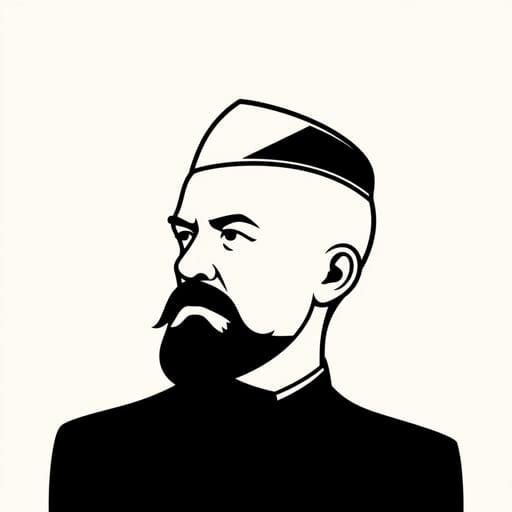
Vladimir Lenin remains one of the most recognized figures in the history of revolutionary socialism. Often associated with the Bolshevik movement, his leadership and ideology shaped the political landscape of early 20th-century Russia and influenced the course of global communism for decades. But the question was Lenin a Bolshevik? requires a deeper exploration of his role, the origin of the Bolshevik faction, and how closely his beliefs and actions aligned with the group’s principles. Understanding this relationship is key to understanding the Russian Revolution and the establishment of the Soviet Union.
Origins of the Bolshevik Faction
The term ‘Bolshevik’ derives from the Russian word for ‘majority’ (bolshinstvo). In 1903, during the Second Congress of the Russian Social Democratic Labour Party (RSDLP), a split occurred within the party. The two factions that emerged were the Bolsheviks and the Mensheviks. Although the division was initially based on a procedural vote, it evolved into a profound ideological and strategic divide.
The Bolsheviks, led by Lenin, advocated for a tightly organized party of professional revolutionaries who would lead the working class in overthrowing the autocracy. In contrast, the Mensheviks favored a broader, more democratic and inclusive party structure, aligned with more gradualist approaches to revolution.
Lenin’s Role in Shaping Bolshevik Identity
Lenin was not merely a participant in the Bolshevik faction; he was its ideological founder and most influential leader. His pamphletWhat Is to Be Done?, published in 1902, laid the theoretical groundwork for what would become the Bolshevik position. He argued that the working class needed a vanguard party to guide its revolutionary struggle, a concept that defined the core strategy of Bolshevism.
Following the 1903 split, Lenin continually worked to consolidate and define the Bolshevik faction as a distinct entity within Russian socialism. He emphasized discipline, centralized control, and a commitment to radical change. These principles became essential to the identity of Bolshevism and were inseparable from Lenin’s own political outlook.
Key Features of Bolshevik Ideology
To understand Lenin’s place within the Bolshevik movement, it is useful to consider the main elements of Bolshevik ideology and how Lenin contributed to them:
- Vanguard Party: Lenin believed in a revolutionary party composed of dedicated, full-time activists capable of leading the proletariat.
- Dictatorship of the Proletariat: He insisted that after a successful revolution, a period of workers’ rule would be necessary to suppress counter-revolutionary forces.
- Revolutionary Tactics: Lenin favored direct action and insurrection over reform or compromise with liberal factions.
- Anti-imperialism: He opposed global capitalism and called for solidarity among oppressed peoples worldwide.
These characteristics were not only central to Bolshevism but were developed and promoted through Lenin’s writings and leadership. His role was not passive; he was the architect of the party’s political and organizational vision.
Lenin’s Leadership in the 1917 Revolution
By 1917, the Bolsheviks had become a major political force. Lenin returned to Russia in April of that year and delivered the ‘April Theses,’ a radical set of proposals calling for an immediate end to Russia’s participation in World War I, the transfer of power to the Soviets (workers’ councils), and the nationalization of land. These ideas clashed with more moderate socialist groups but galvanized the Bolsheviks.
In October 1917, under Lenin’s leadership, the Bolsheviks successfully staged a coup against the Provisional Government, leading to the establishment of the world’s first socialist state. Lenin became head of the Soviet government, and his policies often controversial and authoritarian reflected the Bolshevik emphasis on centralized power and revolutionary control.
Was Lenin a Bolshevik in Spirit and Practice?
While the answer seems straightforward yes, Lenin was a Bolshevik the deeper truth is that Bolshevism was a product of Lenin’s vision. In many ways, the faction cannot be separated from his leadership. His philosophical and strategic ideas gave life to the Bolshevik cause, and he guided its transformation from a faction within the RSDLP into the ruling party of a massive empire.
However, some critics have argued that Lenin’s authoritarian tendencies diverged from earlier socialist ideals, including some held by Bolsheviks themselves. After coming to power, he dissolved the Constituent Assembly when it failed to deliver a Bolshevik majority, cracked down on opposition parties, and established the Cheka, a secret police force that used terror as a tool of governance. These actions prompted debates over whether Lenin remained faithful to revolutionary ideals or betrayed them in pursuit of power.
Relationship with Other Bolsheviks
Lenin’s relationship with other Bolshevik leaders was complex. While he commanded great influence, he often faced internal dissent. Leaders like Leon Trotsky, who initially belonged to the Mensheviks, eventually aligned with the Bolsheviks because of Lenin’s persuasive leadership and the urgency of revolution. Others, like Grigory Zinoviev and Lev Kamenev, had periods of disagreement with Lenin but ultimately accepted his central role.
Despite internal debates, Lenin’s authority within the Bolshevik Party remained largely unchallenged until his health declined in the early 1920s. His influence set the stage for the rise of Joseph Stalin, who would take Bolshevism in an even more authoritarian direction.
Legacy of Lenin as a Bolshevik
The legacy of Lenin as a Bolshevik is inseparable from the legacy of the Bolshevik Revolution itself. Whether admired for his revolutionary zeal or criticized for paving the way for a repressive regime, Lenin’s impact is undeniable. He not only was a Bolshevik he defined what it meant to be one.
Today, Lenin’s role continues to spark debate among historians, political theorists, and activists. For some, he remains a symbol of resistance against imperialism and capitalism. For others, he represents the dangers of concentrated political power and ideological extremism. Yet regardless of one’s interpretation, the connection between Lenin and the Bolsheviks remains a cornerstone of 20th-century history.
asking ‘Was Lenin a Bolshevik?’ is akin to asking whether an author belongs to the book he wrote. Lenin was not only a member of the Bolshevik faction he was its primary architect, theorist, and leader. His vision shaped its strategies, defined its goals, and led it to power in 1917. Though the movement evolved after his death, Lenin’s name and legacy are forever entwined with the word Bolshevik.