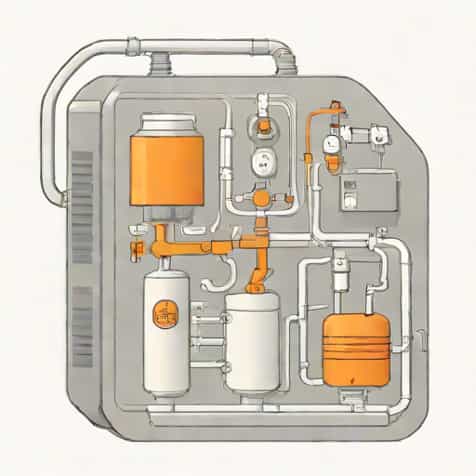
The vapour compression refrigeration system is one of the most widely used methods for cooling and refrigeration in both industrial and domestic applications. Its popularity stems from its efficiency, reliability, and adaptability to a variety of cooling needs. Understanding the components, working principles, and applications of this system is essential for engineers, students, and professionals in the field of thermal engineering and HVAC (Heating, Ventilation, and Air Conditioning). Many technical resources, including PDFs and academic guides, provide detailed explanations, diagrams, and calculations to help users understand this crucial refrigeration method.
Introduction to Vapour Compression Refrigeration
The vapour compression refrigeration system operates on the principle of removing heat from a designated space or substance and rejecting it to a higher temperature environment. This is achieved by circulating a refrigerant through a cycle of compression, condensation, expansion, and evaporation. The system is widely used in household refrigerators, air conditioners, commercial freezers, and industrial cooling applications due to its effectiveness in maintaining low temperatures efficiently.
Main Components of the System
A typical vapour compression refrigeration system consists of four essential components that work together to complete the refrigeration cycle. These components are
- CompressorThe compressor is responsible for compressing the low-pressure refrigerant vapour into high-pressure, high-temperature vapour. This process requires energy input, usually in the form of electricity, and it is crucial for maintaining the flow of the refrigerant throughout the system.
- CondenserThe condenser allows the high-pressure vapour from the compressor to release its heat to the surroundings. As the refrigerant cools down, it condenses into a high-pressure liquid. Condensers can be air-cooled or water-cooled depending on the application.
- Expansion Valve or Throttle ValveThis component regulates the flow of refrigerant into the evaporator. By reducing the pressure, it causes the refrigerant to expand and partially vaporize, lowering its temperature and preparing it to absorb heat in the evaporator.
- EvaporatorThe evaporator absorbs heat from the space or substance being cooled. The low-pressure liquid refrigerant evaporates by absorbing heat, completing the refrigeration cycle before returning to the compressor as low-pressure vapour.
Working Principle of the Vapour Compression System
The operation of a vapour compression refrigeration system can be explained in four stages corresponding to its main components
- CompressionLow-pressure refrigerant vapour enters the compressor, where it is compressed into a high-pressure, high-temperature vapour.
- CondensationThe high-pressure vapour flows into the condenser. Here, it loses heat to the surroundings and condenses into a high-pressure liquid.
- ExpansionThe high-pressure liquid refrigerant passes through the expansion valve, where its pressure drops, causing partial vaporization and cooling.
- EvaporationThe low-pressure, cold refrigerant enters the evaporator, absorbs heat from the target area, and evaporates into low-pressure vapour, which returns to the compressor to repeat the cycle.
This cycle is continuous, allowing for effective cooling as long as the system is operating correctly.
Refrigerants Used
Choosing the right refrigerant is vital for system efficiency, environmental impact, and safety. Common refrigerants include R134a, R410A, R22 (older systems), and newer low-global-warming-potential (GWP) alternatives. Each refrigerant has specific thermodynamic properties, such as boiling point, heat capacity, and pressure-temperature relationship, which influence the system design and performance. Modern PDFs and technical guides often provide detailed tables and charts to help engineers select suitable refrigerants.
Applications of Vapour Compression Systems
Vapour compression refrigeration systems have a wide range of applications, including
- Household RefrigerationRefrigerators and freezers for daily food storage.
- Air ConditioningResidential, commercial, and automotive air conditioning units.
- Industrial CoolingCold storage facilities, food processing, chemical industries, and pharmaceutical applications.
- Ice Making and FreezingIce plants and large-scale freezing units for commercial purposes.
The versatility of the system makes it a cornerstone in modern cooling technology.
Advantages of Vapour Compression Systems
The vapour compression refrigeration system offers several benefits, which contribute to its widespread adoption
- High efficiency and low energy consumption when properly designed.
- Ability to achieve very low temperatures suitable for freezing applications.
- Compact design suitable for domestic and industrial setups.
- Wide availability of components and ease of maintenance.
- Adaptability to different refrigerants and environmental requirements.
Challenges and Considerations
While vapour compression systems are highly effective, they also present some challenges. Environmental concerns regarding high-GWP refrigerants have prompted shifts toward eco-friendly alternatives. Proper maintenance is crucial to avoid issues such as refrigerant leaks, compressor failure, and reduced efficiency. Additionally, system design must carefully consider load requirements, ambient temperature conditions, and refrigerant properties to ensure optimal performance.
Educational Resources and PDFs
For students, engineers, and technicians, PDFs and digital resources provide comprehensive guides on vapour compression refrigeration systems. These documents typically include
- Detailed diagrams of system components and flow paths.
- Thermodynamic analysis and refrigeration cycle charts.
- Formulas for calculating cooling capacity, coefficient of performance (COP), and energy consumption.
- Case studies and troubleshooting tips for practical applications.
Accessing such PDFs allows learners and professionals to gain in-depth knowledge, practice calculations, and understand real-world applications of vapour compression systems.
The vapour compression refrigeration system remains a fundamental technology in cooling and refrigeration due to its efficiency, reliability, and adaptability. With key components such as the compressor, condenser, expansion valve, and evaporator, the system operates on a continuous cycle that effectively removes heat from a designated space. Understanding its working principles, suitable refrigerants, applications, advantages, and challenges is essential for engineers, technicians, and students. PDFs and technical resources provide valuable insights, enabling better design, maintenance, and optimization of these systems. As technology evolves, vapour compression refrigeration continues to play a vital role in both domestic and industrial cooling solutions.