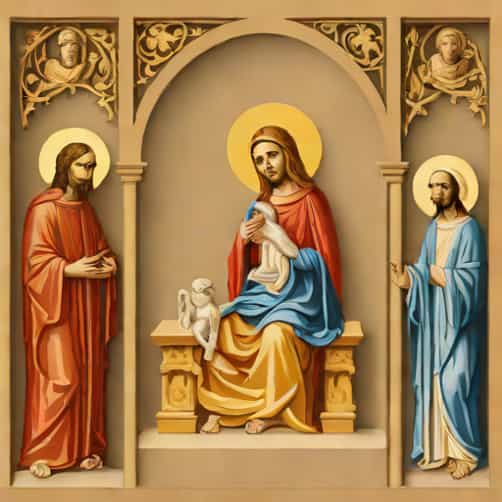
The Van der Paele Altarpiece is one of the most celebrated masterpieces of Early Netherlandish painting, created by the Flemish artist Jan van Eyck in the 15th century. This altarpiece, commissioned by the wealthy civic official Joris van der Paele, is renowned for its extraordinary detail, vibrant color palette, and sophisticated use of oil paint. It stands as a prime example of van Eyck’s meticulous technique and his ability to convey both realism and spiritual depth. Housed today in the Church of St. Donatian in Bruges, Belgium, the altarpiece captures the devotion of its patron while offering a stunning insight into the religious and artistic culture of the time. Its significance extends beyond its religious function, illustrating the interplay between patronage, art, and piety in the Northern Renaissance.
Historical Context of the Van der Paele Altarpiece
The Van der Paele Altarpiece was completed around 1436 and reflects the cultural and religious atmosphere of Bruges during the Early Renaissance. At the time, Bruges was a prosperous city with strong connections to international trade and finance, fostering an environment where art patronage flourished. Wealthy citizens, such as Joris van der Paele, commissioned artworks not only as expressions of personal devotion but also as public symbols of status and piety. The altarpiece was designed for private devotion and public display within the Church of St. Donatian, emphasizing the spiritual aspirations of its patron and the societal values of the period.
Commission and Patronage
- Joris van der Paele, a prominent church official and wealthy citizen, commissioned the altarpiece.
- The work reflects the importance of private patronage in the Northern Renaissance.
- Art served both religious and social functions, reinforcing status and piety.
- The altarpiece was intended for St. Donatian Church in Bruges, highlighting the role of civic-religious institutions.
- Van Eyck’s reputation as a master painter was solidified through commissions like this one.
Artistic Features and Style
Jan van Eyck is celebrated for his pioneering use of oil paint, which allowed for unprecedented precision, luminosity, and layering of colors. The Van der Paele Altarpiece exemplifies these techniques, with its meticulous attention to detail, naturalistic textures, and intricate representation of fabrics, jewels, and architectural elements. The composition centers on religious figures, including the Virgin Mary, Christ, and various saints, each rendered with striking realism and expressive depth. Van Eyck’s use of perspective, though not strictly linear, creates a convincing spatial environment that immerses viewers in a sacred scene.
Key Visual Elements
- Detailed representation of textures, including fabrics, armor, and jewelry.
- Luminous color palette achieved through layered oil paints.
- Realistic portrayal of human figures and facial expressions.
- Intricate depiction of architectural and interior elements, enhancing spatial depth.
- Symbolic use of objects, gestures, and saintly attributes to convey spiritual meaning.
Iconography and Symbolism
The Van der Paele Altarpiece is rich in religious symbolism and iconography, reflecting the spiritual concerns of its patron and the broader Christian context of the 15th century. Joris van der Paele is depicted kneeling in prayer, emphasizing his devotion and piety. Saints including Donatian and George appear as intercessors, connecting the earthly and divine realms. Objects such as the cross, books, and liturgical items carry layered meanings, reinforcing themes of salvation, faith, and moral contemplation. The altarpiece thus functions as both a devotional tool and a visual sermon, guiding viewers toward spiritual reflection.
Notable Symbolic Elements
- Joris van der Paele depicted in the foreground, emphasizing patron devotion.
- Saint Donatian and Saint George represented as protectors and intercessors.
- Crosses, books, and other liturgical items highlighting Christian teachings.
- Flowers, halos, and garments conveying divine purity and sanctity.
- Gestures and gaze direction used to guide the viewer’s focus and contemplation.
Techniques and Innovations
Van Eyck’s work on the Van der Paele Altarpiece demonstrates his mastery of oil painting, which allowed for detailed layering, subtle color gradations, and precise textures. Unlike tempera, oil paint provided greater flexibility in blending and creating luminosity, enabling van Eyck to achieve highly realistic depictions of skin, fabrics, and reflective surfaces. The artist also incorporated meticulous underdrawings and layered glazes, enhancing depth and vibrancy. These innovations contributed significantly to the development of Northern Renaissance painting and influenced generations of artists who followed.
Technical Highlights
- Use of layered oil glazes for depth and luminosity.
- Realistic rendering of textures and reflective surfaces.
- Careful underdrawing to plan composition and detail.
- Attention to naturalistic light and shadow effects.
- Integration of symbolism and realism to communicate spiritual themes.
Legacy and Influence
The Van der Paele Altarpiece has had a lasting impact on the study of art history, Northern Renaissance painting, and religious iconography. Scholars and art enthusiasts continue to analyze van Eyck’s techniques, compositional strategies, and symbolic choices. The altarpiece serves as a benchmark for understanding the artistic and cultural achievements of the 15th century, illustrating the intersection of patronage, devotion, and innovation. Its preservation in the Church of St. Donatian allows contemporary audiences to appreciate the technical mastery and spiritual depth that characterize van Eyck’s work.
Impact on Art History
- Serves as a quintessential example of Northern Renaissance oil painting.
- Demonstrates innovative use of perspective, light, and texture.
- Influenced subsequent generations of Flemish and European painters.
- Provides insight into the role of patronage and religious devotion in art production.
- Remains a key subject of scholarly research and museum exhibitions.
The Van der Paele Altarpiece stands as a masterpiece of Early Netherlandish art, showcasing Jan van Eyck’s remarkable skill, attention to detail, and ability to convey spiritual depth. Through its meticulous depiction of figures, intricate symbolism, and pioneering oil painting techniques, the altarpiece provides a window into the religious and cultural life of 15th-century Bruges. Its enduring legacy underscores the significance of patronage, devotion, and innovation in art history. Today, the Van der Paele Altarpiece continues to inspire admiration and scholarly interest, affirming its place as one of the most important and influential works of the Northern Renaissance.