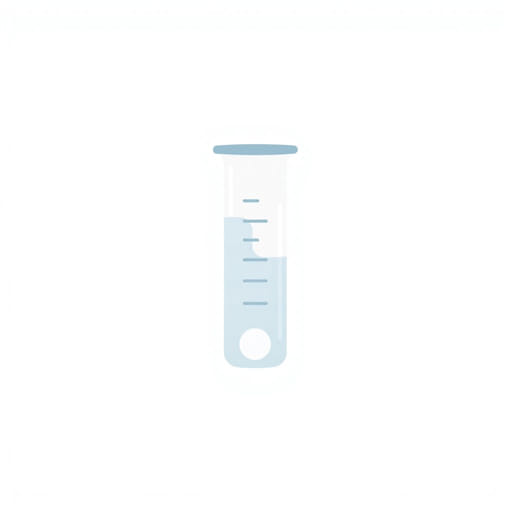
The measuring cylinder, also known as a graduated cylinder, is an essential laboratory tool used for accurately measuring the volume of liquids. Its precise graduations and cylindrical shape make it ideal for experiments in chemistry, biology, physics, and various industrial applications. Unlike beakers or flasks, which are primarily used for mixing or storing liquids, measuring cylinders provide reliable volume measurements, allowing scientists and students to perform experiments with a high degree of accuracy. The versatility and simplicity of the measuring cylinder make it one of the most widely used instruments in scientific laboratories worldwide.
Introduction to Measuring Cylinders
Measuring cylinders come in a range of sizes, typically from 10 mL to 2000 mL, and are made from either glass or durable plastic such as polypropylene. Glass cylinders are often preferred for their resistance to chemical reactions and high temperatures, while plastic cylinders are lighter, more resistant to breakage, and ideal for educational purposes. Each measuring cylinder is marked with graduated lines that indicate the volume, allowing for precise measurement of liquids. The design includes a flat base for stability, a narrow cylindrical shape to reduce parallax errors, and a spout to facilitate easy pouring without spilling.
Laboratory Applications
In laboratory settings, measuring cylinders are indispensable for experiments requiring accurate liquid measurement. Chemists use them to measure reagents before mixing, ensuring that chemical reactions occur under controlled conditions. Biology laboratories rely on measuring cylinders to prepare nutrient solutions, buffer solutions, and other liquid media necessary for experiments involving cells, microorganisms, or plants. Physics experiments often require precise volumes of liquids for density measurements, buoyancy tests, or thermodynamic experiments. The accuracy and ease of use make measuring cylinders suitable for both qualitative and quantitative research.
Educational Uses
Measuring cylinders are frequently used in schools and universities as teaching tools. They help students understand fundamental concepts such as volume, density, and liquid displacement. By practicing liquid measurement with a graduated cylinder, students develop skills in precision, observation, and proper handling of laboratory equipment. In addition to traditional chemistry and biology lessons, measuring cylinders are used in physics demonstrations, environmental science experiments, and engineering projects. Their durability and visibility of graduations make them ideal for classroom environments, allowing students to conduct experiments safely and accurately.
Industrial and Commercial Applications
Beyond educational and laboratory use, measuring cylinders are employed in various industrial and commercial contexts. Food and beverage industries use graduated cylinders to measure liquid ingredients accurately during product formulation. Pharmaceutical companies rely on measuring cylinders to prepare precise quantities of solutions for drug development and quality control. Cosmetic and chemical industries utilize measuring cylinders for batching products, mixing components, and conducting product testing. In each of these applications, the primary goal is to ensure accurate measurements that contribute to product consistency, safety, and quality.
Scientific Research and Experimental Accuracy
One of the primary reasons for using measuring cylinders is their ability to provide precise and reproducible measurements. Graduated cylinders are designed to minimize measurement errors, which is crucial for experiments that rely on exact volumes of liquids. Scientists often use cylinders in conjunction with pipettes, burettes, or volumetric flasks to achieve even greater accuracy. The narrow shape of a measuring cylinder reduces the meniscus error, allowing researchers to read the liquid level at eye level for precise measurement. In analytical chemistry, accurate volume measurements are critical for titration, solution preparation, and reaction stoichiometry.
Environmental and Field Uses
Measuring cylinders are also valuable in environmental science and field research. Researchers studying water quality, soil leachates, or chemical contamination often need to collect and measure liquid samples accurately. Portable plastic cylinders provide a lightweight and break-resistant solution for fieldwork, enabling scientists to perform measurements in remote locations. In ecological studies, graduated cylinders assist in quantifying nutrient solutions, pollutants, or other chemical agents, ensuring that environmental data is reliable and comparable across different studies. Their portability and ease of use make them indispensable tools outside the traditional laboratory setting.
Specialized Measuring Cylinders
In addition to standard measuring cylinders, specialized versions exist for particular applications. Amber or colored cylinders are used for light-sensitive liquids to prevent photodegradation. High-precision cylinders feature more detailed graduations, often with increments as small as 0.1 mL, suitable for analytical work that requires exceptional accuracy. Some cylinders are designed with a wide base and anti-slip features for stability, especially when handling volatile or hazardous chemicals. The availability of these specialized designs enhances the versatility of measuring cylinders across various scientific and industrial fields.
Advantages of Using Measuring Cylinders
- Precise measurement of liquid volumes, reducing experimental error.
- Clear and easy-to-read graduations that allow for accurate observations.
- Durable construction in both glass and plastic options.
- Wide range of sizes to accommodate small and large volume requirements.
- Ease of pouring with a spout design to minimize spills.
- Versatility in laboratory, educational, industrial, and field applications.
Safety and Proper Handling
While measuring cylinders are relatively safe to use, proper handling is essential to prevent accidents and ensure accurate measurements. Glass cylinders must be handled carefully to avoid breakage, while plastic cylinders should be checked for cracks or deformities. When measuring hazardous or corrosive liquids, appropriate personal protective equipment such as gloves, goggles, and lab coats should be worn. Cleaning the cylinder before and after use ensures that residues do not affect future measurements or contaminate experiments. By following proper laboratory protocols, the measuring cylinder remains a reliable and safe tool for accurate volume determination.
Measuring cylinders are versatile, precise, and essential tools in laboratories, classrooms, industry, and field research. They provide an efficient means of measuring liquid volumes accurately, contributing to experimental reliability, product consistency, and scientific discovery. From preparing chemical solutions to measuring environmental samples, the uses of measuring cylinders span a wide range of disciplines and applications. Their simple design, durability, and accuracy ensure that they will continue to be a fundamental instrument in scientific and educational settings for years to come.