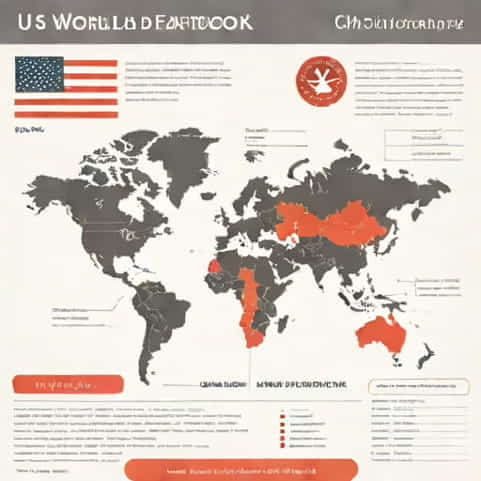
The US CIA World Factbook is one of the most comprehensive and widely used resources for global information, providing detailed data on countries, territories, and regions across the world. It is published by the Central Intelligence Agency of the United States and serves as an essential reference for researchers, educators, policymakers, and anyone interested in understanding the political, economic, and social landscapes of different nations. The Factbook includes information on geography, population, government structure, economic indicators, communications, transportation, military capabilities, and transnational issues. Its value lies not only in the breadth of information but also in the credibility and accuracy associated with CIA research. By offering detailed profiles of nearly every country, the World Factbook helps users compare nations, analyze trends, and gain a deeper understanding of global affairs.
Purpose and Significance
The primary purpose of the US CIA World Factbook is to provide a reliable, centralized source of data about countries and regions worldwide. Policymakers and government officials use the Factbook to make informed decisions about foreign policy, trade, and security. Scholars and students rely on it for academic research and comparative studies, while journalists and analysts use it to provide context in reporting on international events. The significance of the Factbook is amplified by its authoritative nature; it is meticulously compiled and regularly updated to reflect current information, making it a trusted reference for anyone needing accurate and comprehensive country data.
Content Overview
The CIA World Factbook is organized to provide clear and structured information on each country. It typically includes sections such as geography, population, government, economy, energy, communications, transportation, military, and transnational issues. Each section is designed to give a concise yet thorough overview of key facts, enabling users to quickly grasp essential information about a country’s characteristics and capabilities. Maps, charts, and statistical tables are often included to support textual data, making the Factbook both informative and visually accessible.
- Geography land area, climate, terrain, natural resources
- Population demographics, languages, religions, urbanization
- Government type, political parties, leadership, administrative divisions
- Economy GDP, trade, industries, labor force, inflation
- Energy production, consumption, imports, exports
- Communications internet, telephone, media, broadcasting
- Transportation infrastructure, ports, airports, railways
- Military armed forces, expenditures, defense treaties
- Transnational issues disputes, international agreements, refugees
Uses and Applications
The CIA World Factbook is a versatile tool with applications across multiple domains. In education, it serves as a reliable reference for students studying geography, international relations, economics, and political science. Researchers and academics use it to gather baseline data for studies comparing countries or analyzing global trends. Government agencies and international organizations use the Factbook to inform policy decisions, assess risks, and monitor geopolitical developments. The data is also invaluable for businesses evaluating international markets, assessing trade opportunities, and understanding socio-economic conditions in foreign countries.
Applications in Various Fields
- Academic research and teaching
- Policy formulation and governmental decision-making
- Journalistic reporting on international affairs
- Business and market analysis for global operations
- Comparative studies of economic and social indicators
- Military and strategic planning
Reliability and Credibility
One of the main advantages of the CIA World Factbook is its credibility. The information is sourced from official government reports, international organizations, and other reliable datasets. While no source is entirely free from potential errors, the Factbook is widely regarded as authoritative because it undergoes rigorous verification and is updated annually. Users can rely on it to obtain consistent and comparable information across countries, which is particularly useful for longitudinal studies and cross-national analyses.
Sources and Verification
The Factbook compiles information from multiple sources, including United Nations databases, World Bank statistics, government publications, and international research organizations. Each entry is reviewed for accuracy, and discrepancies are addressed during the annual update process. This meticulous approach ensures that users receive trustworthy information that can be used with confidence for academic, professional, or policy-related purposes.
Accessibility and Format
The CIA World Factbook is easily accessible to the public through its official website. Users can search for individual countries, browse categories, or download the data in digital formats for offline use. Its user-friendly interface allows for quick navigation, and its organized structure helps users find information efficiently. The Factbook is also designed to be understandable for a wide audience, with concise explanations, clear tables, and visual aids that enhance comprehension.
Key Features for Users
- Online accessibility with search and browse options
- Downloadable formats for offline research
- Regularly updated to maintain current information
- User-friendly interface with clear sections and tables
- Visual aids like maps and charts for better understanding
Global Impact and Recognition
The CIA World Factbook has gained global recognition as a leading source of country-level data. It is cited in academic papers, used by international organizations, and referenced by media outlets worldwide. Its influence extends beyond the United States, serving as a benchmark for global statistics and country profiles. By providing a standardized framework for country information, the Factbook facilitates international research, policy discussions, and comparative analysis, making it an indispensable tool for global understanding.
Examples of Global Usage
- Comparative studies of economic growth and development
- Analysis of demographic and social trends
- Monitoring geopolitical risks and conflicts
- Planning international business and trade strategies
- Educational resources for schools and universities
The US CIA World Factbook is more than just a reference book; it is a comprehensive resource that bridges knowledge gaps and provides reliable data on countries around the world. Its structured approach, extensive coverage, and authoritative information make it a valuable tool for researchers, educators, policymakers, businesses, and the general public. By offering detailed insights into geography, demographics, government, economy, and more, the Factbook allows users to understand global patterns, analyze trends, and make informed decisions. Whether for academic purposes, policy planning, or general knowledge, the CIA World Factbook remains an indispensable guide to understanding the complexities of the world and the diverse nations within it. Its continued relevance and accessibility ensure that it will remain a trusted source for years to come.