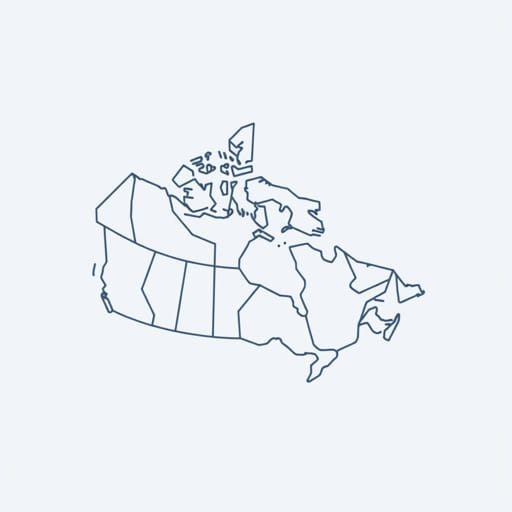
The idea of a U.S. annexation of Canada has existed in various forms since the 18th and 19th centuries. Though never realized, this concept has captured the imagination of politicians, military strategists, and writers throughout history. Rooted in expansionist ideologies, political ambition, and at times, military conflict, the notion of America taking over Canada speaks to broader themes of nationalism, geopolitical rivalry, and continental unity. Understanding the history and motives behind this idea helps us grasp not only American and Canadian identities, but also the evolution of North American politics.
Historical Background of U.S.-Canada Relations
The American Revolution and Canadian Neutrality
During the American Revolution (17751783), the Thirteen Colonies sought independence from British rule. The Continental Congress hoped to bring the British colonies of Canada into the revolution, expecting sympathy from the French-speaking population of Quebec. However, Canada remained largely loyal to Britain, and American attempts to invade Quebec in 1775 failed. This marked the beginning of strained military ambitions toward the north.
The War of 1812 and Expansionist Ambitions
The most significant moment in U.S. efforts to annex Canada occurred during the War of 1812. Fueled by the belief that Canadians would welcome American liberation from British rule, U.S. leaders launched several military campaigns into Canadian territory. However, not only did these invasions fail, but they also united Canadians both English and French speakers against American forces, helping to form an early Canadian identity.
Manifest Destiny and Continental Ambition
The 19th Century Ideology
In the 19th century, the ideology of Manifest Destiny the belief that the United States was destined to expand across North America encouraged political figures and settlers to look toward Canada as a natural extension of American territory. Though most attention focused on western expansion and the annexation of Texas, California, and Oregon, some advocates argued that Canada’s incorporation would fulfill this vision.
Political and Public Interest
Various U.S. politicians and newspapers promoted the annexation of Canada as a way to strengthen the Union. In 1866, following the American Civil War, the idea resurfaced when Irish-American Fenians launched armed raids into Canada, hoping to pressure Britain into granting Irish independence. Though unofficial, these attacks demonstrated the presence of annexationist sentiment in segments of American society.
Canadian Confederation and National Sovereignty
A Response to American Pressure
Canadian Confederation in 1867, which united the provinces of Ontario, Quebec, New Brunswick, and Nova Scotia, was partly a defensive response to American military threats and expansionist ideas. Canadian leaders understood that unity would make their territory more secure and better able to resist foreign interference.
Strengthening Canadian Identity
The threat of annexation served as a catalyst for Canadian nationalism. Rather than weakening British North America, American pressure led to stronger internal cohesion and the eventual formation of a distinctly Canadian government and political structure. The prospect of U.S. control was no longer viewed as beneficial or desirable by the majority of Canadians.
Annexation Proposals in the Late 19th and Early 20th Century
Economic Arguments for Union
Even after military ambitions declined, some Americans and Canadians proposed union through economic integration. In the 1880s and early 20th century, annexationists argued that shared markets, railways, and natural resources would benefit both nations. However, these ideas failed to gain substantial political support in either country.
Shift in Global Alliances
As both nations industrialized and expanded their global interests, the U.S. and Canada began to develop parallel but distinct foreign policies. World War I and World War II showed the importance of allied cooperation, especially with Britain, but did not revive serious annexationist ambitions. Instead, the emphasis shifted to peaceful cooperation.
Modern U.S.-Canada Relations
From Rivalry to Partnership
Today, the relationship between the United States and Canada is one of the closest in the world. They share the longest undefended border, collaborate on military and intelligence operations, and maintain deep economic ties through trade agreements like NAFTA (now USMCA). The idea of annexation has faded into the past, viewed more as historical curiosity than political possibility.
Popular Culture and Alternate History
In modern media, the U.S. annexation of Canada occasionally appears in works of fiction, alternate history novels, or satirical commentary. These depictions, while entertaining, rarely reflect any serious political interest or real-world feasibility. Instead, they serve as creative outlets to explore what-if scenarios grounded in past tensions.
Reasons the Annexation Never Happened
- Canadian Loyalty to Britain: Canadians, especially in the 18th and 19th centuries, saw themselves as loyal British subjects. The idea of joining the United States was generally unpopular.
- Military Failures: Repeated U.S. military efforts to take Canadian territory failed, particularly in the War of 1812.
- Internal U.S. Priorities: The U.S. was often more focused on internal development, the Civil War, and western expansion than on annexing Canada.
- Rise of Canadian Nationalism: Growing Canadian identity and political development reduced any desire for union with the U.S.
- International Diplomacy: British-American treaties and diplomacy, such as the Treaty of Washington (1871), improved relations and removed causes for conflict.
Legacy of Annexation Ideals
Lessons from History
Though annexation never materialized, the idea played a role in shaping the political geography of North America. It pushed Canadian leaders to unify and develop a stronger government, while teaching the U.S. the limits of expansionism. It also emphasized the importance of mutual respect and diplomacy between neighboring countries.
Symbol of Changing Power Dynamics
The decline of annexationist thought also marked the maturation of Canadian independence. Canada moved from a British colony vulnerable to foreign threats to a sovereign nation capable of directing its own destiny. The U.S., in turn, evolved from a young republic driven by territorial hunger to a global power focused on broader strategic alliances.
The U.S. annexation of Canada remains a fascinating episode in North American history, characterized by ambition, rivalry, and evolving national identities. While the concept once stirred serious debate and military action, it now serves as a historical example of how ideas of expansion can shape the political and cultural boundaries of nations. Understanding this topic provides valuable insight into the past struggles for identity and sovereignty, and highlights the importance of peaceful coexistence between close neighbors. The annexation that never happened reminds us that power, unity, and national pride are often born from resistance, not submission.