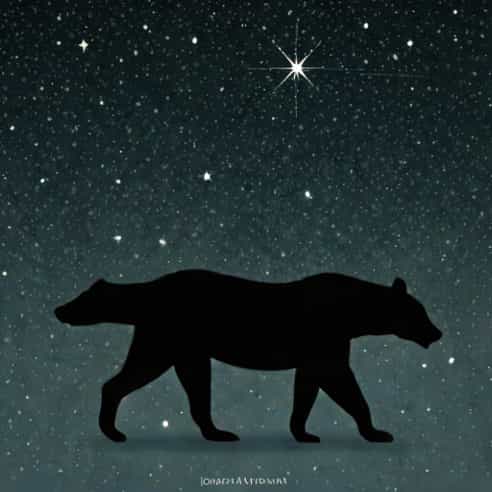
The night sky has fascinated humanity for centuries, with its vast array of stars and celestial patterns inspiring stories, navigation, and scientific discovery. Among the most prominent and easily recognizable constellations are Ursa Major, Orion, and Cassiopeia. Each of these constellations holds a unique place in astronomy and mythology, offering not only visual beauty but also practical use for stargazers and navigators. Understanding the characteristics, locations, and significance of Ursa Major, Orion, and Cassiopeia allows both amateur and experienced astronomers to appreciate the wonders of the night sky more fully.
Ursa Major The Great Bear
Ursa Major, also known as the Great Bear, is one of the largest and most well-known constellations in the northern hemisphere. Its distinctive shape, featuring the famous asterism called the Big Dipper, makes it an essential guide for locating other stars and constellations. The Big Dipper consists of seven bright stars that form a recognizable ladle or dipper shape, making Ursa Major easy to identify even for novice stargazers.
Location and Visibility
Ursa Major is visible throughout the year in most of the northern hemisphere, making it a reliable reference point for navigation. The constellation can be seen circling the North Star, Polaris, which lies in the nearby constellation Ursa Minor. The two stars at the end of the Big Dipper’s bowl, known as the pointer stars, direct observers to Polaris, helping to find true north.
Mythology and Cultural Significance
The mythology of Ursa Major varies across cultures. In Greek mythology, it is associated with the nymph Callisto, who was transformed into a bear by Zeus and placed among the stars. In many Native American traditions, the Big Dipper is seen as a bear being pursued by hunters. This constellation’s storytelling and symbolic importance highlight humanity’s long-standing connection to the stars.
Orion The Hunter
Orion is another prominent constellation, easily recognizable for its distinctive pattern and bright stars. Often referred to as The Hunter, Orion contains several notable stars, including Betelgeuse, a red supergiant, and Rigel, a blue-white supergiant. Orion’s Belt, consisting of three stars in a straight line, is one of the most famous asterisms in the night sky, helping observers identify the constellation with ease.
Location and Seasonal Appearance
Orion is primarily visible in the winter months for observers in the northern hemisphere. Its prominent stars make it a favorite target for both amateur and professional astronomers. Orion is also visible from many parts of the southern hemisphere, although its orientation appears inverted compared to the northern view.
Stars and Deep-Sky Objects
Beyond its bright stars, Orion is home to several deep-sky objects. The Orion Nebula (M42) is a stellar nursery, visible even to the naked eye as a faint glow in Orion’s sword. The constellation also contains multiple star clusters and regions of interstellar gas and dust, making it a fascinating area for astrophotography and astronomical research.
Cassiopeia The Queen
Cassiopeia is easily identified by its distinctive W-shaped pattern formed by five bright stars. Positioned opposite Ursa Major across Polaris, Cassiopeia is a northern circumpolar constellation, meaning it is visible throughout the year for most northern observers. Its location makes it a useful navigation aid and a prominent feature in the night sky.
Mythology and Symbolism
In Greek mythology, Cassiopeia was the queen of Ethiopia, known for her beauty and vanity. Her story is intertwined with that of her daughter Andromeda and the sea monster Cetus, and the constellation’s position in the sky symbolizes her punishment, as she appears to circle the celestial pole upside down for part of the night. Cassiopeia’s myth adds cultural depth to its astronomical significance.
Astronomical Features
Cassiopeia contains several notable stars and deep-sky objects, including the open clusters M52 and M103. These clusters provide opportunities for observing star formation and evolution. The constellation also lies near the Milky Way, making the region rich with star fields, nebulae, and other celestial phenomena for telescopic observation.
Comparing Ursa Major, Orion, and Cassiopeia
While Ursa Major, Orion, and Cassiopeia are all easily recognizable, they differ in appearance, mythology, and utility. Ursa Major is often associated with navigation due to its pointer stars, while Orion is famous for its bright stars and deep-sky objects, making it a favorite for astronomers. Cassiopeia’s unique W shape and mythological background add an element of storytelling and symbolism. Together, these constellations provide a diverse and fascinating view of the northern night sky.
Practical Uses
- NavigationUrsa Major and Cassiopeia help locate Polaris and determine north.
- Seasonal ObservationOrion serves as a marker for winter months in the northern hemisphere.
- Astronomical ResearchAll three constellations host interesting stars, nebulae, and star clusters for study.
Observing Tips
For those interested in observing these constellations, several tips can enhance the experience. Using a star chart or a mobile app can help locate the constellations quickly. Observing from a dark location, away from city lights, improves visibility of fainter stars and deep-sky objects. Binoculars or a small telescope can reveal additional details, such as the Orion Nebula or open clusters in Cassiopeia.
Best Times to Observe
Ursa Major and Cassiopeia are visible throughout the year in the northern hemisphere, making them ideal for year-round observation. Orion is best observed during winter evenings, from December to March, when it rises in the eastern sky after sunset. Planning observation sessions around these periods ensures optimal visibility and enjoyment.
Ursa Major, Orion, and Cassiopeia are three of the most iconic and significant constellations in the northern hemisphere. Each offers unique features, from the navigational utility of Ursa Major to the bright stars and nebulae of Orion, and the mythological symbolism of Cassiopeia. Understanding their locations, characteristics, and stories enriches the experience of stargazing and connects modern observers with centuries of astronomical tradition. Whether for educational purposes, navigation, or personal enjoyment, exploring these constellations reveals the beauty and complexity of the night sky while highlighting humanity’s enduring fascination with the stars.