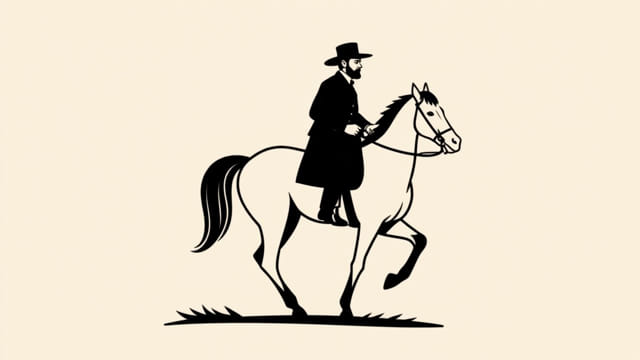
Throughout American history, few military leaders have become as renowned for their horsemanship as Ulysses S. Grant. Long before he became the 18th President of the United States, Grant had already earned a reputation as one of the most skilled horsemen of his era. His extraordinary ability with horses was not only a personal talent but a foundational element of his early success in both military and civilian life. From his youth in Ohio to his service in the Mexican-American War and later the Civil War, Grant’s relationship with horses shaped much of his legacy and demonstrated a discipline, courage, and understanding of animals that reflected his calm demeanor and strategic mindset.
Early Life and Love of Horses
Born in 1822 in Point Pleasant, Ohio, Ulysses S. Grant was drawn to horses from a young age. Unlike many children who merely rode for pleasure or necessity, Grant developed an intuitive connection with horses that allowed him to understand their behavior and needs. By the time he was just a child, his talent was already clear he could ride the most spirited animals and break in young horses better than adults twice his age. His family often relied on him to handle the most difficult horses on their farm, and local neighbors recognized his gift as exceptional.
Early Demonstrations of Skill
By his early teens, Grant was not only riding horses but also driving teams of them for long distances, handling carriages and hauling heavy loads with ease. His father, Jesse Grant, was a tanner and often sent young Ulysses on long trips to deliver goods, trusting his son’s skill and reliability with valuable cargo and sometimes uncooperative horses. These early experiences built Grant’s endurance and confidence, preparing him for the physical demands of military service later in life.
West Point and Horsemanship Records
When Grant entered the United States Military Academy at West Point in 1839, his horsemanship quickly set him apart. While not the top academic student, he excelled in practical areas especially equestrian training. West Point’s rigorous riding program demanded balance, control, and strength, and Grant rose to the challenge. He was widely regarded as the best rider in his class and even set a record for high jump on horseback that remained unbroken for decades.
The Famous High Jump
One of the most legendary stories from Grant’s time at West Point involved a competitive jumping test. Each cadet was expected to ride over a high bar jump. As the bar was raised, fewer cadets succeeded. When it reached over five feet, only Grant remained. Mounted on a powerful horse named York, he charged the jump and cleared it with ease, setting a school record. This feat earned him praise from instructors and admiration from his classmates.
Military Service and Use of Cavalry
Grant’s equestrian expertise was invaluable during his military service. In the Mexican-American War (18461848), he used horses to navigate dangerous terrain, carry messages, and perform reconnaissance. His comfort on horseback allowed him to remain calm under pressure, and he often rode in and out of battle zones with confidence and precision.
Civil War Leadership and Mobility
During the Civil War, Grant’s command required him to move rapidly between units, assess battlefronts, and lead troops effectively. His horsemanship allowed him to travel swiftly and directly across challenging terrain. It also gave him an advantage in reading the battlefield and staying mobile during engagements. Horses were central to communication and strategy in 19th-century warfare, and Grant’s deep knowledge of equine behavior helped him choose the right mounts and care for them properly ensuring they could serve for extended periods under extreme conditions.
Relationship with His Horses
Grant was known for the kindness and respect he showed to horses. Even in the chaos of war, he treated them not just as tools of transport but as living creatures deserving of care. Unlike many military leaders who used and discarded horses without sentiment, Grant ensured his mounts were fed, rested, and well-maintained. He hated cruelty to animals and reportedly intervened when he witnessed mistreatment by subordinates. This compassion reflected his quiet personality and dedication to doing what he believed was right even in small matters.
Favorite Mounts
Among his many horses, Grant had several favorites. Cincinnati, a powerful and elegant horse, was perhaps the most famous. Gifted to him during the Civil War, Cincinnati was tall, strong, and capable of enduring long, difficult rides. Grant rode him often, especially during the final campaigns of the war. Another horse, Jeff Davis named after the Confederate president was captured and later used by Grant in parades and ceremonies. These horses became symbols of his leadership and discipline.
Horsemanship After the War
Even after the war, Grant remained devoted to horses. During his presidency, he continued to ride regularly and used carriages pulled by well-trained teams. He was even fined for speeding with his carriage in Washington, D.C., reflecting his enduring love for fast, spirited horses. His appreciation for equestrian sports and driving was part of his everyday life, a continuation of the passion he had developed in childhood.
A President Who Understood Animals
Grant’s reputation as a skilled horseman was well-known among political allies and foreign dignitaries. His ability to ride, control, and bond with horses became an informal part of his public image. It symbolized discipline, control, and reliability traits that also defined his military and political leadership.
Legacy of Ulysses S. Grant’s Horsemanship
Grant’s skill with horses is often overshadowed by his military victories and presidency, but it remains one of the most personal and enduring aspects of his character. His talent was not just physical it reflected a patience, understanding, and quiet confidence that served him in all areas of life. For historians, Grant’s horsemanship offers a window into his personality: calm under pressure, firm but compassionate, and deeply attuned to the world around him.
Why Grant’s Horsemanship Still Matters
- It showed his early commitment to hard work and responsibility.
- It enhanced his military effectiveness, particularly in mobile warfare.
- It reflected his humane treatment of animals, setting a moral example for others.
- It contributed to his public image as a strong and steady leader.
In the broader narrative of American history, Ulysses S. Grant’s horsemanship deserves recognition not just as a personal talent, but as a key element of his identity. Whether in war, peace, or politics, his relationship with horses reveals a man of depth, discipline, and enduring character.