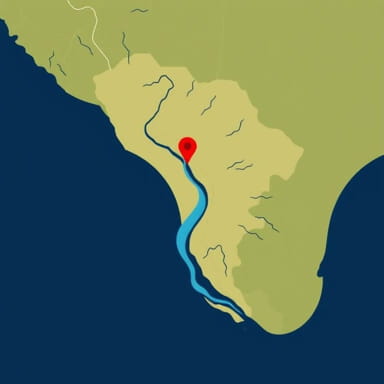
The Pilcomayo River is one of the most significant waterways in South America, both for its ecological importance and its role in shaping the political and cultural boundaries of the region. It stretches across multiple countries and diverse ecosystems, carving its path through highlands, valleys, and plains. Understanding the geographic location of the Pilcomayo River provides insights into its environmental complexity, historical influence, and the human communities that have long depended on it for water, food, and transportation.
General Overview of the Pilcomayo River
The Pilcomayo River is a major tributary of the Paraguay River, which itself is a critical component of the larger Paraná-Paraguay river system. The Pilcomayo River spans approximately 1,100 kilometers and flows through three South American countries Bolivia, Argentina, and Paraguay. Its name originates from Quechua and can be interpreted as River of the Birds” or “River of the Red Mud,” both fitting descriptions due to its biodiversity and heavy sediment content.
Countries Traversed by the Pilcomayo River
- BoliviaThe river’s source lies in the Andes Mountains, within Bolivian territory.
- ParaguayIt forms part of the border between Paraguay and Argentina in the Gran Chaco region.
- ArgentinaIt flows through the northern provinces, contributing to local agriculture and ecosystems.
Source and Upper Course in Bolivia
The geographical origin of the Pilcomayo River is located in the Andes, specifically near the Potosí Department in southern Bolivia. This upper course is characterized by steep valleys, narrow gorges, and fast-flowing water. As the river begins its descent, it collects runoff from mountainous terrain, making this region highly prone to erosion and sedimentation.
Highland Geography
The upper basin is situated at elevations of over 3,000 meters above sea level. These highlands are cold and rugged, marked by sparse vegetation and mining activity. Numerous tributaries feed into the Pilcomayo at this stage, bringing both water and minerals from the Andes.
This section of the river is vital for Bolivian agriculture, particularly in valleys where irrigation from the river supports crops and livestock. However, due to mining in the region, water quality concerns persist and impact both humans and wildlife downstream.
Middle Course through the Gran Chaco Region
As the Pilcomayo River leaves the Andes and enters the lowlands, it begins a complex journey through the Gran Chaco, one of South America’s most extensive dry forests. This region covers parts of southeastern Bolivia, western Paraguay, and northern Argentina. The terrain is flat, with sandy and clay soils that influence how the river behaves, often changing course and creating wetlands and oxbow lakes.
Hydrological Characteristics
- Slow-flowing watersDue to the flat terrain, the river’s velocity decreases, allowing sediment to settle.
- FloodplainsSeasonal flooding creates marshes and nourishes ecosystems.
- DistributariesIn wet seasons, the river may split and form temporary channels.
During the rainy season, the river expands, flooding large areas and supporting diverse habitats. In contrast, the dry season often reduces water flow, turning parts of the river into isolated pools. This dynamic environment supports unique plant and animal life, including endangered species such as the Chacoan peccary and various migratory birds.
Lower Course and Border Region
Further downstream, the Pilcomayo River becomes a natural border between Argentina and Paraguay. This area is politically and economically significant, as the river serves as a demarcation line and source of water for both countries. The provinces of Formosa (Argentina) and the Boquerón Department (Paraguay) are directly influenced by the river’s presence.
Border Significance
The river plays a crucial role in defining territorial boundaries and supporting local populations. Several border towns rely on the Pilcomayo for drinking water, irrigation, and transportation. The management of this shared waterway often requires bilateral agreements between Argentina and Paraguay, especially in times of flooding or drought.
The town of Clorinda in Argentina and nearby Paraguayan communities have historically developed around access to the Pilcomayo River. Efforts to regulate and monitor its flow are critical for preventing disputes and ensuring sustainable use.
Mouth of the Pilcomayo River
The Pilcomayo eventually merges with the Paraguay River near the town of Asunción, the capital of Paraguay. This confluence marks the end of its journey and the beginning of a new one, as its waters join the Paraguay-Paraná system, eventually flowing into the Río de la Plata and the Atlantic Ocean.
Ecological Transition
Near its mouth, the Pilcomayo’s muddy waters meet the larger Paraguay River, creating a mixing zone rich in nutrients. This area supports fishing industries and provides habitat for aquatic species such as catfish and river dolphins. The delta-like environment is also important for migratory birds that travel between the Amazon Basin and southern South America.
Challenges in River Management
Despite its environmental and geographic importance, the Pilcomayo River faces numerous challenges. These include pollution, sediment accumulation, climate variability, and cross-border disputes. In particular, sedimentation is a severe problem, causing parts of the river to become blocked or redirected, affecting both ecosystems and human settlements.
Environmental Concerns
- Mining wasteHeavy metals from upstream activities threaten water quality.
- DeforestationClearing of the Chaco forest affects water retention and erosion.
- Infrastructure projectsDams and diversion channels alter the river’s natural flow.
Efforts are underway by regional governments and international organizations to monitor the river’s health and promote sustainable use. These include satellite monitoring, environmental impact assessments, and the creation of protected areas along key stretches of the river.
Human Settlements and Cultural Importance
Throughout its course, the Pilcomayo River supports a variety of communities, including indigenous peoples, farmers, and fishermen. In Bolivia, Quechua and Aymara populations live along its banks, while in Paraguay and Argentina, Guaraní-speaking communities maintain traditional ways of life closely tied to the river.
The Pilcomayo also holds cultural and spiritual significance. It is featured in local folklore and rituals and is seen as a life-giving force. In rural areas, river festivals celebrate seasonal changes and pay homage to the waters that sustain both land and life.
The geographic location of the Pilcomayo River is vital to understanding its environmental complexity and socio-economic role in South America. From its high-altitude origins in Bolivia to its wide floodplains in the Gran Chaco and its final merger with the Paraguay River, the Pilcomayo is more than a body of water it is a living system that connects landscapes, nations, and cultures. As development pressures increase and climate patterns shift, protecting the Pilcomayo River remains a regional priority for conservation, cooperation, and sustainability.