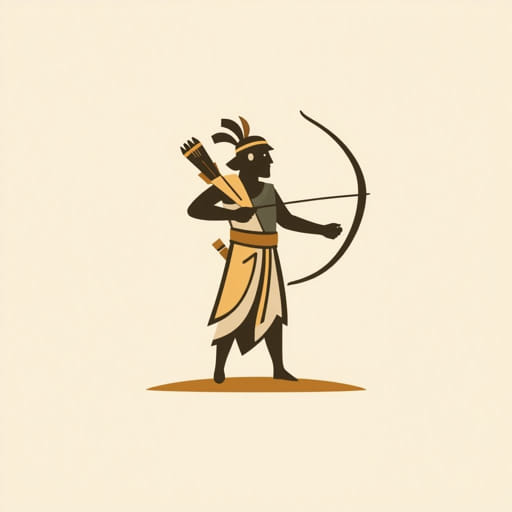
In the ancient tapestry of human history, few names carry the same air of mystery and controversy as Nimrod. Often mentioned in early biblical texts and echoed through Jewish, Christian, and Islamic traditions, Nimrod’s story is one wrapped in both legend and interpretation. He is portrayed as a mighty hunter, a powerful king, and a rebellious figure against divine authority. The narrative surrounding Nimrod is a fascinating mixture of power, ambition, and theological symbolism. His legacy spans across cultures, suggesting that his story held deeper meanings for civilizations searching to understand the origins of kingdoms and the defiance of divine order.
Origins and Lineage of Nimrod
Nimrod is first introduced in the Book of Genesis, specifically in Genesis 10:812, where he is described as a descendant of Cush, the son of Ham, and the great-grandson of Noah. He is famously referred to as a mighty hunter before the Lord, a phrase that has invited much debate regarding its meaning.
Genealogical Context
According to the Bible’s Table of Nations, Nimrod’s lineage places him in a significant post-Flood context. As the world was repopulated by Noah’s descendants, the emergence of a figure like Nimrod represented the formation of early power structures. His genealogy as a son of Cush linked him to regions of Africa and the Near East, giving rise to associations with Ethiopia and Mesopotamia.
Nimrod as a Mighty Hunter
The description of Nimrod as a mighty hunter has led to various interpretations. While some view this literally highlighting his skills in hunting wild beasts others see it symbolically, suggesting that Nimrod was a conqueror of men, a hunter of power and dominion rather than animals. The phrase before the Lord has also been interpreted to mean in defiance of the Lord, painting him as an early archetype of human rebellion.
Symbol of Strength and Control
Nimrod is one of the earliest biblical figures to be associated with monarchy and empire. He is credited with establishing several key cities, including Babel, Erech, Akkad, and Calneh in the land of Shinar, and later, Nineveh and Calah in Assyria. These cities would become some of the most important centers of early civilization.
- Babel The foundation of what would become Babylon, associated with confusion and pride.
- Erech One of the oldest cities in Mesopotamia, later known as Uruk.
- Nineveh A prominent city in Assyria, famously connected to the prophet Jonah.
The Tower of Babel and Nimrod’s Role
The Tower of Babel is one of the most iconic stories associated with Nimrod, though the biblical text does not explicitly name him as the builder. However, later Jewish and Islamic traditions commonly link Nimrod to the construction of this grand tower, built in defiance of God’s will.
Challenge to Divine Authority
The tower was intended to reach the heavens, symbolizing mankind’s attempt to assert independence and unity without the need for divine guidance. Nimrod, as the king of Babel and instigator of centralized power, is often seen as the driving force behind this act of defiance. His ambition to create a unified world order under his rule was seen as a threat to divine sovereignty.
God’s response was swift and decisive He confused the languages of the people and scattered them across the earth. This not only thwarted Nimrod’s plan but also served as a theological explanation for the diversity of languages and nations.
Nimrod in Jewish and Islamic Tradition
Outside the Hebrew Bible, Nimrod’s story expanded and evolved, taking on different layers of meaning in various religious texts.
Jewish Midrashic Accounts
In Jewish folklore, Nimrod is frequently portrayed as the antithesis of Abraham. While Nimrod represented tyranny and idolatry, Abraham symbolized faith and obedience. According to the Midrash, Nimrod tried to kill Abraham by casting him into a furnace, but Abraham miraculously survived. This tale reinforces the view of Nimrod as a powerful but ultimately doomed ruler who opposed God’s chosen path.
Nimrod in Islamic Stories
In Islamic tradition, Nimrod (often referred to as Namrud or Nimrūd) is remembered as a king who claimed divinity. He is said to have debated with the prophet Ibrahim (Abraham), arrogantly declaring that he could give life and death. When Ibrahim challenged him by asking God to bring the sun from the east if Nimrod was truly powerful, Nimrod was unable to do so. His story concludes with his downfall, often attributed to divine punishment, such as being struck down by a tiny gnat that entered his brain.
Legacy and Symbolism
Nimrod’s legacy stretches far beyond the biblical text. He has become a symbol of unchecked ambition, tyrannical power, and rebellion against divine will. As a ruler, his building of cities represents the birth of urban civilization. However, his actions also serve as a cautionary tale about pride and the dangers of attempting to replace divine authority with human control.
Historical and Mythological Influence
Although there is no definitive archaeological evidence confirming Nimrod’s existence as a historical figure, his legend has influenced numerous stories and mythologies. He is often associated with other ancient rulers such as Gilgamesh or Sargon of Akkad, blurring the lines between myth and memory. His association with Babylon further entrenched him as a figure of spiritual rebellion in Christian eschatology.
Modern Interpretations
Today, Nimrod is often referenced in literature, religious studies, and even pop culture. Interestingly, the term Nimrod in modern slang has taken on a derogatory meaning often implying foolishness possibly due to ironic usage in 20th-century media. However, this is far removed from his original portrayal as a powerful and cunning ruler.
Scholars continue to explore Nimrod’s story to understand how early societies viewed kingship, rebellion, and the relationship between man and God. His enduring presence in religious texts highlights the human fascination with figures who rise to great power, only to be humbled by forces beyond their control.
The story of Nimrod remains one of the most intriguing narratives from antiquity. As a mighty hunter, empire builder, and challenger of God, he represents both the potential and peril of human ambition. Whether viewed through the lens of faith, folklore, or history, Nimrod’s story continues to capture the imagination of those who seek to understand the early roots of civilization and the eternal struggle between power and piety.